[00:00:11.010] – Speaker 1
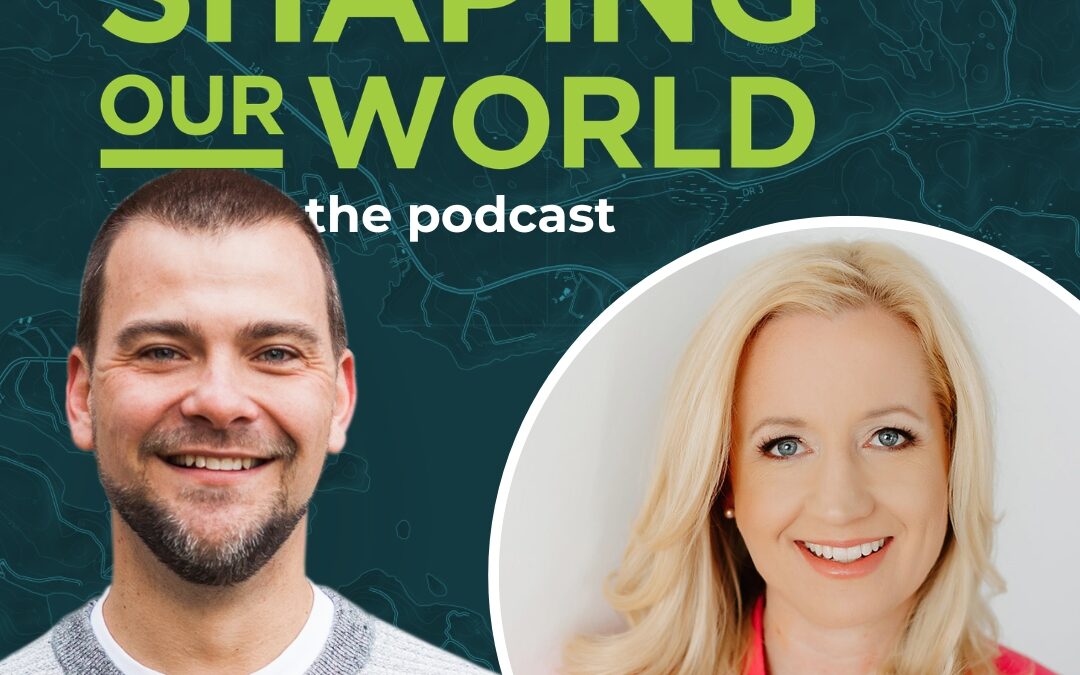
Well, hey everyone, I’m Chris Tompkins and welcome to the Shaping Our World podcast. My goal is to invite you into a conversation that will leave you more confident in understanding and inspiring the young people in your life. Each episode we talk with leading thinkers and practitioners and offer relevant resources to help you dive deeper into the world of our youth today. Today we have Lisa Canning on the show. Lisa is an interior designer, entrepreneur, and the founder of The Possibility Mom. She built a successful interior design business that led her to hosting her own HGTV show called Marriage Under Construction, and she had appearances on The Marilyn Dennis Show, The Goods, and Breakfast Television. She’s also the proud mom of 11 children. Yes, 11 children. Spending years in hustle mode, driven by the belief that success required you to be constantly working, she kind of ended up burning out and feeling the guilt and strain of trying to measure up to all of that. Then she made the radical shift and started the Possibility Mob. Through her book of the same name, speaking engagements, and coaching opportunities, she now helps other moms simplify their lives, reduce feeling overwhelmed, and letting go of that constant guilt.
[00:01:35.810] – Speaker 1
Her core message is this: motherhood doesn’t have to be this hard. It’s possible to pursue your dreams and be a great mom without losing yourself. In the process. She’s passionate about helping women design not just beautiful homes but a more sustainable, joyful life. Can’t wait for you to hear our conversation with Lisa and all the insight she’s gained from her career and her life and parenting 11 kids. So let’s dive into our conversation with Lisa. It’s great to have you, Lisa.
[00:02:14.180] – Speaker 2
Oh my gosh, I’m so happy to be here.
[00:02:16.170] – Speaker 1
Yeah, excited for this conversation. We ask most of our guests this question based off of the title of the show. What shaped your world when you were growing up? What are the big influences in your life?
[00:02:27.330] – Speaker 2
My parents raised us with this belief that we could do anything, and that absolutely carried forward, you know, in my childhood and into my adulthood. Um, I wrote a book called The Possibility Mom, and it was very much because I think that That drumbeat of what is possible, can you dream bigger, was very, very present in my life growing up.
[00:02:50.810] – Speaker 1
What shapes your world today?
[00:02:53.060] – Speaker 2
What shapes my world today is my 11 kids. That is probably the most—
[00:02:57.510] – Speaker 1
Sorry, you said 11.
[00:02:58.830] – Speaker 2
11, yes.
[00:02:59.800] – Speaker 1
11.
[00:03:00.350] – Speaker 2
Yes, sir, 11 children. So I’ve got my oldest is 17.
[00:03:03.800] – Speaker 1
Okay.
[00:03:04.290] – Speaker 2
And my youngest is just about to turn 1. And so they shape my world in many different ways. Very practically speaking, that’s a lot of knocks on the door. That’s a lot of places to be and a lot of needs to be met. But from a more, you know, just internally, my role and my identity as a mother, uh, they make me a better person. They help me to grow in holiness. They help me to grow in patience. And so my, my role as a mother of 11 really shapes my, my world every day. Um, I am a wife of almost 20 years, and I am also very much shaped by coaching and speaking. So I primarily speak to Catholic women who are pursuing something big in their lives. They feel like the Lord has called them to something. For many of them, it’s, uh, business, it’s entrepreneurship. And for many of them, it is simply how to get through the day without yelling at my kids. And so, uh, that shapes very much my activities, coaching and speaking and writing for this audience.
[00:04:08.960] – Speaker 1
That’s amazing. And that kind of coaching work that you’re talking about, you know, how do I get through the day without, you know, a mom of 11 kids, when you speak, I think people probably listen because I’m imagining a lot of moms out there particularly leaned in a little bit when they heard how many kids you have under the age of 17. So really looking forward to diving into your storey and all the insights that you’ve gleaned from what you do. And I kind of want to start with that. You had like a dream career, a show on HGTV, momentum in the design world. At the same time, you’re raising a family. Can you take us behind the scenes in kind of that early days when you were, you know, working in career world and raising a family at the same time? What was that like?
[00:04:56.660] – Speaker 2
So as I mentioned, I was raised with this real, like, you can do anything. And so I kind of gave anything I got into a lot of energy, a lot of attention. I wanted to do well at anything I did. And it was interesting because I viewed my career in television. I hosted an HGTV show. I worked in front of the camera and behind the camera for many years. So I gave that everything. I did my very best to, you know, show up on time, learn everything I could, really like get the most out of that experience. And then I would say I did the exact same thing as a mother. and, and a faith-filled mother. I, I really looked to the influences of a lot of the moms I had around me who were doing really cool things with their kids. Many of them were, were homeschooling before it was cool to homeschool, you know what I mean? Like, I had many of those influences around me, and so I was trying to do both of those things really well. There was also a part of me that was trying to please everyone. So there was a part of me that was trying to live up to these expectations of the directors in my life, the you know, television executives who were around me and encouraging me to do certain things and for my life to look a certain way.
[00:06:09.710] – Speaker 2
And then I was also trying to live up to these unspoken expectations, to be honest, and sometimes spoken, of people in my faith community, of people around me who were, you know, saying things like, you really shouldn’t be working. And it was just such an interesting dance and tension. Spoiler alert, you really don’t gain anything by trying to please other people. And so it took a lot of self-reflection. It took some failure. Like, I, I tell this storey in my book, The Possibility Mom. Like, I just came to an implosion. It was right outside of a job site. I had had my fourth baby in 5 years. My husband and I just chose to be very open to life whenever, you know, it came. And so very, very, like, shortly after having that baby, I was bringing her to a construction site, and I just remember sitting there in my minivan and like calling out to the Lord and just saying, this is— I don’t think you want me to be this miserable. Like, I don’t think you want me to be this exhausted and this rundown. And I just begged him to show me a different way.
[00:07:16.040] – Speaker 2
And, and so he did. And that, and that was just— yeah, that, that was— it was a lot of tension. I think for many years I was trying to please others, and then finally could, like, had to put my own self-reliance aside. And I think that’s probably been, you know, now in my, in my 40s, like, like, you know, sort of skipping ahead, you know, 20 years, literally. I’ve been a mother for 17 years. I’ve learned, it’s been a continual learning, that my reliance is not the ultimate reliance, that I do need to turn to the Lord and that he is what makes all things possible.
[00:07:53.510] – Speaker 1
I want to get into all this because there’s, there’s so many questions that arise from this that I think are helpful for a lot of folks, moms in particular, that are balancing all this stuff at the same time. Like, I want to go back. You said you had this moment and there was an abrupt change for you in direction. Can you take us back to that? Like, what did the change look like for you when you kind of stepped away from, you know, HGTV and the work you were doing in that world?
[00:08:19.660] – Speaker 2
Well, it was interesting because I didn’t fully step away, but I wanted a different way. And so I just kept asking, like, in my prayer, in my journaling, like, all the things, anybody around me who I could ask this question to, like, I just kept asking the question, show me a different way. There’s an expression, um, in the coaching world sometimes we use as manuals. I’ve also heard this expression, sacred cows. It’s like you can sometimes— at least I had this picture of what success had to look like, and it was very narrow. Like, it was very like, this is the only version of success. You do this, you work every day, you, you know, do A, B, C, D. I was kind of copying people, and I just was like, what if it could be different? So in a very practical way, I asked, how can it be different? On a very practical sense, I also set some limits. So I remember the very first boundary I set was I want to be the one to pick up my children from school at minimom 3 days a week. So what that meant is 3 days a week I had to tell the numerous people who had typically been open, like I’d been open to, I had to tell them, I’m so sorry, my last appointment of the day is 1:00 PM.
[00:09:34.650] – Speaker 2
And I remember back then, Chris, being like, nobody is going to do that. Like, I remember just being like, nope, everybody, I have to like give of myself to my clients all the time. And it was fascinating, all of them, like all of them, all of them were like, oh yeah, that’s so much better for me. I don’t want to be in rush hour traffic. I’d rather be home with more time to pick up my kids as well. Like, it’s— I just remember every fear I had around making changes was, you know, dispelled. And then it also looked at really clarifying my priorities. So meaning, look, really declaring them. Like, we can all say our health matters to us, we can all say our faith matters to us, like, we can all say our marriage matters to us, but then that has to be translated in activity. And so from a very practical point of view, I started tying my priorities to appointments in my calendar. So just, I’m sure this won’t come as a surprise, or, you know, it’s not, this is not rocket science, this is not totally novel, but I just essentially started making these recurring appointments that would protect my priorities.
[00:10:43.770] – Speaker 2
So if I wanted a relationship with the Lord, I had to have prayer time in, in somewhere in the calendar. If I wanted my relationship with my spouse to, you know, be robust, to be mature, I had to schedule some date nights. I think some people— it’s interesting because I coach women of all kinds of backgrounds, of all family sizes, of all professional careers. For some women, my observation is they can do things without scheduling. There are some people who don’t necessarily need a literal reminder, go to the gym. But for the majority of women I coach, when things don’t have like a very specific intention, like a very like sacred little spot, it just can then become the priorities of everyone else in your life. And I think that’s just really key whether or not you actually have to physically schedule them. That I think is up to the individual and maybe how many different priorities you’re managing. But for me, with 11 children and many different initiatives that I’m involved in, actually putting it in the calendar and writing it down and giving it the same intentionality that I would give to showing up for like this podcast, for example, like any appointment, showing up, you know, the best that I can show up in that given season.
[00:11:59.630] – Speaker 1
I, I want to press in a little bit on, because I think people listening, we get a lot of pressure, and I think especially women, to kind of be all of these things at the same time. And for men, it’s true too, but I think it lands often listening to my wife, you know, journey this, like the pressure to be a good mom and a good spouse, but also to like that career-driven side of it. And it sounds like, you know, we talked about like you didn’t move away totally. You kind of redefine that. Uh, can you talk a little bit about where these pressures come from, how we absorb them, how do we make choices about what, what is most important to us, how do we redefine career?
[00:12:43.040] – Speaker 2
So there’s two things I really want to hit on, and one is discernment, and then the second is healing. So discernment— we all have a unique path and calling in our life. I’ve been called to a big family. Others are called to different kinds of families. Like, we all have a unique calling, including whatever else we do outside of family. And having the courage to just sit with the Lord and be like, show me what you want me to see. And that can be very scary if, you know, you’ve never been told that this is safe, like it’s safe to dream with the Lord. But discernment in general, it, it requires also quiet. Like it requires the ability to literally just sit there and listen. You know, in, in my, in my Catholic tradition, contemplative prayer is one that is very much encouraged. So meaning you are quiet, you, you are quiet, you are silent. You, you, it’s sometimes extremely difficult for me to do, but just so that you can literally hear his voice. So, and, and, and I think we learn what the Lord’s voice sounds like, literally through practise. And but we have to give ourselves that space to sit and listen and discern, is this my voice?
[00:14:03.240] – Speaker 2
Is this his voice? So number one, discernment. Number two is healing. And I think for me, this was the most important element when it came to redefining success for myself. We all grow up with parents who do their very best. And we all, for the most part— I’m making some generalisations, but for the most part, you know, many people grow up with, with teachers and mentors and friends and siblings, like, who are well-intended, right? But of course, we’re all human, and things can happen that then build our self-concept that perhaps is not exactly, you know, your true self. Like, meaning there is a you that is meant to really come out But comments from parents, comments from teachers, trauma of various kinds can obviously impact then how you start to view yourself. And so for me personally, failure was really hard. And so I kept looking at, well, no, this is like what it looks like to be a successful interior designer, you know, a successful HGTV personality. It must look like A, B, C, D, E, F, G. And that’s it. And it took me a lot of time, therapy, healing, counseling— like, literally all the modalities.
[00:15:27.100] – Speaker 2
Like, I have done so many different modalities to help myself just heal, to understand that it can look different. And so for me, it was becoming a little bit more comfortable with failure. It became— it was also healing from, um yeah, unrealistic expectations that I was imposing upon myself, all very much related to failure. And it looked like just being more gentle. And, and, you know, for listeners, like, your versions are all going to be different. You know, this was just my, my healing journey. But to recognise that you might be influenced by these voices, by these concepts that you actually don’t want to live by. And again, having that courage and that ability to just pause, reflect— am I actually living a life defined by what I think success is, or am I living it based on someone else’s definition of success? And that was really important for me.
[00:16:33.170] – Speaker 1
I want to press in just a little bit, Lisa, on this because I’m resonating with what you’re saying. I do know even for myself to find that time in a really busy world is really challenging. And I know you talk about like setting boundaries. I love what you were saying about like certain times you won’t have meetings after that, what we say no to, but I wanna kind of zero in on this. Like how do we structure our time, our world How do we kind of prioritise that time to do what you’re suggesting is really important to making sure we know we’re on the right track, we’re heading in the right direction, we’re spending time in the things that we value the most?
[00:17:16.920] – Speaker 2
I think having a picture of why something matters can be very helpful. So I wonder if many of your listeners can relate to what I’m about to say, but like where perhaps at one point in your life rules equaled rigidity. And it was just like, that’s a rule, I don’t want to follow it, right? But then we get to a point where we start to understand the wisdom behind a rule, or like why a rule matters. So just to make an example, this is not a rule. Nobody says you have to get up at 6 AM to pray, right? That’s not a rule. But if you want to get up maybe before your children because it’s convenient, it’s probably the more likely time that you will get in some actual quiet. That’s a great suggested practise. And to sort of think, okay, well, why is it worth it to get up at 6:00 AM? Okay, well, I’m probably going to get some actual predictable quiet. I know that I am more recollected and I can face my day with a lot more, you know, courage and calm when I’ve had that first. So, so just Number one, like, why?
[00:18:24.840] – Speaker 2
Why is this good? Because I don’t think anybody likes to do something just because somebody told them to or because it’s a great idea. Like, there’s got to be some connexion behind why that’s going to be a good thing to include in your life. And then to use the expression, like, not throw the baby out with the bathwater, right? So meaning, this happens to me, I’m a breastfeeding mom at time of this podcast, you know, I’ve been breastfeeding for like 17 years, you know, like interruptions are a very common, normal thing in my life. So when I set the alarm and I get up, but then a child literally walks in and snuggles up beside me, you know, during my prayer time, do I close my Bible and say, forget it? Like, I’m just not even going to bother? Like, no, obviously not. Like, I just continue. You know what I mean? Like, I continue. If I get interrupted, I will pivot, ask, you know, answer whatever that is, and then go back. I might be painting it like it’s oversimplified or like, that’s great, Lisa. Like that works for you, but that would never work for me.
[00:19:26.970] – Speaker 2
But the point I’m trying to make here is that we also don’t have to make it an idol. I think that’s like a really helpful thing to remember that like anything, and this applies to anything, to prayer, to exercise, to eating well. It’s like the pursuit of these things, yes, are important, are going to benefit us, but it doesn’t mean you can’t do it modified. It doesn’t mean that, you know, if I don’t get in time in the first, you know, moments of my day, I just try to fit them in later. And sometimes it’s not sequential, right? Sometimes it’s like 5 minutes and then another 5 minutes that’s interrupted, but I’m still getting it in.
[00:20:02.290] – Speaker 1
That’s really helpful. My whole exercise world is kind of like that. I would, you know, I played a lot of sports growing up and was probably in better shape when I was younger and, you know, would go to the gym and expect to be at a certain level and then be frustrated and then be like, ah, and then you end up not doing it where Now I’m probably in a season to be like, yeah, I might not— I may have planned 45 minutes, but I only did 20. Rather than seeing the missed 25, I’m going, oh, I did it for 20 minutes. That’s a good thing, you know, and, and try to celebrate that. I think that’s really good. I want to go back a little bit, like when you’re in that constant hustle mode, you know, early days of, you know, children and career and all that. What do you think your kids were experiencing as opposed to now, as you’ve kind of done everything that you’ve said you’ve done and set boundaries and said no to things. And get us in the mind of our kids. What are they experiencing when we’re constantly chasing our tails and really striving to do what we believe is the most important, as to having a little more— a different approach, um, as you’ve, you’ve shared?
[00:21:09.760] – Speaker 1
What do our kids experience in both of those kind of situations?
[00:21:13.540] – Speaker 2
I mean, I’ll just speak for myself, like my, my personal experience, but I know for sure life before was hurried. Like it was rushed. It was always like, oh my gosh, hurry up, we’re late. Like, come on, come on, come on. Like even for church, like, you know, I’m sure this is so relatable, like where people are just like, you’re, you’re mad by the time you’re in the car and then you’re trying to get into your service with some, you know, like some element of peace and it can be so difficult. So Yes, we were rushed. I would say that my mind was always somewhere else because there was just always something else to build. There was always something else to do. And I would say that my children experienced a mom who couldn’t self-regulate. And so when a mom can’t self-regulate, everything becomes a little bit like, ah, like there’s always a reaction. Because I couldn’t regulate my own reactions. So life now, while of course is not at all— I am a huge work in progress always, but I would say that I’m a lot more regulated. And if you’re listening to this and you’re not familiar with what I mean, self-regulation is essentially just your mind, your body, your heart, your spirit’s ability to calm down after a moment of stress.
[00:22:34.480] – Speaker 2
This can look many different ways for people. For me, it can be as simple as putting my hand over my heart and taking a few deep breaths. Sometimes I have to like leave a situation. So like I might say to my kids, I just need 5 seconds. Literally, I’m just going to step out onto our back patio and then I’m going to come back. And sometimes it’s that. Sometimes it’s obviously tagging in somebody. Hey, I really need 5 minutes. Like, I’m closing my door, please manage this. But I would say today I have worked very hard at learning what it means to regulate myself when I’m in periods of stress so that, again, my children aren’t necessarily receiving a reaction that then forms something in them, right? So again, I’m not perfect at it, but I would say that I don’t know, 60% of the time I’m able to take an emotion, feel it, like feel it. So feel the emotion and then do something with it that allows it to kind of, you know, pass and move on. And then we can get back to whatever we were doing, right? Emotions are normal. They’re healthy.
[00:23:52.160] – Speaker 2
They’re necessary. And just on a very practical note, they’re human. Like we kind of can’t escape them. Jesus had them. You know, one of my favourite things about Holy Week is you get to see just the dynamics of the emotions that, you know, he went through. And so they’re good. They are good. But when we don’t know how to manage them, especially when they’re intense, or, you know, going back to what I was talking about with healing, especially when we were maybe told that it’s not good to feel anger, or like, girls like you don’t cry, whatever it is, insert whatever example. Then it becomes a very difficult thing to navigate when, especially as you get into parenthood. I, I think parenthood unlocks oftentimes all kinds of stuff that perhaps you have not processed or even are aware of. It unlocks different experiences from your own childhood that perhaps, again, just with time, that you just don’t remember. But they come to the surface in a really unique way in parenthood. And so just to, you know, answer your question, I think my kids now are getting a much more regulated mother. They’re also getting a lot more time for just peace.
[00:25:07.740] – Speaker 2
So meaning like we’re not necessarily rushing. I’m very kind of strict about we don’t have to have an activity every single evening. Like, time at home together is necessary and important. So I would say they’re also getting quite a bit of that, like, just languid family time.
[00:25:29.500] – Speaker 1
What do you think that does for them in their, like, own development and how they— because they’ve obviously, the older ones particularly, have kind of watched you and, and see how you’re prioritising them. What do you think this experience of, like, what you’re just sharing does for them? Why is this kind of important for kids to experience a balance?
[00:25:50.880] – Speaker 2
Children— I am not a child psychologist, so just FYI, like, this is all—
[00:25:55.690] – Speaker 1
oh, you’ve got 11 kids, so you are a bit of an expert. So I think it’s fair to say, yes.
[00:26:01.970] – Speaker 2
What I’ve come to really understand about children is how much they learn their own self-image, their own self-concept just what it means to be them and to be safe to be them is so much learned in the home. We could talk for hours, Chris, on that, just that alone. We are all incredible, unique human beings. Like, the Lord has something so unique for every single human being on this planet, but that fostering of that, that flourishing of that human begins at home. Home is always where a child is going to come home and say, you know, this coach was mean to me, I’m so upset, or this happened, you know, in class and I don’t know what to do about it. Like, that gets processed at home. And it’s not like— I really don’t believe it’s time, like, meaning You don’t have to be available 16 hours a day to process, but you do have to be available like at some point. Like at some point a child needs to know my mom is available for me. Again, so it doesn’t have to be 16 hours of the day, and in fact that’s actually really detrimental, and that’s a whole other podcast.
[00:27:28.620] – Speaker 2
I’ve coached a lot of moms who can’t think they did. They don’t think they can steal away for anything for themselves. That’s a whole other topic. But a child does need to know it’s safe for me to be myself, and my parents, my home gave me that environment.
[00:27:47.070] – Speaker 1
How do you— because one of the things we always hear in the show and talk about is, you know, taking time to do exactly what you said with each kid, to, to listen and make sure they they know they matter and they’re significant. And, and that takes time and intentionality. How do you do that with like 11 kids across the mix?
[00:28:07.370] – Speaker 2
When there were fewer of them, okay, it was— and I’ll just be— I’ll be happy to share like the metrics, so to speak. But yeah, I, I would say that around 6, 7 kids. 6, 7. I can’t believe I just did that.
[00:28:19.880] – Speaker 1
Oh my gosh, my teenagers would be so I know my daughter would be so proud.
[00:28:27.970] – Speaker 2
I also just learned like Gen Z language just recently, like what aura means and what— anyway, I can’t even. They were like, yeah, mom, the kids all say you have like high aura. I was like, what? Like, what does this even mean?
[00:28:40.320] – Speaker 1
Anyway, producers and editors, that’s the clip that should go on Instagram.
[00:28:44.820] – Speaker 2
It’s so crazy. Anyway, so amazing. When I had between 6 and 7 children, it was possible at bedtime to kind of like do the rounds for each. So it just, there was a little bit of time always at bedtime that that happened. So bedtime I think is a really helpful place, like it’s a natural place, right? You’re, you know, tucking them in depending on their age, right? Like they’re just, there can be a significant moment of connexion. So I would say bedtime was really helpful. Now with 11 kids of all different ages, I would say it happens a little bit more fluidly. So like there’s just a little bit more fluidity to it. With my older kids, it often happens in the car, right? And it often just naturally happens with whoever is sitting in the front seat. And so just that’s just a very natural, you know, how are you? They can’t escape it. You know what I mean?
[00:29:39.830] – Speaker 1
Like, yeah, they’re seatbelted in.
[00:29:42.140] – Speaker 2
They’re seatbelted in for a duration of time. And that happens fairly often in my life. Like, there’s many different places we’re going in a car, so that actually allows for a lot of different opportunities for somebody to be in the front seat. And then I would say that it also happens with some intentionality. So I will— I kind of just do this every week. I will reflect back on my week, and sometimes it’s daily, but I’ll just be like, who needs more attention? Like, and I’ll make it a prayer. Lord, show me who who needs more attention. And then usually the name comes up pretty easily. And so then the next day or the next week, I’m kind of like, hey, you know, come with me to do the groceries today. Or like, why don’t we go get a cup of coffee? Or I’ll just make up an errand, like, hey, I think you need new, you know, uniform pants, like, let’s go. And it’s— that becomes that moment of one-on-one time.
[00:30:35.530] – Speaker 1
I want to go back just a bit because this has been so helpful. From a parenting perspective, but, you know, we kind of early on talked to just about the pressures that we have even around career and vocation. And from your switch to HGTV to what you’re doing now with the Possibility Mom, how have you kind of redefined vocational success when you’re managing and loving and caring for 11 kids? But you still, I hear you’re coaching, you’ve written a book, How have you redefined it? What does that look like for you?
[00:31:09.090] – Speaker 2
This may not be the answer you want to this question, but I’m just going to give you what came to my mind, and, and that is a regulated central nervous system. That is literally my barometer of success. So when I start to feel really stressed, which happens often, like I’m not immune to stress, Uh, so for example, if I launch a campaign and the numbers aren’t coming in, like, like, so people did not sign up for the offer, I will literally, like, I measure the success, of course. Like, I get excited if I get the result that I wanted, right? Of course. And I’ll do the human things that I can do. So, you know, I’ll, I’ll send another email, I’ll do another push on social media. Like, I’ll, I’ll do the things that my training and my expertise allows me to do. But true success for me is, did I remain calm? And there’s an element of that that is truly, did I surrender this success to the Lord? I think that is, if you want to like explore the thesis statement of my life in this season, that is like it. It is Okay, I have limited time.
[00:32:26.960] – Speaker 2
I often have limited energy. You know, I am 42 at time of this recording. Perimenopause is like a thing, you know, it is a thing. And so I’m often feeling a lack, like there’s, it often feels like there’s a lack of time, a lack of energy, you know, a lack of resources, a lack of whatever, right? And I just sort of, and I do the human thing where I will spiral, I will get kind of like stressed out, but then, what success looks like for me is simply, okay, Lord, like, did I trust you with it? Did I trust you with the time you gave me? Did I trust that you’re going to give me the time if I have discerned this is what you’ve asked me to do in this season? If I’ve discerned that correctly, then I better trust that you’re going to make the time and the energy and the resources available. And that is, I would say, my definition of success. Did I do it all with a regulated central nervous system? Because when we’re regulated, we show up better. I think that’s another just like quick thing that I use as a gut cheque on myself.
[00:33:39.470] – Speaker 2
Like when I review my day, we have this beautiful practise in the Catholic faith called an examen, a daily examen, E-X-A-M-E-N. Where at the end of your day, you’re just simply asking, like, where did I see you in my day, Lord? Like, where am I grateful? Where did I miss you? Maybe where do I need help tomorrow? And that’s a question I’m constantly asking. Did I show up well? Like, and if I didn’t show up well, so if I snapped at my husband, if I was irritated with my kids, you know, if I came into a room and it was turned upside down by little toddlers and I like, you know, screamed, like I’m, I’m looking at that and I’m, I’m, you know, and I’m examining, okay, well, did I do that? Did that happen because I was frustrated that, you know, I’m on another call in 5 minutes? And again, all these things are human, right? And we must, you know, be gentle on ourselves. But we can also do the practical end of like, okay, well, do I need a little bit more buffer? You know, do I need a little bit more help?
[00:34:39.820] – Speaker 2
Do I— did I need to set up expectations so that food isn’t all over the floor, whatever, right? Did I show up well? What did that look like in my day? Are helpful questions I ask myself.
[00:34:53.280] – Speaker 1
I love that because so often when we think about success and where our expectations of success come from, we’re looking to like these external things, you know, whether it’s other people’s expectations, whether what the world or the culture defines as success for career or parenting or whatever. I love that you just kind of flipped that up and said, actually, success is kind of internal and it comes from how I’m experiencing self-regulation, how I’m experiencing this thing that I’m doing, what’s it doing in me. I’m going to think about that for a while because that is a really unique way to approach it because, you know, I might have thought your answer would have been like, oh, I just redefine what these external expectations are and I recalibrate the metrics and I, you know, I have a different measurement. But you’re going to a whole new level of different measurement, which I think is really thought-provoking. And I think really good for all of our listeners and myself to kind of ponder and go, okay, yeah, like maybe there’s a different question you know, for me to ask when I’m, you know, trying to navigate. Why does this feel off?
[00:36:06.810] – Speaker 1
Or am I doing too much? Or is this the right thing?
[00:36:09.710] – Speaker 2
I’ll just say this briefly. I think we are all called to holiness. So like, we’re all called to grow and, and be more in union with the Lord. But I think we do that in very different ways. So some of us are going to be called to do that in homeschooling and, you know, primarily stay-at-home parenthood. Some of us are going to be called to that uniquely, you know, in, in that we’re caring for an ageing parent or we’re caring for a child with special needs. Like, there are going to be many things that grow and shape and stretch us and call on us to rely on the Lord more. And, and I think for some of us it is entrepreneurship. For a lot of the women I coach, it’s, it’s business. And for myself, like, yes, I’ve experienced external success. Like, I’ve experienced some of the things that come with building, you know, a coaching business. I have experienced that. But it’s more, I think, about like, how do you recover when you did something and it failed? Or how did you navigate when you were really excited and it just didn’t happen? You know, like, and the word disappointment is such an interesting one, I think, for people to reflect on.
[00:37:28.160] – Speaker 2
Like, disappointment, off of your appointment. And so just like, really, what is there for me to learn in this, Lord? I didn’t get exactly what I wanted, but what do you want me to learn? And sometimes that’s truly where the goal, the success, the thing that no one else is going to see that development of interior virtue, that development of a deep interior life where you are talking to the Lord and where you are learning, yes, I can trust you with absolutely everything.
[00:38:05.970] – Speaker 1
Just as we kind of come to the tail end of our conversation, I think it’s, uh, yeah, just my way of wrapping up would be to say, like, you know, you’ve been doing this for a while and you have a lot of kids, maybe for you to kind of give a little advice, like what’s one thing you’ve learned along the way through success or failure or whatever it is that would just be like kind of a takeaway for parents about what you’ve learned about parenting that you could offer as a helpful tip or advice or something that would encourage them today?
[00:38:45.140] – Speaker 2
Every day is a new day. And like every hour is a new hour. Every minute is a new minute. So I can be very hard on myself. Like I have not, I don’t know if on this side of heaven I will heal fully from just desiring to be excellent at everything. Right. So I can be very hard on myself, particularly when I have screamed or I have, you know, just unloaded unfairly on my kids, especially. Many things can be solved by going to bed, you know what I mean? Like taking a bath and going to bed. Like many things can be solved for adults and children alike, right? And so just like, but it doesn’t also have to be the next day. Like every minute you can just close your eyes for a minute, ask the Lord for more strength, and then return back to whatever it is that you need to deal with. And so that we can begin anew. With the Lord anytime.
[00:39:39.640] – Speaker 1
Is there any kind of thing you’ve learned, uh, or thing you do in your home with your kids, like something that parents could kind of take as like a— you talked about boundaries, saying no. Do you have traditions, things that you think of, man, this has worked really— because I just— I’m like, man, if you could get some things that work really well when you’re managing 11 kids, there’s other families out there be like, great, give me, give me those things, pointers, tips I can do with my kids. To help them thrive in whatever they’re doing? I know us as parents, how we show up is really important, but is there something you can specifically offer for parents or adults that care for kids that we could do with kids that they could feel the impact kind of immediately?
[00:40:20.530] – Speaker 2
And this again is not rocket science or very novel, but just everybody in my house is involved in something in the house. So meaning like everybody has a chore, older kids help younger kids. And what I’ve observed about that is there’s teamwork that’s learned. There’s even just the improvement of gross and fine motor skills. Like, I’m not even kidding. Like, little kids are learning and watching how to do physical things. And we’re meant to live in community. You know, I have a unique one in a large family, but even in a smaller family, like, we are meant to do things with people, for people. Contribution to others is such a gift, and that can look so different in every dynamic. So I would just simply say kids can be involved in anything, whether it’s house chores or even the most, you know, complex of like ministry opportunities. Like, just involve your kids, give them jobs, and see what happens when they’re invited to collaborate.
[00:41:28.540] – Speaker 1
Incredible conversation, Lisa. Really inspiring story. Parents or listener, anyone listening can pick up your book, The Possibility Mom, I would imagine at Amazon and wherever you can get books. But if anyone’s listening like, man, speaking opportunities, coaching, how could they find you? Where would they go online to get a little more information about those, what you do in that world?
[00:41:50.580] – Speaker 2
Come along the adventures of 11 kids on my Instagram @lisacanning and then my website, https://lisacanning.ca/ Is where you can learn about booking me as a speaker, hiring me as your coach. I’ve got online opportunities and one-on-one opportunities, and it’s a great gift. I’m very— I’m grateful for the opportunity to coach women.
[00:42:13.940] – Speaker 1
Listening to you today, I’m sure you do a fantastic job at that. So thank you for being willing to share your storey today and for inspiring us and even giving me some things to think about to too, as we head off into the magical world of parenting and investing in young people today. Thank you so much, Lisa.
[00:42:32.170] – Speaker 2
Ah, it’s my pleasure. Thank you for having me.
[00:42:36.730] – Speaker 1
Well, that’s it for today’s episode. If hearing from Lisa Canning encouraged you to think differently about motherhood, balance, and what it looks like to pursue your dreams without burning out, head over to muskokawoods.com. There you’ll find blog post with key takeaways from this conversation and a link to listen again. Don’t forget to subscribe to Shaping Our World and share this episode with a parent, especially a mom, who’s feeling the pressure of doing it all and could use a reminder that there’s another way. Thanks for listening, and we’ll see you next time.