[00:00:12.280] – Speaker 1
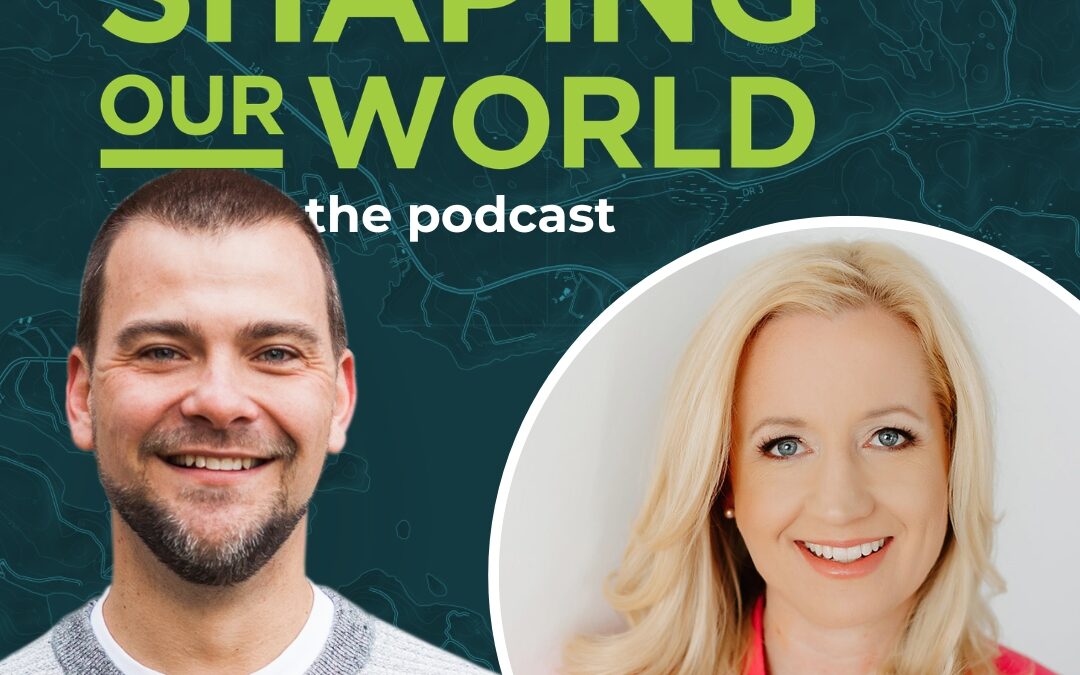
Well, hey everyone, I’m Chris Tompkins and welcome to the Shaping Our World podcast. My goal is to invite you into a conversation that will leave you more confident in understanding and inspiring the young people in your life. Each episode we talk with leading thinkers and practitioners, and we offer relevant resources to dive deeper into the world of our youth today. Today, we’re joined by Andini Makosinski. Andini is a Canadian-born inventor, storyteller, and in-demand speaker on topics like invention, creativity, AI, and the intersection of art and science. At 15, she invented The Hollow Flashlight, a flashlight that’s powered by body heat. For this, she won the Google Science Fair and gained international recognition. You should go Google it. Look it up. Hollow Flashlight. She’s also invented eDrink, a mug that converts the heat from the drink into electricity to charge other devices. Andini has been named to— listen to this list— Time’s 30 Under 30 World Changers, Forbes’ 30 Under 30, Glamour’s College Woman of the Year, Popular Science’s Young Inventor of the Year, and Entrepreneur’s Young Millionaires. She’s delivered 5 TEDx talks and has spoken at the G7 and Y20 summits, along with numerous other TV appearances and hosting gigs.
[00:01:39.440] – Speaker 1
She now works as a director, producer, and a stylist for music video and brand campaigns. With her inventions and background in science and creativity, right up to her work in art and film today. I think you’re going to really enjoy our conversation with Andini, and it’ll inspire you to think about the world a little differently. So let’s dive into our conversation today. Andini, great to have you.
[00:02:14.910] – Speaker 2
Thank you for having me. I’m excited to be here.
[00:02:17.400] – Speaker 1
Yeah, I’m looking forward to this conversation. And before we dive in, as we do kind of with all of our guests, wanted to get a little bit behind the scenes on who you are. So why don’t you tell us what shaped your world when you were growing up? What were kind of the big influences in your life?
[00:02:34.080] – Speaker 2
The big influences in my life as I grew up were building things with my hands, watching silent films and operas, a lot of classical music, both from the Western world and the Indian world, and reading a lot of classic books, adventure books, and yeah, just being within my imagination most of the time.
[00:02:57.270] – Speaker 1
We’re going to hear a little bit about how that influences your work, and we’re going to dive into all that today. But maybe just help us get to know you personally today. Like, what shapes your world today? What are big influences? Are you still watching silent films? Like, what, what shapes your world today?
[00:03:13.760] – Speaker 2
What shapes my world today is a lot of— yeah, still watching a lot of older movies and diving more into film history and learning more about the technical aspects of film. Um, and then still now working in a more organised fashion and using my imagination and problem-solving skills in totally different areas in both the arts and the sciences. And, uh, trying to get 8 hours of sleep. That definitely does shape my world on a daily basis.
[00:03:42.620] – Speaker 1
I hear you on that for sure. And so tell us a little bit about the work you’re doing today, a little bit about how you’re shaping the world of people around you formally, vocationally. Tell us a little bit about that.
[00:03:56.350] – Speaker 2
Oh gosh, I don’t know. I mean, I hope I’m just uplifting my friends to be happier and have some more laughs. And always the number one thing I’m really passionate about is just getting other people to pursue whatever creative creative dream that they’ve had in the back of their mind for years and just going out and trying to do it. Because I think a lot of us, myself included, we are our own worst enemy sometimes and can really stop ourselves from doing the things we always wanted to do. But yeah, I would say my work— I do work with a lot of people now. Before, when I was inventing things, it was much more singular and just myself. And then now I’m working more as like a producer and director, so I’m always hyper-social all the time.
[00:04:39.950] – Speaker 1
That’s awesome. Okay, so you talked about working with your hands, you talked about inventing, and I want to kind of start there. So you invented the Hollow Flashlight. It’s a flashlight that works using only the heat from your hands, is that right?
[00:04:52.610] – Speaker 2
Yes.
[00:04:53.250] – Speaker 1
The kind of inception of that was you learning about a friend in the Philippines that failed a grade because they didn’t have electricity, uh, to study at night. So kind of behind your invention. It isn’t just about the science. There’s this empathy to solve real people’s problems. How did that kind of experience the way you looked at invention and got you involved? What’s the connexion between empathy and invention for you personally?
[00:05:19.360] – Speaker 2
Well, I’ve definitely found in the past that when I have had a personal tie or an emotional tie to a situation or a problem that needed solving, I was a lot more motivated to actually follow through and do it, um, versus if you don’t care about something or someone, you’re much more less likely to want to do something and follow it up to the finish. I had done 10 science fairs before I graduated high school, uh, from my grade 6 to my grade 12 year, and a lot of my projects were in alternative energy harvesting, which is harvesting energy that’s always around us, we just don’t necessarily take advantage of regularly all the time just yet. So I was playing around with solar energy, thermal energy, and kinetic energy, and, um, When my friend’s problem in the Philippines, as I’m half Filipino and had some friends there, when she told me about this, I was just really shocked because I had grown up in Canada on the West Coast and took, you know, flicking on the light switch for granted that the light would come on every time. And to realise, I think I was around 13 when she told me that she didn’t have light in her house, that was quite a big deal.
[00:06:25.010] – Speaker 2
And I wanted to create an invention that could potentially help her. And that tied in well to me doing science fair competitions. I was a very competitive kid, loved presenting, public public speaking, and all of it just kind of worked out.
[00:06:37.440] – Speaker 1
And like the idea to help people as like a core driver behind things like Invention, I think that’s a really important thing for kids, no matter what it is they’re setting themselves out to doing. How can we kind of inspire that for young people and think about kids in general to kind of think about the world around them and develop empathy so they can really build things that matter and help real-life people?
[00:07:02.440] – Speaker 2
I think it’s really interesting because now with kids being on the internet and social media, they are a lot more aware of issues that other populations around the world are experiencing. But I would also argue that there is sort of an oversaturation of news and problems and just reporting on how horrific the conditions are around the world, which can also— it’s not necessarily an oversaturation because these are all very real issues, but young people seeing all these problems all the time on their phones, that kind of oversaturation can lead to sort of freeze, freeze up where they go, “I don’t know, the world’s ending. I don’t know how I could possibly make a difference or contribute.” So I think when you think that big picture of like the world is ending, everyone’s suffering in some way, it’s like very terrifying to think about as a young person. I mean, if I had thought about, oh my God, there’s billions of people without electricity, which is true, or without light in the world, how can I solve that? I I probably would have been too intimidated to try and invent anything, you know, at 13, 14 years old.
[00:08:07.870] – Speaker 2
But because I had one friend and she had this problem and I was emotionally connected to that, that was a lot kind of, quote unquote, easier for me to feel like, okay, what if I solved her problem? And then later on realised, oh, that could snowball and help or inspire so many others. So I think it’s important that, you know, young people do have empathy and are reading about the news or have friends in different countries and are writing to them, you know, pen pals, that sort of thing, or maybe through family and visitations. Um, so they are aware that the way that they live is not necessarily the only way that everyone else experiences life. But then it’s about, okay, my friend in this different country or this different city, or maybe they’re across Canada, they have a different problem because they live on a farm, so they have XYZ, and I live in you know, the suburbs, so I have X, Y, Z problems and finding ways to interchange ideas and inspiration and suggest potential solutions, I think is a beautiful thing. I think we’re kind of put on this earth to alleviate other people’s suffering and pain in any way we can, no matter what area we work in.
[00:09:14.870] – Speaker 1
It kind of reminds me of the Muskoka Woods where I work. Our vision statement is inspiring youth to shape their world. And when we were like looking at that, we were talking about like shape the world because we want our impact to shape the world. But we thought, no, if we can actually just focus them or encourage them to look at their world, then the ripple effect can go on from there. So I love, as you were saying, that like that local expression of being inspired as a young person to make a difference. I think that’s really great. You mentioned like young people being on screens and, uh, social media and stuff, but that wasn’t kind of your experience growing up. You I didn’t really spend time on screens, not allowed to, I don’t know, video games, all that sort of stuff. But you would spend time watching like Gilbert and Sullivan operas, silent Charlie Chaplin films. You weren’t constantly plugged in. And I read in a CBC interview your advice to young people was to limit distractions because you learn best when you’re young. When you look at how immersed kids are in screens today, what do you think we’re at risk of losing?
[00:10:20.180] – Speaker 1
In a generation of young people? And maybe switch then for parents who are listening who feel like that battle with screen time, and you know, it’s your experience growing up is probably a lot different than a lot of young people. And what parents kind of resist is saying you can’t be on screens at all. So what’s a realistic way to create the kind of space that actually feeds into or inspires creativity and curiosity in kids?
[00:10:45.630] – Speaker 2
I think with kids on their screens constantly, we’re losing a sense of patience that they need to develop and the ability to be bored and allow the mind to wander and to sit with yourself and not immediately want to escape reality. And I think attention spans in general obviously are just going downhill. Mine have since I’ve started, you know, having a phone and being on technology constantly for work. It’s not my favourite thing. I don’t think we have enough research to say what exactly, scientifically, how it’s really affecting a human to grow up in such a world. If they were born— if a kid was born in the past 10 years, growing up with iPads and all that, I don’t think we have enough info to really see how it’s affecting the human mind and body. But we definitely have a lot of research showing attention span, anxiety, depression, all these things are going up. A lot of body dysmorphia, like all these things. There’s so much pressure, especially for young girls, to look a certain way online. And I just think it’s horrible. I don’t know. I just don’t think it’s a productive thing for you to be on as a young person at all, or even as an adult.
[00:12:00.030] – Speaker 2
It comes with a whole other slew of problems. It’s not like you become 25 and your prefrontal cortex develops and you’re like, ah, I can use internet in a healthy manner now. And I think for parents, a lot of them are at an age where they are familiar, you know, with cell phones and all this, but they don’t necessarily have also a healthy relationship with their own personal technology. And they’re probably struggling to adapt and use their technology in a healthy way in front of their kids. And I think a lot of parents have to realise how you interact with your TV, your iPad, your phone, your smartwatch, all of that is setting an example in front of your kids of how they should be using technology. So I really think that as a parent, you have a huge responsibility to model however you think best for your child to interact with personal technology. But then a lot of parents are probably struggling with an addiction to their phone and whatnot as well. So I don’t know if there is a perfect scenario or solution. I, I don’t think it’s necessarily running out to live in the middle of the woods with no technology whatsoever, because I think If you want to be employed and you’re not working a certain kind of trades job or have a farm or something, you need to at least have some sense of a phone.
[00:13:21.320] – Speaker 2
And, or if you know, some jobs now it’s, you know, especially for example, in the entertainment world, it is important to have a profile and, you know, have a visual portfolio of your work. And now followers are so important, which is so garbage now. So I don’t know. I would just say, and I’m not a parent, so there is a huge lack of experience when I speak for these things. But what I would advise is from my own personal experience, which is just get your kids to be proactively solving problems and engaging their brains and their minds and their hands with building things from a young age and get them off the iPad. Like, maybe Minecraft will have some benefits because you are kind of building things. But I in general don’t believe most video games or computer games to be remotely helpful, except All the Right Type, which I had to do in grade 5, which was a typing programme. And we would compete and try to write, type on the computer as fast as possible. And I still really enjoyed that experience as a kid. But, um, For the most part, I would just say get your kids off the screen because it’s so— I mean, the problem is it’s really easy.
[00:14:38.610] – Speaker 2
Like, as a parent, at the end of the day, you’re like overwhelmed. You’re trying to deal with your own work and problems, and then your kid is crying and you’re like, here, take the iPad, go watch your TV, like, go watch your show. I totally get why that feels like, oh my gosh, a sense of relief, like handing it over. But you’re also training your kid to find pleasure within, you know, just watching something without thinking at all on a screen. And now sometimes watching just on iPad is enough. You need to have iPad watching and put the TV on for YouTube, or they’re also playing a game. Like, this multi-screen kind of hyperstimuli is just not at all productive. I just don’t think that’s leading anywhere good.
[00:15:17.530] – Speaker 1
Just building off what you were saying, one of the things that I’ve, I’ve learned and experienced, not just as a parent, but in the work that I do at Muskoka Woods is like being really intentional with the time that it’s off and then being really consistent. Because you talked about like kids not being bored, you know, and I think sometimes when we’re off it and we can’t find things to do, then the temptation is to just like scrap it. And sometimes discovery, like you’re talking about, invention, solving problems, creativity, It kind of takes time. You kind of got to work through the not being on the devices and being stimulated that way to actually find that. And that’s what we found even at summer camp is like the more consistent we are, and we don’t have phones now for our youngest age group. And, you know, people are like, how do I manage that? And it’s like the time where they’re not on it starts to become really enriched with other things that you start to go, that was good. Like that, brings a lot of life. I’m enjoying the stuff that I’m doing when I’m not on there, but sometimes it just takes time.
[00:16:20.170] – Speaker 1
So you’ve got to be consistent and intentional with that. And that would, I think, would be what I would build off of what you’re saying as, as a way to give parents encouragement that, yeah, it might not feel like it’s working right away, but stick with it, be intentional, spend time off of screens.
[00:16:36.350] – Speaker 2
Yeah, 100%. I think just like, yeah, when you’re off the screen Also though, it is important to have some time where you’re just sitting with yourself because I find it’s then when the ideas that have been percolating at the back of my head will pop through in that moment of clarity where nothing else is really distracting me. Or I would just remember sometimes the best ideas I would have creatively would come honestly in the middle of a conversation with someone when I was zoning out, or in class if I was zoning out and bam, an idea would come. Sometimes it really is like that. So I think you’re waiting in line somewhere, instead of going on your phone, like, just be in your mind and, I don’t know, think thoughts of like some idea or project you’re working on and see what pops up. Because I really do feel like ideas come at really unexpected moments, and if you don’t capture it straight away, like, it’s like a spark kind of coming off a fire. If you don’t capture and write it down or draw a picture or record a voice memo, whatever it is, straight away, you’ll lose it.
[00:17:36.790] – Speaker 2
And I think when you’re on technology and on screens all the time, it’s so easy just not even to have any of those ideas because the screen is giving you entertainment.
[00:17:47.220] – Speaker 1
I want to get into some of like your inventing and creativity and all the things that drove you, particularly at a young age. But kind of before we do, as you were like inventing and doing all that stuff, you started to gain attention at a really young age. TV appearances, speaking. Awards, and now you’re a host, a model, brand ambassador. How did all that shape your identity and confidence, and how do you feel about the responsibility that comes with kind of that platform when, you know, like a lot of young people are looking up to you?
[00:18:19.450] – Speaker 2
I don’t think I was prepared at all at a young age, you know, when I was 15, to start receiving like international attention for my inventions. It was really like This is my science fair project. I’m excited to compete at the science fair. Like, I wasn’t like, oh, I want all this attention and I want to be a global child, you know, not pariah necessarily, but like I got a lot of, it was a lot. My parents didn’t know how to deal with it. I didn’t know how to deal with it. I didn’t have any media training, so I was kind of just like learning as I went. I think it was very confusing for me as a young adult going into my 20s because I remember every time I got a year older after I was 15, I felt a sense of I was I was too old and I was losing— people wouldn’t be excited in learning about me anymore because I was ageing out of the child teenage genius thing. And when I turned 20, that was a whole thing. And obviously I didn’t go and study science. I studied English and film studies and I wanted to get more into film.
[00:19:17.360] – Speaker 2
But leaving behind this kind of very much assigned identity of child teenage genius and trying to transition into a a totally new area far later than a lot of peers my age was and has been quite difficult. And I had a lot of points that were quite low for me where I was like, I don’t know what I’m supposed to be doing. I don’t have enough guidance. I don’t have a lot of friends that have been on the same kind of career trajectory as me. I think I kept worrying what would people people think or what would impress people and I should do those things instead of really following like, what do I want to do? Like, what would actually bring me pleasure creatively? So it was a really, actually quite tough, I would say, in the past 3, 4 years learning experience. But I feel like I’m now coming into myself and who I want to be as an adult a lot more. But yeah, there was obviously a lot of pressure, I think I felt too, to be kind of a role model and all this. I definitely fought against that for a while, but I’m still obviously very honoured anytime someone writes to me and they’ve done their science project in class about me, or their school has dressed up as me for their musical or all these things.
[00:20:31.660] – Speaker 2
It is truly astounding to me, and I feel very honoured. But yeah, I think it was a lot of pressure, and I had no experience. My parents didn’t have any experience going into it. So there was that layered with the usual teenage angst and growing pains and all that. So it was a lot, but I got through it.
[00:20:52.300] – Speaker 1
Who were the people, adults, teachers that kind of came alongside you to support you when you were kind of up and coming in that world?
[00:21:00.810] – Speaker 2
My high school principal, Mr. Rodford, Andy Rodford. He’s a lovely, lovely man. He was very supportive of me as I was kind of flunking so many classes in high school after all the attention and being absent so much. And in grade 12 and part of grade 11, he would call me into his office, I think almost like once a week, just during a lunch break to have lunch and ask me how I was doing and, you know, encourage me to still care about my calculus class or like whatever it was. Yeah. And he still really checked in with me. And right before I Got my, uh, had my graduation at the local university here. I went and visited him at his office one final time. That was very meaningful for me. My parents have been pretty helpful. I mean, they were very supportive. My mum was very supportive. My dad was my main mentor for science fair. Um, but my mum really kept me on track for like actually getting deadlines done. And she’s always been so generous and trying to help me whenever I needed any kind of help. But yeah, and then I’ve had other really lovely adults in my life.
[00:22:05.750] – Speaker 2
Like, um, at the Google Science Fair, there was a couple that was helping organise it named, um, Heidi Kleinmaus and Gary Bowles. And Gary’s father has— he wrote this very famous, um, book called What Colour Is Your Parachute, which is like a career help. It’s like been around for decades. And, um, at that time they were helping kind of produce the Google Science Fair and some of their Google Hangout livestreams and things. And I became good friends with them at that point when I was 15. And since then they’ve really been in my life. And Heidi has managed me for a few years in that time and they’ve just been so lovely in guiding me and getting more into the professional world and speaking. And yeah, Heidi’s helped me really with the growing pains as well. So it was a good time. Yeah.
[00:22:55.610] – Speaker 1
So we talked about that Hallo flashlight and could tell us a little bit more about some of the specific inventions that you made that you look back on and you feel really good about?
[00:23:05.930] – Speaker 2
Yeah. So the flashlight was the main one. A year later, I made the eDrink, which is a coffee mug that harvests the excess heat of your hot drink and converts into electricity so you could give your phone a boost of energy. And both of those I presented at The Tonight Show with Jimmy Fallon and did all these things with them. A few years later, I had gotten patents for these inventions. In the US and Canada. And I was working on a line of children’s toys that ran off of green energy that used my patented technology. And I was living in New York at the time, building prototypes with students there. And then I signed some really bad business agreements and I had to back out of everything for a year. And it was— yeah, I still don’t have those prototypes I made. They were kept by my ex-manager. So it was just kind of, I don’t know, and, you know, in between when I was 15 to 23, I received multiple business offers from different big companies around Canada and the US to licence my flashlight, but it just wasn’t ready commercially. I mean, it just wasn’t competitive brightness-wise with like a battery-run flashlight, and I was in high school or university and not necessarily wanting to drop out and like dedicate my time to be like a CEO of a flashlight company.
[00:24:21.060] – Speaker 2
That just like wasn’t my dream, right? I thought it was for a while, and I was really in that entrepreneur space, and I almost was going to take the Thiel Fellowship in San Francisco, but I’m glad I didn’t. Um, but yeah, I just realised I’m not really meant to be a business CEO. I just don’t know if I would like— I don’t want to necessarily always work for other people, but I don’t think like me having a business and selling a product is necessarily what exactly I want to do.
[00:24:48.170] – Speaker 1
When you were younger, uh, and maybe even today, but I know when you’re younger, a lot of your inventions didn’t work or didn’t work exactly the way you wanted or in the timetable you did, but you kept showing up, like 10 science fairs before you finished high school. That’s huge. So what did you learn in that season about failure and kind of what kept you going to keep putting more things forward?
[00:25:11.900] – Speaker 2
Well, in inventing, failure is not really as big of a deal because it happens very regularly and you are just kind of testing things out. You have a hypothesis, you have your objective, and then you’re kind of going, I just will experiment and try things. And the experimentation is never really a clean-cut process. There’s a lot of ups and downs a lot of times where things just don’t work. But you look at failure as a way to give you information of going, oh, okay, that did not work. My invention did not light up. The circuit didn’t work. You know, whatever it is. And you write that down. That’s data. And then you move on and you try something else. So, um, obviously there’s some emotion involved, like it can be emotional or frustrating or saddening, you know, whatever it is. But, um, I think pretty often in the creative process, while you are involved emotionally, you do also need to set aside some part of your brain that goes, okay, it didn’t work. That is okay because we have more info to go forward with now, and your failures can help inform other people who are working on similar things and like going on their first steps.
[00:26:16.390] – Speaker 2
They’ll know more of what not to do. So anytime I failed in my career, which has been many, many times in inventing and everything, I just take it as, oh, I really learned from that. And that’s probably more exciting than if everything worked out perfectly and I learned nothing.
[00:26:30.820] – Speaker 1
What a great principle to apply to like a whole bunch of other stuff in life. That line you said, like, failure is about gaining information. Man, imagine if we could kind of inspire our kids with that when, you know, they don’t make the team or they get a really bad grade on something, to kind of reframe that to say that this is about gaining information and learning more and, you know, continuing to problem solve your way through life. I think sometimes we just see failure as so cut and dry and we use it to evaluate where we are, self-esteem, different things like that. And I love that idea of failure helping us gain information. That’s really good.
[00:27:10.220] – Speaker 2
For sure. And, you know, when I was a kid, if I got criticism from someone, I would hate that. I would turn bright red, like my whole face turned bright red, and I would feel so bad about myself and I would fixate on it. And then at a certain point, I think like through doing inventing and doing more creative projects and doing a lot of things that were really bad and corny and like, I’m like, oh my God, I could still do so much better even and nowadays you realise like you have to have periods where you’re not very good at something and things aren’t working out, or you are failing a bunch in order to get to a space where you are objectively succeeding more. So even if something, a project I work on doesn’t turn out exactly how I had dreamt it to be, I still feel proud of myself because I still did that project and I still completed it and I made something new and I’ve learned from it. And I think in the educational system, there has been such like a good or bad, you failed, you passed kind of thing.
[00:28:09.090] – Speaker 2
And I think there’s so many more nuances to that where even if a student, if a student has tried really hard, but they’ve objectively gotten a quote unquote bad grade, there is an argument to be made that they have actually learned more than the kid that aced the test or the assignment and didn’t try at all.
[00:28:28.960] – Speaker 1
When we think about like your inventions, you were building inventions from like a lot of the stuff around your household, turning garbage into ideas. Where do you think that kind of came from for you? And what did that teach you about creativity?
[00:28:44.390] – Speaker 2
It came from my parents not giving me many toys. My dad grew up during World War II, so he didn’t have much. And my mum grew up in a really small village in the Philippines where they didn’t have like a TV till she was a teenager. They just didn’t have a lot growing up and they thought, even though they came to Canada and had me, they said, if we give her less, she will be more creative with whatever we do give her. And so I was given a hot glue gun and then I would collect whatever I could find around the house and make toys. Um, or I would get like, sometimes we’d go to garage sales and I would get plastic animals and then I would like take apart old printers or computers and like build like make imaginary dollhouses, but like for the plastic animals, or like a parade of this. It was, you know, it was a stretch. I mean, some people could be like, “Oh, that was actually really mean that your parents didn’t give you anything.” But I choose to look at the nicer side, which is we were poor, so I just made the best of what we had.
[00:29:39.070] – Speaker 2
And it did make me exponentially more creative in my spare time, I think. So I am really grateful, and I do believe to some extent children could be like cats where, you know, You can go and buy your cat the fancy cat climb house and all the fancy mice and toys, and then they’ll just play with a plastic bag you put in the side of the room and have way more fun with that. And honestly, anytime I really wanted something like a skateboard or some niche things as a child that I can’t remember, I never played with it once I got it. It’s like the typical thing as a kid, you beg your parents for a thing and then you get it finally, and then you use it once and then you’re like, okay, I’m done. So I think it was better that I made a lot of my own entertainment. And I think I have a habit of making the best out of whatever situation I’m in, and that has transferred to me as an adult and helped me exponentially with just being very entrepreneurial.
[00:30:35.540] – Speaker 1
It’s amazing. I have a quick storey just kind of on that. We used to take some of our high school students from Muskoka Woods on a March break ski trip to Vermont and You know, Muskoka Woods, 6-lane water slides and like all the fancy bells and whistles around programming. And we had taken them to like Stowe and, you know, Jay’s Peak, all those places to ski. And we were doing like movies and touring the Burton factory. And one night, the first night we went on the one trip, these kids developed a game around a garbage can and they were sitting around, they created this game and they had more fun doing that thing over like a garbage can than all the other stuff that we were planning. And we were sitting watching that and we’re like, isn’t that interesting, right? Like here we are strategizing about all these fancy things that we can do to programme for kids. And on their own, they created a lot of fun and engaged with literally a garbage can. And so we’re, it was just a reminder to us that sometimes creativity and fun can come from the things that like boil up from the ground with not a lot of resource.
[00:31:42.120] – Speaker 1
But when they’re into it, they get really into it and they had so much fun with it and we thought next time we’ll just get a garbage can, throw it out in the backyard. It’s a lot cheaper and a lot easier to run than a, you know, a big trip or buying a big 6-lane water slide. But anyways, I thought, I thought of that when I heard your story.
[00:32:00.100] – Speaker 2
That’s great. Yeah, I love that story. I think that’s a great example of like, yeah, freedom to play, but within some limitations of like having limited resources, but that that freedom mentally is almost better than having the freedom of so many choices of things to do. And then kids also get overwhelmed and don’t want to— don’t even know what to choose. You have to kind of tell them sometimes, or just take away options, honestly.
[00:32:23.680] – Speaker 1
And I think sometimes when they find it themselves, it’s even more meaningful than if it’s created by parents or teachers or us. When they discover it themselves, which goes circular back to like we’re talking about creating that space boredom, not on screens, to think, to contemplate, because then things can kind of rise up from the ground that way and kids can engage. I kind of want to go back, like you mentioned in your storey that you studied English, and you know, I might have assumed that you studied science because, you know, you’re in inventing and thinking about electricity and energy and all that stuff, but you’re a big supporter of like blending English and science together, and that’s not often how kids learn today. So can you tell us a little bit about that, why you think the connection’s so important and what we can do to encourage like that integration of, you know, we often think like I’m either a right brain or a left brain person. I’m either good with science or I’m good with art or English, and you talk about kind of bringing those together. Tell us a little bit about that.
[00:33:27.020] – Speaker 2
Yeah, I think the right right versus left brain thing is kind of a myth. I do believe it has a lot to do with your own self-beliefs about yourself and what you’re capable of learning and achieving and how you spend your spare time, because that’s often how you develop most of your skills and knowledge that you carry around. And most of learning happens outside of school, not necessarily just in the classroom. And from a young age, I had, you know, I was taking things apart and building things and soldering and circuits and all that. But I was also at the same time watching silent films, helping my dad film his own film documentary projects. Dreaming about being a movie director since I was like 11. So I wanted to pursue both. I wanted to do science and art, and I didn’t see why I had to choose. And a lot of people would argue that I should have chosen earlier or something so that I would be more objectively successful in either field. But life is short, and I kind of went, I don’t want to choose something and only do one thing just so that I can be wealthier or more successful in a thing and live my life and be sad that I never tried the other things that I’ve always wondered about.
[00:34:32.920] – Speaker 2
And honestly, there was also a lot of pressure for me to go into sciences from my household and just getting all that attention from so young. So classic me, or many teenagers, when you have a lot of pressure to do something, you usually run in the opposite direction, which is what ended up happening. And I turned down an engineering placement at a university to instead go into their arts Arts and English programme, and then eventually I came out quite a bit longer later with a major in English and then a minor in Film Studies. Um, and I loved it. I had so much fun in university. Some people talk about their degree experiences being like horrific, and I was like, I had so much fun. And also because I was studying English, I had all these electives to choose from. It was so much freedom where I could actually curate what I wanted to learn. Versus I know in some engineering programmes, like, the electives are like all still just like math and there’s no actual room in your degree and the time you have to take anything else. Versus for me, I got to do a whole class on patents and like technology history.
[00:35:37.380] – Speaker 2
I did one on like Chinese history. I did, uh, vampires in film and literature. I did like early German cinema. I did all these different paintings, like Renaissance painting. I got to take all these classes and learn so many things. And I was like, this is feeding my soul and like wanting to just like be a human and understand more about the world versus like if I was just sitting taking a bunch of math and chemistry, physics classes that I didn’t personally really want to take in the first place. So I’m really happy with my experience in the educational system, um, for the most part in university because I could curate it a lot more than in high school and middle school. And I do believe that the next generations really will have to be sort of Renaissance individuals where you need to have multiple skills in completely different areas in order to be employable. Because we’re going to be really, I think, heading towards either like a gig economy where if you are creative like me, you are jumping from job to job. There is no job stability necessarily, or you’ll be working in trades with your hands like like plumbers, electricians, those guys are getting paid the most, I think, in the future, honestly.
[00:36:50.800] – Speaker 2
And, um, I think a lot of people will want to return to trades and working with their hands because we live in such a screen-immersed world. And that’s literally just not for everyone. Like, not everyone wants to work in front of a screen all day. And I think I’m happiest when I’m working on set now, doing production, directing, and I don’t touch my phone the whole day. I don’t look at social media the whole day, and I’m building things, and actively using a lot of my skills from inventing and problem solving on the fly, but in production. So just in a different setting. And I’ve been able to take my skills of presenting and like, you know, like speech, which originally came from like reciting poems with old Polish ladies when I was a kid, then got like honed through science fair presentation and practise. And then I became like a public speaker and then I became like an event host. And now I use my speaking skills for when I’m directing or producing things and need to give people very specific, precise information. So there’s many ways where like these skills that you develop in the sciences or the arts can be applied in a variety of different areas.
[00:37:57.500] – Speaker 2
And we don’t need to be as locked down to like one job and one identity our whole lives, unless that’s what you want and you’re like an ophthalmologist or something that I want you to be a specialist as a heart, heart surgeon or whatever it is.
[00:38:13.650] – Speaker 1
I’ll switch gears just a little bit because you spend a lot of your time in the green tech and sustainability spaces, like speaking at conferences or the brands that you work with. I know a lot of young people are concerned about the future of the planet and anxious about that. What would you say that you’ve seen that would give you some hope about the world we live in and the environment around us?
[00:38:37.510] – Speaker 2
I think nowadays with social media, we also are seeing a lot of young people being proactive, um, about talking about potential solutions or ideas or thoughts they have on the current social climate and culture, and actually creating discussion and creating a difference in the way people think about things, which can be used for good. Um, and I think also I do see the educational systems slowly, depending where you are, changing and adapting to the modern world. And a lot of kids being given freedom to make personal projects for the end of semester where they do pursue something that is very close to their heart and they come up with really innovative solutions. So I think, I think there is a lot of hope. I think a lot of people are, young people are really fighting for a world they actually want to live in, in 10 to 20 years. And I haven’t given up hope on them just yet.
[00:39:33.790] – Speaker 1
Awesome.
[00:39:34.190] – Speaker 2
I feel pretty optimistic, but I also think there’s a lot of things on a more global political scale that I’m not really privy to speak to, but I think there’s a lot of issues that will be— that are overall discouraging for young people, and we’re all just trying to find a way through it right now.
[00:39:53.390] – Speaker 1
Well, I mean, that is encouraging that you see a lot of hope for young people because as these issues come up, this next generation, they’re gonna be the ones that inherit them and inevitably solve those issues for, for all of us in the world. So that, that’s encouraging. As we kind of wrap up our conversation, it’s been so encouraging, so insightful as we listen to your storey and your journey and the things you’ve gleaned from all your experiences. I want to finish up with just a couple questions to land the plane. If there’s one mindset that you’ve developed from all of your inventing and tinkering and failing and trying again and experimenting and learning. What would that mindset be that you would want to encourage for people? And how as parents could we foster that mindset in the lives of the kids we care about?
[00:40:43.410] – Speaker 2
Yeah, I think an inventor’s mindset is something that I’ve just naturally adopted throughout the years and growing up, um, which is just again making the best with whatever you’re given in the situation. And innovating forward from that. I think a lot of times we could blame the tools that we have or the resources we have as not being enough, but I always believe the human mind and will is very persistent if you want it to be, and you can kind of work yourself out of a lot of day-to-day problems, at least, that you may have. And, um, I think for parents, it’s really about modelling to your kids something that inspires them to problem solve. And instead of when, you know, some appliance in your house breaks, going out and immediately buying or ordering on Amazon a new one, why don’t you try and spend an hour tinkering with your hands and try to solve it or find something else around the house that you can substitute to have a different function? I think just being innovative with what you have and not following into a consumeristic mindset is the number one thing I would encourage parents to model for their kids.
[00:41:51.240] – Speaker 2
Because when you fall into a consumeristic mindset, it’s very passive and you just never really think about solving your own problems other than just buying a solution instead of inventing one.
[00:42:03.010] – Speaker 1
In our organisation, we have a definition of leadership that is leaders are people who look at the world and say it doesn’t have to be this way and they do something about it. We weave that into like our leadership programme for young kids and this idea of like you look around and there’s a problem to solve and you do something about it. That’s really your story. And even in Inventions about a friend in the Philippines who doesn’t have electricity, and that inspires you to do something about it. What would you say is kind of a last piece of advice for kids who are like seeing things around them that they want to help with, but they don’t really know where to start? What from your experience have you learned that you could give them some advice today?
[00:42:43.750] – Speaker 2
Mm, see if there’s a local science fair and try and sign up with it either individually or with your school. And take a problem that you’ve seen around in your community that you feel like needs to be fixed because the adults aren’t doing it right, and come up with your own solution and propose it. And I find the structure of science fair actually really constructive and helpful for when you’re young and you’re trying to structure a project and make it happen. It’s good to have deadlines as well because self-imposed projects are always kind of like, I just need to finish it, and then there’s no deadline. But yeah, I would just look for some sort of club if it’s not a science fair, some sort of club you could create in your school maybe, um, where you actively get together and try and solve problems that you see around you. Because the number one thing I learned when I won at the Google Science Fair when I was 15 was just like, anything is possible, you know, and that anything you put your mind to, if you are really showing up for it, consistently every day can become a reality.
[00:43:46.350] – Speaker 1
Anything is possible. I love that. So good. Well, Andini, thank you for sharing your story. So inspiring. And for being an encouragement to me, and I know so many of our viewers and listeners today. Thank you so much for being with us.
[00:43:59.830] – Speaker 2
Thank you for having me.
[00:44:03.980] – Speaker 1
Well, that’s it for today’s episode. If hearing from Andini Makosinski got you thinking about about creativity, invention, and how young people can turn curiosity into real-life impact, why don’t you head over to MuskokaWoods.com? There you’ll find a blog post with key takeaways from this conversation and the link to listen again. Don’t forget to subscribe to Shaping Our World and share this episode with a parent, teacher, or leader who wants to help young people think differently, create boldly and build things that matter. Thanks for listening, and we’ll see you next time.