[00:00:12.600] – Speaker 1
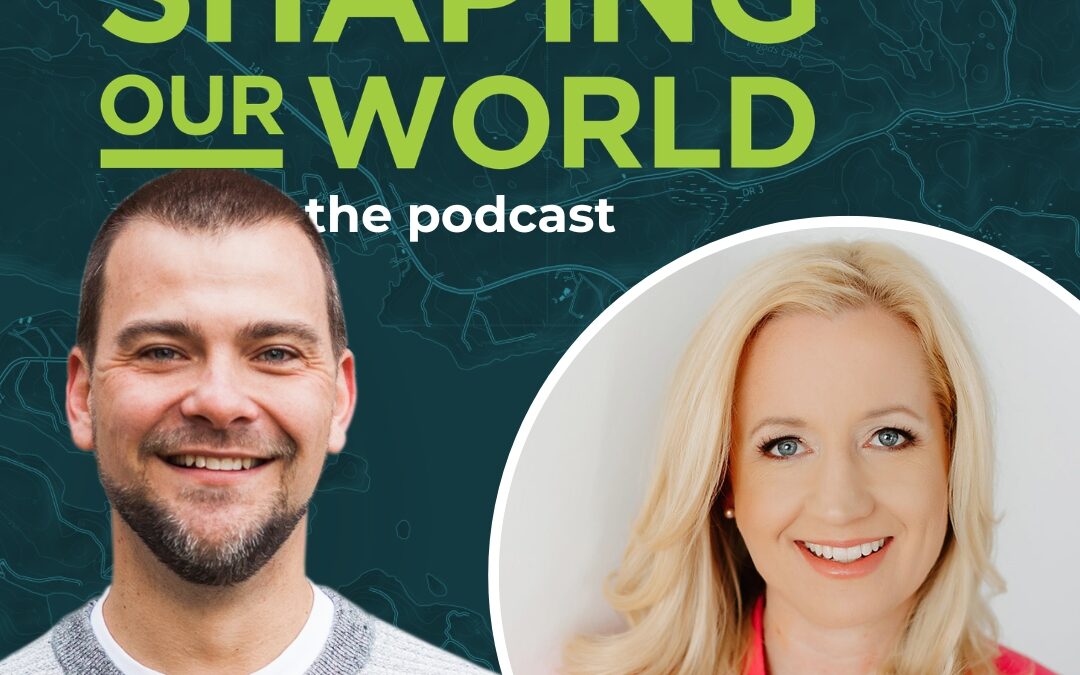
Well, hey everyone, I’m Chris Tompkins and welcome to the Shaping Our World podcast. My goal is to invite you into a conversation that will leave you more confident in understanding and inspiring the young people in your life. Each episode we talk with leading thinkers and practitioners and offer some resources to help you dive deeper into the world of our youth today. Today we have a great show for you as we’re joined by Waneek Horn-Miller. Waneek is a Mohawk woman from the Kahnawake Mohawk Territory near Montreal. Waneek was the co-captain of Canada’s Olympic women’s water polo team at the Sydney 2000 Olympics. She’s also a gold medalist at the 1999 Pan Am Games and a six-time participant in the North American Indigenous Games. You actually may recognize her if you watched the Paris Olympics on CBC, as she was a primetime host and a colour commentator. Waneek overcame a near-fatal stabbing during the 1990 Oka Crisis when she was just 14 years old, a turning point that shaped her life and leadership. She’s an advocate for Indigenous sport, wellness, reconciliation, and community building, and she’s worked with the Assembly of First Nations to help develop sport, fitness, and health strategies for Indigenous youth and communities.
[00:01:32.700] – Speaker 1
She’s passionate about helping young people build confidence, resilience, and self-esteem through sport, education, and cultural identity. She uses storytelling and lived experience to bridge gaps and repair relationships between Indigenous and non-Indigenous peoples as she speaks all over the place. Waneek was named one of Canada’s most influential women in sport by Canada’s Association for Advancement of Women in Sport and Physical Activity. I think you’re in for an incredible conversation as we talk with Waneek Horn-Miller. Let’s dive in. It’s great to have you, Waneek. Thanks for joining us on the show.
[00:02:23.690] – Speaker 2
Hello everybody, so happy to be here from my basement.
[00:02:27.430] – Speaker 1
Yeah, well, I’m in, I’m in a little remote podcast studio that’s actually in a closet, so, uh, you know, we’re coming from very unique places today.
[00:02:36.570] – Speaker 2
And I was hoping to be at like the Muskoka Camp. I’d be like, this is— oh, I get to go there and do a podcast.
[00:02:42.070] – Speaker 1
One of these days we should do that with the water slide in the background or Lake Rosseau or something. That’s a Some good insight there. As our listeners know, the podcast is called Shaping Our World, and we always start off by getting a little more insight into what has shaped your world and what is shaping your world today. So going back to when you were a child, what were the big influences in your life? What was shaping your world?
[00:03:05.830] – Speaker 2
Well, so I am from the communities of Kahnawake, which is on the south shore of Montreal where my mom’s from, and my father is from Oshweken or Six Nations, which is near Brantford, Ontario. So I’m Kanien’keha:ka, Mohawk. So my dad went to like a version of a residential school and my mum went to Indian Day School. So for a lot of listeners out there, you’ve heard a lot about these things recently. I’m the child of two of these people and I was very lucky because my mum, she is, she’s 86 years old, she still is a Mohawk language keeper. She was and still is, but she was one of Canada’s first Native rights activists. So back in the 1960s, she was extremely active in the civil rights movement. Speaking of podcasts, my little sister, who is an award-winning actor in Canada, she might know her from shows like Letterkenny and different things. She did a podcast with my mum called Coffee with My Mum, which is all about the storeys of my mom’s exploits in the 1960s and stuff. So—
[00:04:10.490] – Speaker 1
Oh man.
[00:04:10.930] – Speaker 2
Being raised in a family of women like that, I have two older sisters and a younger sister. I was really shaped by that environment, just being with a lot of Indigenous women, but also politically active women.
[00:04:27.290] – Speaker 1
Yeah. And we’re going to talk more about your storey and how that shaped what you’re doing today. But before we kind of get into that, help us to get to know you a little bit beyond your work and other things. Tell us about Wauneeek. What’s shaping your world today?
[00:04:40.780] – Speaker 2
Oh geez, you know what shapes my every moment almost? I’m a mother of 3 kids. Oh yeah, wow. I have, uh, so my oldest is 15, she’ll be turning 16, so I’ll be soon a mother of a 16-year-old. She’s a high-performance water polo player like myself, uh, so lots, 20 hours a week of practise. Um, my son is 12, he’ll be 13 soon, he also plays water polo. And then I have a 9-year-old almost 10-year-old, and she has special needs. So I’m really getting more and more active in the, um, the special needs community, neurodivergence community. That literally is like 80% of my life. I still— I’m self-employed. I do broadcasting. I was one of the hosts, primetime hosts for the Olympics in 2024. I do a lot of motivational speaking. I do a lot of advocacy around access to sport in Canada, in particular for Indigenous people, but I also believe strongly for Everybody, for new Canadians, sport and amateur sport is so expensive now that it is only accessible to really upper middle class people. So yeah, so that’s kind of what I do. And I have two dogs.
[00:05:51.570] – Speaker 1
And two dogs, which we saw, you and I, you showed me before. So that, that’s so fascinating and loving hearing how so much of your storey is influencing what you’re doing today. And part of the reason why we wanted to have you on the show is just the uniqueness of your storey and what you have to offer from all this stuff, because you’re kind of known for like these two opposite ends of the spectrum. When you were around 14, a teenager, you were nearly fatally stabbed at the Oka Crisis, and years later you were the co-captain of the Canadian women’s water polo team. So, I mean, I’m sure we could spend an hour talking about that journey, but I wonder if you can kind of talk us through high level, like your journey from that, you know, teenage life to sport and how much did sport or does sport play a role in your journey and your healing from that?
[00:06:45.910] – Speaker 2
Well, I have always been very vocal about the role that sport plays in the Indigenous community. It’s very different than mainstream, you know. You know, there was recently a national commission struck by the Trudeau government on the future of sport commission. I participated and I said, you cannot view sport in Canada for Indigenous people the way you do it for Canadians. For us, it’s a suicide preventer, it’s a pregnancy preventer, it’s a mental health tool, it keeps our kids out of the justice system. It is a leadership builder. It is a community builder. Like, sport is— and you know what? Like, I became an Olympian, but that is not the focus, I believe, of Indigenous sport. And so, you know, when I think of sport in my life, my mum was a single mum and she didn’t have a lot of money, but the one thing she invested in for me and my sisters was putting us into sports. She said, you need to learn some really vital— and as an Indigenous rights activist, she knew what me and my sisters were gonna space within the mainstream world. She doesn’t have control over that, but she could prepare us, right?
[00:07:59.300] – Speaker 2
And, you know, I started off as a competitive swimmer and a competitive runner. She chose those specifically because they were not judged sports, that they weren’t even team sports where, if you know, in team sports there’s a bit of like, ah, that ambiguous, like, mm, they fit or they don’t fit. She wanted us to like, as much as possible, make it us against the clock, that we had as much control over it. So I did well in those. I was a provincial champion for 50 free in Ontario. I had city records in running. But I got tired of that and I started playing water polo in high school in Ottawa. And it was the most incredible thing. Now, like 14, for any of you parents out there, you know how hard 13, 14, 15 is, especially for girls, right? It is studied that is a drop-off for sport. A lot of girls will drop out of sport for a lot of reasons. Number one, they want a social life. Number two, it’s like there’s so many pressures that are different. And I was very lucky to find water polo because it was that, at that time that I went through the most stressful, one of the most stressful moments of my life, going through the Oka Crisis.
[00:09:15.170] – Speaker 2
Getting stabbed, and then subsequently dealing with extreme post-traumatic stress disorder afterwards. And, you know, I had this conversation with my mum 6 days after that happened to me. And I was— I see, back then they didn’t even— I didn’t even know there was anything called post-traumatic stress disorder. We now know more about it because of our soldiers coming back from Afghanistan and different things, right? So, she came in to my room and she said, “What do you want to do, Waneek?” And I said, “I don’t know. I want to stay in this room. I feel safe here.” I didn’t— I was ready to just kind of quit life. And she looked at me and she said, “You know what, Waneek? Everybody will understand. You have a very good reason to feel the way you feel right now. But you had this dream of going to the Olympics. And if you give up now, you will be that soldier’s victim for the rest of your life.” And she said, you know, but everybody will understand, just let me know what you want to do. And then she got up to leave my room and she paused with her hand on the doorknob.
[00:10:17.880] – Speaker 2
I’ll never forget that because, yeah, my mum always had something more to say to me. And she turned around and she said, but I didn’t raise you to be anybody’s victim. And then she left the room. And you know what? It changed in my mind everything. You know, I was 14, I had my whole life ahead of me. Was I going to be someone’s victim? Was I going to give that power to somebody? And I just couldn’t fathom, you know, that for the rest of my life. And so I left my room, I went back to water polo, I trained for the next 10 years in a system At that time, Canadian sports system was not, they didn’t care about culture. They didn’t care about, they were just like, get in and play. I felt lonely. I felt alienated. But I always remember, people ask me, why didn’t you quit? And there were times I really did want to quit. I always went back to that days after the Oka Crisis and talking to my little sister. My little sister was 4. She was my little nugget. My little doll, right? And I remember just knowing what I knew suddenly about the world, how scary it could be, how dangerous it could be.
[00:11:34.630] – Speaker 2
And I remember holding her and promising her that I would make sure that she would have a safe life, that she would achieve all her dreams. I said, “I promise you’re going to be everything you dream to be.” And I realised as I was training for my dream The only way that she was going to know how to do that is if I showed her. And if I quit on myself, I was showing her how to quit. And so it became this, like, promise I made to her every day: I’ll go back one more day for you. I’ll go back. And I would say that 10 years that I trained for the Olympics was very transformative for me. I really, really understood the value of sport and what it did, not just to become an Olympian, but how it could save your life. And so, that’s why I’m such a big advocate and I’m very outspoken about sport in Canada.
[00:12:28.930] – Speaker 1
I wonder if you can maybe dive a little deeper into, from your experience, what do you think it is about sports and involvement in sports that is that suicide prevention, and particularly for young people in Indigenous communities? How does sport play a role in self-identity, resilience? What’s the correlation there?
[00:12:51.200] – Speaker 2
You know, I mean, at the very basic, like, you know, biological level, it’s those endorphins, right? That is your natural antidepressant. That is something that we all love, that after-exercise kind of high you feel, that feeling of what— when you’re doing it. But, you know, when you’re in sport, you’re learning to understand your body. You’re developing, you’re forging this very, very intimate relationship with how your body works, what hurts it, what doesn’t hurt it, what great things it can do for you, you know, in sport, achieving your dreams. That is really important because like, if that relationship with your body, then you start to understand, I don’t want to put things in it that hurt it. It’s gonna hurt, it’s gonna stand in the way of of doing what I want it to do, I’m not gonna let other people hurt it, right? I’m not gonna let anybody hurt me. And you develop this relationship of protection, of admiration for what you physically can do. And then, you know, when you get a chance to play in sports with others, whether it’s in your community or outside of your community, you know, and I’ve often said this, you know, on very public stages, you know, We call ourselves in Canada a multicultural society, but how do we teach people how to embrace diversity?
[00:14:14.680] – Speaker 2
How do you teach them, right? Sport is one of those places that you’re like, I don’t care if you’re wearing a hijab or if you are gay or if you are trans. If you’re the best person on the field, I want to play with you. Like, you see people for what they can contribute rather than what they look like. And then suddenly, as you’re like going up in the ranks of sport, like whether, you know, I’m one of the very few Olympians, Indigenous Olympians to go to the Olympics in a team sport. And I say this very distinctly because when you are in an individual sport, you can kind of do your own thing. You’re like a little bit separate, right? Because you’re relying on yourself. When you’re in a team sport at an Olympic level, you almost have to be like able to read your teammate’s mind, their body language, the look in their eyes, like forecast what they’re going to do so that you can kind of coincide with it. And that, the ability to do that and be able to kind of have that kind of relationship with each other really breaks down.
[00:15:16.290] – Speaker 2
You have to break down those barriers and come together. And it’s such a incredible experience to be able to have the opportunity to do that with people from all walks of life. And you never forget it. You never forget that feeling. It doesn’t matter. You go back to your community. You don’t see these people for a very long time. I haven’t seen some of my teammates since the Olympics. I would say that I can still remember how much pride and how much enjoyment I got from like giving the perfect pass so they could score that beautiful goal. Like, it’s just such a, ah, I did it! You know, like, that is such a great feeling. And this is why sport is all those things. It’s a leadership builder. It’s like something you value. It’s something you want to do. And you know, a lot of Indigenous, young Indigenous people, they’re very good at it. Like, very, very good. And so giving them opportunities and access is something very important to me. Now that I’ve become an Olympian,, right? And I remember I’m not the first Olympian from my community, I’m the third. So my community of Kahnawake and Alwyn Morris, he won gold in 1984 in flatwater kayaking.
[00:16:30.800] – Speaker 2
And he was a huge mentor to me all through my journey to the Olympics from like 14 when I first met him. And when I came back from the Olympics having finished 5th, I was devastated. I don’t care now. I’m really proud of that now. But like right after, pretty devastated, right? We were medal hopefuls, all this kind of stuff. And so I remember talking to him about it and he said, you know, Waneek, you are such a good athlete. I’ve watched you on many multiple different types of competition. You’re just such a good athlete. But you know what will make you a great athlete? And I said, what? He said, what you do with this experience and how you make it possible for other people, for other members of our community. He says, that is when you will truly find your greatness. And I was like, you know, I, I remember thinking that’s what I wanted to do with the rest of my life. I wanted to make what I had the privilege of getting to do accessible to more people.
[00:17:32.550] – Speaker 1
That’s so good. Like, there is so much research on how involvement in things like sport, extracurricular, community involvement is beneficial for young people and helps with their thriving and well-being. But it’s so good to hear like the personal side to that because you could just read things, but to hear it from you and, and how that shaped you and, you know, what you continue to do to encourage others to do that is, is really inspiring. You did kind of mention as, as we are in your conversation just a minute ago, just about some of the systemic barriers and racism that is kind of prevalent in sport and even at like the more senior competitive level. How did you experience that in your journey and how did that shape your view of yourself, your identity, and even how you approach leadership?
[00:18:22.600] – Speaker 2
You know, it’s because it’s interesting because people like, as I, you know, compare it to Native Americans in the United States and a lot of the the people and the storeys that I know of, of their experiences, it’s different in Canada. And I’ve always said that in many aspects, Canadians are polite racists. That’s what we experience. It’s not like, “Oh, I don’t like you because you’re Native, get out of here.” You will hear that. You will hear that, but you don’t necessarily. One of the most damaging things that you could ever tell a person of colour or or anything like that is, “I don’t see colour. I don’t see it.” Because what you’re saying is, “I don’t see your experience. I don’t see where you come from. I don’t see your roles and responsibilities in your community. I don’t see any of that.” And that is what makes up a person. That’s actually what makes up a person’s motivation, drive, reason, you know. And some of those things that I experienced in sport were they weren’t necessarily like, I don’t like you because you’re Native, because I could always handle that, right? I could— I was like, hey, let’s roll.
[00:19:31.670] – Speaker 2
I was very aggressive when I played water polo and when I was younger, whether it was on the cross-country, you know, field or on the track or what. I, I could beat people. I think I could just be like, you don’t like me? Eat my dust, you know? Yeah, that’s how I, I approached it. Or I was able to do something. It’s more of that, um, the institution. When you start to really understand how many of these institutions are set up so that only a small segment of society can succeed, it is literally set up— the norms, the values— and then you’re trying to make your way in that and you don’t fit. Like, those aren’t your norms. Those aren’t your ways, but you still want to succeed in there, right? So like, you know, being that I understood this, like my mum would say to me often, you’re going to face mostly indifference from people, racism, sometimes all-out racism, like very blatant, and like, it’s going to be hard, Monique. Like you will go in, the preconceived notions, the stereotypes, that were there even before I got into the room that then I had to disprove.
[00:20:48.770] – Speaker 2
Like, “Oh, Native people, such great athletes, but they tend to like, they go Native or they go off the reservation.” Those terms are actually used for non-Indigenous athletes. When you go Native, it’s like, you’re just, you’re going wild. We don’t know what to do with you. We, uh, you know, like you’re unpredictable. I don’t know if you’re going to fit the team cohesion or the culture, the team culture. I don’t know, you’re unpredictable. Going off the reservation or just quitting and going home, going native, oh, they’re gone native. These are terms that are used by coaches and play athletes to describe a behaviour. And you know, I remember my very first training camp, I was in 1995, I showed up at the Olympic Stadium in Montreal and one of the first things the coach said to me was, “I hear you’re Native.” I was like, “Oh, here we go.” You know, “Oh, here we go.” And that is never a good way to, well, when I was young, wasn’t a good way to start a conversation. “I hear you’re Native.” Because the next thing is always, “I’ve heard some things about your people.” And that’s what the coach said.
[00:21:59.050] – Speaker 2
“Oh, I’ve heard some things about your people.” I’m like, “Oh, great.” And then usually, all the stereotypes would come out. And I remember at that moment, standing on that deck, I was the only Native person probably in the entire building, thinking to myself, what am I doing here? Why, like, why do I want to be in a place where I am not understood? Am I welcome? I don’t know. Do I feel safe? Not really. But I had this burning desire to get there, right? And so I kind of had two choices in my mind. I can either get angry or I can believe, maybe just accept that that is just the way my people are and I could leave. And you know what? I was raised by a mother who said it’s better to get angry than to get sad. And I looked at him and I said, “Oh really? What did you hear?” And he went, Whoa, okay, Monique, how about you get in the water and show me what you can do? And so with that statement, I also understood that I wasn’t starting on the even playing field as other people. My, my Québécois teammates, they weren’t being told, oh, I hear you’re French, or the girls from BC or Calgary wouldn’t be, I heard you’re from Alberta.
[00:23:14.630] – Speaker 2
You know, like, it was, I was down here, I was gonna have to disprove what he was already expecting of me. And then I was gonna have to be better than many of these other women in order to get to the Olympics. But that was something I was trained for since I was a child. And I, I was expecting it.
[00:23:36.340] – Speaker 1
I, I can imagine one of the temptations could be that, uh, you know, you, you mentioned going into a place with a lot of different values, you know, the pressure that all young people feel to fit in. You know, one of the temptations could be to like move away from your own culture and values to embrace, you know, what you feel like is the norm in there. But you’ve talked about like how staying connected to your culture and embracing your identity can shape resilience, especially in environments where we face discrimination. Could you tell us a little bit about how that helps? People like yourselves and young people who are facing discrimination to kind of really step into and stay close and connected to their communities?
[00:24:20.820] – Speaker 2
Well, the reality that I often tell young Indigenous people, I said, you have to, especially when you’re in spaces where there’s no other Native people at all, you have to become an educator of people on who you are. Like, you have to learn This is part of the skill set. Yeah, it’s not fair. Your other team, your teammates don’t have to do that. But you do. Who are you? Where are you from? What is your, like, role in your family? What are the things, what are the markers in your culture that are important to you? That’s something you have to teach people. And, you know, I was really lucky. There was one girl. So a lot of the, like, I trained in Montreal and I lived on my reserve. And there was one girl moved from Gatineau to Montreal to train with us, and she was kind of put in this little one-bedroom in a house somewhere, and she was like, I mean, she’s like 19, 18. I was like, no, no. My mum was like, we can’t leave her in a one-room, that’s not right. So she says, invite her out to Kahnawake, invite her out to Kahnawake.
[00:25:24.440] – Speaker 2
And so I started inviting her to my community to come stay with me and my family. And she was the first French friend, first Québécois friend I’d ever had. And I remember she then started to be around my family, be around my culture, spend time in my community. She started to understand who I was and what made me tick. So then she helped articulate that to my teammates, right? She started to like, no, wait a second, you gotta understand something. And so That was one of the things is like, I think one of the things that I realised as well as an Indigenous athlete is that if we try to conform, if we try to shrink to fit some sort of mould that literally we won’t ever really fit, we’re putting out the flame that makes us great. And you have to figure out how to Carve a space out for yourself within your team, within your sport, to strengthen the sport. And one of the greatest examples of that is how in New Zealand, the haka is a traditional Māori dance that the rugby teams, all national teams in New Zealand do the haka.
[00:26:43.070] – Speaker 2
It doesn’t matter if they’re Indigenous or not, they are taught to do it. And it is done correctly, it is sanctioned by the community, everything. And you know, when I thought about my role in my team, I really, I come from a very warrior-like people. If you know much about Mohawks, we’re very warrior-like. So this was like, okay, I like to fight. I like to protect. I know I’m not afraid of much. Trust me, you stare down a couple tanks and a lot of guns, you’re not really afraid of people anymore. Water polo is like easy, easy peasy, right? So My teammates, I saw them like I would see my family, my community, and I became a protector. I invited my community out to my team, out to my community. I would have team dinners. I was trying so hard to kind of create that space within my sport to see my culture and my community and my people as a place of strength, as something that can make everybody stronger. You know, rather than not just myself, but everybody in a team. So this is, it’s a process that you have to undergo and you have to constantly articulate your perspective.
[00:27:55.820] – Speaker 2
It’s, that’s, that’s the reality of it.
[00:27:58.120] – Speaker 1
So I want to dive into leadership a little bit. You’ve talked about leadership throughout and what you’ve learned, and you’ve described Indigenous leadership as empowering others and standing alongside them. How does that challenge the more traditional top-down model of leadership? How do you view leadership and why is that important to you to kind of pass on to younger people?
[00:28:21.660] – Speaker 2
Well, you know, if I could, you know, just kind of elaborate on what that means for us. So like in the mainstream world, and we’re living in a world of billionaires and trillionaires, there’s a lot of talk around that, right? In the Indigenous community, If you’re a jerk and you have a lot of money, you’re just a rich jerk. Like, you do not have, like, you will not have the respect that money can buy in the mainstream society, right? You could be the worst, most oppressive CEO of a company, but if you’re a trillionaire or billionaire, you get people’s respect because money buys respect. In the Indigenous community, it doesn’t. It’s how you act, it’s how you live, it’s the, I guess, the role model in what you do for those around you. And it’s also like how you support others, you know. And this is why the concept of human rights is really important to me because, you know, when I think of human rights and, you know, some of the human rights, you know, the human rights is pretty like a young, it’s a young thing, 1948. After World War II, we had, we need a written down set of rules of how to treat each other, right?
[00:29:34.740] – Speaker 2
And in Canada, the Charter only came in the ’60s, in 1960 under Diefenbaker. The human, the Canadian Charter has only been applicable on Indigenous communities since I think 2008.
[00:29:47.110] – Speaker 1
Wow. Yeah.
[00:29:48.390] – Speaker 2
Right. So, but when you, when you look at, you know, human rights, some of the things that like, You know, people that are listening to this pod are so used to just being part of everyday life in Canada. The right to vote, the right to gather and protest, the right to go to court and fight for your rights. Like these things, those are like things that are entrenched in everybody’s everyday life. And then there are outliers in that, right? So you have trans rights or Indigenous rights, women’s rights to a certain extent, right? These, what I call, they’re like the early warning system or the canary in the coal mine, right? And many people don’t pay attention. They say, “Well, I don’t know anybody who’s Native. I don’t know anybody who’s trans.” So those rights get violated, they don’t really, like they’re not impacted personally by them, so they’re not paying attention. But the thing that those, those are those early warning systems, And if you stick your head in the sand and don’t pay attention, when you pop up, you will real— oh my, what do you mean I don’t have access to safe abortions?
[00:30:57.930] – Speaker 2
What do you mean I can’t— so like, that’s what I’m saying is that there’s an interconnectedness and we’re seeing it real time happen. They are living, they are breathing, and they are important that we stand behind each other, whether you’re from that community or not. It doesn’t matter. Like, you know, will I march for the right for Muslim women to wear hijabs? Yes, I will. I will. Why? I am Mohawk. That has nothing to do with my daily life, but I know that their rights are connected to mine. And that is very evident in an Indigenous way of leadership, is that you have to remember that your safety, well-being, you know, access to A good life is only as safe as you make it for others. And that’s why you have to really use your voice and your leadership and your platform and your privilege to make a difference for everybody.
[00:31:52.460] – Speaker 1
I want to go back just to part of your storey in the Oka Crisis. And you’ve said that like holding your sister during that crisis made you really realise how choices matter beyond ourselves. What does that experience and what have you learned about how we influence the next generation or younger people in our lives?
[00:32:14.330] – Speaker 2
Wow. I mean, I’ve had a very incredible privilege to be invited to Indigenous communities all over North America for a long time. I’ve also gotten a chance to speak in a lot of universities and high schools and in the non-native community as well. You know, that being able to share a bit of Canadian history in real time, like I’m actually living a piece of history, I can share it from first-person experience. It’s kind of like what you would hear from like a Holocaust survivor or, you know, something along those lines. And so I’m not saying that it’s even like, I don’t mean to say that, like, but you know what I mean? Like when you hear history like that, like I think about influencing next generations is so important, but I think influencing my generation is even more important to me because when I do speak, I talk to people my age and I say, you know, we have a saying, we have a perspective in many Indigenous communities, but in my community that you’re supposed to, every decision you make, you have to think how it’ll impact people 7 generations in the future, right?
[00:33:23.050] – Speaker 2
And in a way, like if you think about what you and I are doing right now, you know, this podcast will be in a digital archive somewhere. When you’re long gone, your descendants are going to be able to upload and access and watch their ancestor have important conversations, try to make a difference, right? You know, in many ways, you and I are writing our legends right now that will be handed down to our children and our descendants. And you know, in 7 generations, they will be having very hard times. They’ll be struggling with probably similar but in a different flavour of the issues we face today, right? Because humans, we’re kind of like that. And they will be struggling to figure out what to do. And I always tell people, be the ancestor that is the one that inspires them to be brave and courageous and face challenge, use their privilege in a good way and not be fearful. Show them that you can survive that. Show them that you could do this. And so that’s how I try to influence people of my generation. And in a lot of ways, you know, we look at what we’re trying to do today and I say this very, very passionately because I’ve travelled in many parts of this beautiful world.
[00:34:49.320] – Speaker 2
And in Canada, we’re trying to create something that’s never existed anywhere on this planet in any time. And that’s a country that no matter what race, religion, sexual orientation, sexual identity, economic level, or geographic location, that you can achieve your greatest potential contribute your greatest gifts to society in a safe and respected way. And this is something that I would say in many aspects of this world, people are saying, “Nah, you just need some old white dude telling you how to love, how to, where to live, how to identify, what you can do, where you can go.” That is sort of what people are saying, “No, we need to be told.” I said, “No, no.” Canada, we’re trying to create something so special, so incredibly revolutionary, and it will take all of us, you and I, doing the heavy lifting, the hard conversations, the difficult and uncomfortable conversations that have to happen as we chart that path forward to try to achieve that great, beautiful country that we want to create for our descendants. So, you know, that’s what I try to instil in Canadians, this collective hope. And a big part of that future are my people.
[00:36:09.050] – Speaker 2
Big, big part. Not a subnote, not a special case over here, but an integral part that we have been since day one of the economic, you know, relationship that was started hundreds and hundreds of years ago. So this is kind of what I try to instil is that hope and that motivation.
[00:36:28.530] – Speaker 1
Those of us who are Canadians will probably be a bit more familiar with the word reconciliation. And I think sometimes that feels like this kind of big idea and maybe is harder to see in the day-to-day ebb and flow. And you’ve been known to say that if we want reconciliation, we need to have hard conversations and really listen. So what does that look like? What What would you say, like we’re having one of these conversations now, how can our regular listeners continue to take steps forward in reconciliation with our Indigenous communities and others around us?
[00:37:08.760] – Speaker 2
There’s a lot of people like me, a lot of public speakers, a lot of Indigenous people that go out and do that cross-cultural work. And I always tell communities that I am encountering, you know, I’m here to answer all the questions. And there’s never a stupid question. Now, if I come back and you ask me the same question, then it becomes a stupid question. But I think that one of the things that, you know, and the fact that you work at a camp with young kids, it really does, it dawns on me how important teaching young people how to communicate is. And now, what do I mean by that? We are living in a very different time where kids think a retweet is communicating. They curate every aspect of their life. They curate their images on social media. They curate their friendships. They can cancel people online. Like, it is very rarely do they have— like, they almost want to not have the conflicts face to face. Because you and I grew up in a time where if you had a conflict with somebody face to your face and you said something stupid, you had to deal with the consequence of that.
[00:38:21.480] – Speaker 2
They don’t have to anymore. So when I think about reconciliation, one of the core skills of reconciliation is the ability to communicate something very hard in a way that someone will hear you. The other side of reconciliation is being able to listen and understand why that person is saying what they’re saying. And that isn’t just a one-way flow of information that isn’t just from Indigenous people to non-Indigenous people. In a lot of ways it often is, but it’s also back. How can I hear what you’re trying to say to me? What does reconciliation mean to you? What are your hopes for the future? How do we find common ground? How do we create a path forward that is respectful? And so I believe, like I’ve said this many times in universities, We need to reinstitute debates in universities. We need to have hard convers— like hard debates. Young people need to see professors and community members debate hard topics so that they understand how to do it in a way that’s respectful. And that is the only way that Canada’s gonna serve really, really— like if we think about where we are now in the kind of in this precarious world setting, We are going to need to fortify ourselves even more, and that’s not by having a single-minded viewpoint and that everybody else is collateral damage.
[00:39:47.450] – Speaker 2
No, but that is by harnessing the power and the contribution of every single person in this land. We have to figure out how to do that, and that’s what I believe reconciliation really is, is being able to kind of harness that, make people feel seen, valued contributing parts of, of the future.
[00:40:08.500] – Speaker 1
It’s really good. I just— even for me to share, one of the things I’ve heard in you telling your storey today that I never would have had to think about growing up and comprehend, really, and it never even dawned on me till you said it, about choosing a sport where there wasn’t judgement or coaches that could prefer one over the other on a team. When you mentioned like getting into running or swimming, you know, against the clock, you know, where you’re evaluated by your merit and your skill alone. And I just thought, that’s something I never had to think about growing up. That’s a new perspective for me that, um, you know, in our conversation I’ve really, I’ve really learned to, to hear. And, uh, yeah, that’s just kind of sitting with me to be like, yeah, that is We often say experiences are different, and we know that, but I think that’s something that really stuck with me. My daughter hasn’t had to think about choosing a sport where she wouldn’t be judged by the colour of her skin or where she grew up. So yeah, that’s, you know, this is what these conversations do, right?
[00:41:15.350] – Speaker 1
They get us another level of empathy and knowledge and understanding, which I think is an important part of the journey.
[00:41:23.480] – Speaker 2
You know, and when I share my perspectives, so in how I was raised to understand my culture, one of the most sacred things that we hold very dear is independent thought, the ability to have your own idea, own perspective. And so, you know, that lying was very frowned upon. You weren’t supposed— you were messing with someone’s mind. But also my mum would say to me and my sisters when we were young, go to school and don’t get educated. And what she would mean by that, I mean, I have a professor sister, a doctor sister, like I’ve got, we got very well institutionally educated. Right, right. But what she was meaning by that, she’s like, don’t ingest someone else’s perspective and make it your own. She said she would tell us that understanding something, whether a problem or a situation, it’s like kind of casting like when you cast a net to go fishing. You cast it, you pull in, and you see all these bits of information, whether it’s through conversations or reading or whatever podcast that you’re, you know, consuming. Think about this from an independent, your own perspective. And if you don’t fully understand it, if you can’t come up with your own perspective on something yet, keep casting that net until you feel confident that you have your own perspective.
[00:42:46.500] – Speaker 2
When I share my perspectives, it’s never meant to make it yours. It’s never meant to change your mind, but it’s meant maybe to spark that independent thought of like, you know, I never thought of that, hmm, you know. It’s always meant to spark new thoughts and new ways of seeing the world so that you can then come up with your own perspective on a situation. And that’s what I hope But this conversation is for everybody who’s listening. It’s just I’m part of your casting of the net in trying to understand something. And I hope I can contribute in a really good way.
[00:43:22.900] – Speaker 1
Oh yeah, it’s working even for me listening. So that’s our hope too, is that we’re able to do that. We’re kind of coming near the end of the interview and I just have a couple questions maybe we could tackle just to kind of wrap up. When you look at the next generation, Indigenous and non-Indigenous, what gives you hope for our future when you look at young people?
[00:43:42.900] – Speaker 2
Every time I see non-Indigenous people stand up when there’s no Indigenous people in the room or anywhere and they say, “Indigenous women are 5 to 7 times more likely to go missing in this country,” that’s not what it means to be Canadian for me. That’s wrong. When I hear a non-Indigenous person say, “106 communities have been on 30-plus years of boil water advisory,” advisories and can’t— don’t have clean drinking water, and we’re considered a first world country. That’s not what it means to be Canadian. Indigenous treaties, as a Canadian, I am half of those treaty obligations, and I want to live up to my half. I want us to live up to half. I want to hold my leadership accountable. When I see people, and I’m seeing more and more non-Indigenous people do that because it’s a reflection on them and the country that, you know, I went around the world wearing the Canadian uniform for years, and I know what the world kind of perceives Canada to be as this beautiful place. Just to many of people in this country, it is. But I knew the reality of what it meant to be Indigenous in this country.
[00:44:56.670] – Speaker 2
I could never ever feel the same way when I travelled, and when people would say stuff to me, I would say, well, not for everybody. I want for future generations, for them to be able to travel the world with that flag and say, “It is the best place on earth for everybody within our borders to live. It is the best. And I’m going to work to make that happen.” That’s what I want. And that’s my hope. I see more and more of our young people doing that.
[00:45:27.660] – Speaker 1
And a lot of the research does say that this next generation of young people are more attuned to inclusivity and to the issues that are around them. So that gives us hope that more and more Canadians can say exactly what you just said. And maybe as, as us adults listening, we can join in and encourage them in that as well. I want to wrap up with maybe one final question. You’ve pushed through trauma, racism, adversity. If you could leave young people and the adults that care for them and are guiding them with one message of hope, resilience, or the kind of legacy they’re building, what would it be?
[00:46:07.350] – Speaker 2
You know, any young person, old person, anybody who’s been through trauma or hurt, I will tell you the one thing that those people who’ve done that to you, what they’re hoping, what their whole objective is, is to take away your joy. So be joyful every single day. As an act of revenge against those people who’ve hurt you. Never ever let anybody take your joy. Fight for it, guard it, grow it, and spread it to everybody that you can, because that is one of the most revolutionary acts that we can do in our fight against all that is happening in this world, is to lose our joy. If we lose our joy We’re giving in. So don’t ever give up on your joy.
[00:46:55.770] – Speaker 1
So encouraging and inspiring. And I can— again, we’ve only met through this 45-minute conversation and I can tell you’re practising that. And so thank you for being a model of that and so many other things, giving young people hope and advocating for a whole bunch of different communities, including the Indigenous community. So thank you for this conversation today. I know it’s been so enlightening for me and for our listeners and just one more step forward in us expanding our horizons of what’s happening in our world and the plight of young people and what we can do to stand with them and give them hope for the future. So thank you.
[00:47:32.860] – Speaker 2
Thank you. And I hope to meet you in person sometime at the beach.
[00:47:36.400] – Speaker 1
Yeah, we’ll get you over to camp.
[00:47:38.000] – Speaker 2
Yes. Yeah. Take care.
[00:47:39.580] – Speaker 1
Awesome.
[00:47:39.700] – Speaker 2
Thank you. Bye.
[00:47:41.740] – Speaker 1
Well, that’s it for today’s episode. And what an inspiring conversation. If hearing from Waneek Horn-Miller encouraged you to think differently about resilience, sports, reconciliation, and the power of perseverance, head over to muskokawoods.com. There you’ll find a blog post with key takeaways from this episode and a link to listen again. And don’t forget to subscribe to Shaping Our World and share this episode with a parent, educator, coach, or young person who’s passionate about advocacy, culture, identity, community, and overcoming adversity with strength and hope. Thanks for listening, and we’ll see you next episode.Mohawk Olympian Waneek Horn-Miller on Leadership, Courage and Shaping the Next Generation