[00:00:13.510] – Speaker 1
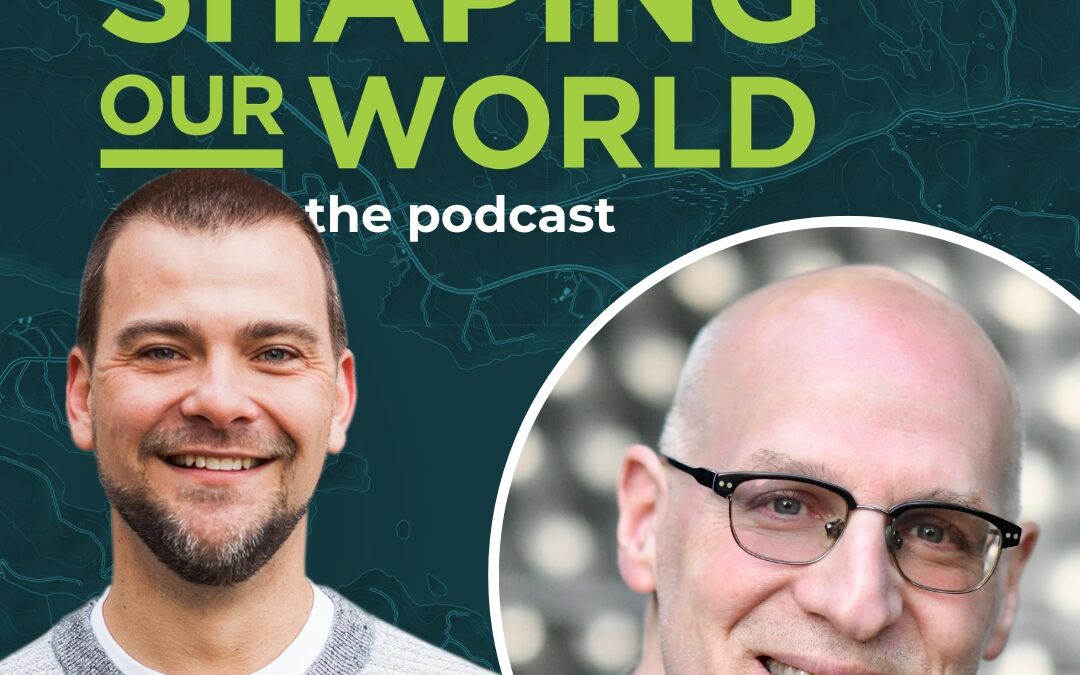
Well, hey everyone, I’m Chris Tompkins and welcome to the Shaping Our World podcast. Every once in a while, a conversation from our archives becomes especially relevant again. This episode was recorded in Season 2 of the podcast back in 2022. But with Canada experiencing one of the toughest summer job markets for young people in years, we thought this would be a great time to bring the conversation back. For many teens, a summer job is more than just earning a paycheque. It’s often where they build confidence, learn responsibility, develop leadership skills, and really discover what they’re capable of. But when those opportunities are harder to find, and the jobs run out, an important question remains: How do we continue helping young people grow? Our guest is Charles Roberts, CEO of Live Different, a Canadian charity that has inspired more than 1.6 million youth through leadership development, service projects, and humanitarian experiences around the world. In this conversation, Charles reminds us that some of the most important lessons young people learn Initiative, resilience, compassion, leadership, and purpose aren’t only found in the workplace. They can also be developed by serving others, stepping outside of our comfort zone, and choosing to make a difference in our communities.
[00:01:45.590] – Speaker 1
Whether your teen landed their summer job or is still searching or is feeling discouraged by today’s job market, We hope this conversation offers encouragement and practical ideas for you to come alongside them as they’re growing. Here’s our conversation with Charles Roberts.
[00:02:14.890] – Speaker 2
Charles, it’s great to have you on the show.
[00:02:17.130] – Speaker 3
Thanks, Chris. It’s great to be here with you.
[00:02:18.960] – Speaker 2
Yeah, thanks for joining us today. Let’s get to know you a little bit better. What shaped your world when you were a teenager?
[00:02:27.600] – Speaker 3
I was fairly fortunate. I view myself as fairly fortunate. My parents are huge positive influencers in my life and very selfless, very gentle, very kind with all of us, myself, my siblings. So that was huge. And I don’t take that for granted because I understand it’s not everybody’s lived experience. So I’m certainly thankful for that. Teachers, there’s a few teachers in school, especially those school trips that you go on. And, you know, they’re very influential in my life and very thankful for them. And probably one of the reasons I’m actually doing this today is some of the teachers who believed in me and encouraged me along the way. Yeah. And obviously, you know, friends. And although I didn’t have a chance to attend Maskoka as a young person myself, camp experiences in the summertime were huge for me as far as influences on my life. And I met my wife at camp when I was 16 years old. You know, I would be amiss not to mention, yeah, just, uh, you know, school trips, summer camp experiences, all, all intertwined together.
[00:03:24.890] – Speaker 2
So yeah, well, I’m probably not surprised knowing what you do that some of those things shaped you as a young person. I find it really interesting, and so many people I talk to— and this could be a whole other separate conversation we could get into— how Well, it actually connects to some of the stuff you do, how what happens in your life as a teen really can shape the whole trajectory of your future so much so that it can even influence your vocational choices and career, which you’ve kind of illustrated and we’ll get into a little bit more. So I find that really interesting. What’s shaping your world today? Give us a little bit about who you are and what’s interesting in your world.
[00:04:03.610] – Speaker 3
Yeah, today, I’m a pretty big believer in kind of this growth mindset and continuous learning stuff. So I love to read. I do a fair bit of driving. I live kind of out in the country. So I’m in the vehicle a lot back and forth and commuting. So listening to books and podcasts has been huge for me. I have a couple of mentors who cheque in with me regularly that I have a great deal of respect for. One gentleman cheques in with me every morning, actually, with a text message. And, you know, it’s— yeah, I certainly appreciate still having people in my life that do that with me. And then, yeah, just some intentional networking with other people that, you know, other parents, with other people in other organisations across Canada, I think has been pretty valuable. I’m a bit of a relational learner and certainly love and enjoy being with people, so I learn very well that way too.
[00:05:01.640] – Speaker 2
Yeah. Given that note, you know, you talked about a growth mindset, learning. Talk a little bit about what you’re doing now that’s shaping the world of teens and young people.
[00:05:12.200] – Speaker 3
Well, as you know, I’m the CEO at Live Different, and so our, our mission is to kind of empower, engage youth in this lifestyle of compassion and service. How can we, how can we get students outside themselves to serve and care for the world around them is what we do through our multiple programmes. And you know, my role is a little bit more strategic in the kind of the business and leadership side of things with the organisation. So I’m not personally hands-on with youth as much as I used to be or certainly enjoy being. But yeah, as an organisation, that’s what we’ve kind of created and evolved into is just, you know, that saying, psychology, you want to help yourself, get outside yourself and help somebody else. And there’s a lot of symptoms that we see in our society today, you know, anxiety, depression, suicide, or, you know, lack of purpose, or, you know, that the root issue is, you know, not dealing with a symptom of the problems, but you get to the root of the issue of, yeah, get outside yourself, serve and care for others, and that true sense of fulfilment and joy is just— it’s going to happen as a result.
[00:06:13.910] – Speaker 3
And so that’s, that’s kind of our area of focus and specialty. And, um, yeah, and more— a little more personal, like, I’ve I’m a father of 6. Oh yeah, my wife has 6 children. And, um, so you—
[00:06:27.750] – Speaker 2
yeah, you’re a parenting expert as well.
[00:06:29.840] – Speaker 3
Well, no, far, pretty far from it. But one of the, one of the kind of convictions or things that we hold dear to us is like spend time one-on-one with our children and, um, you know, making sure that that’s a priority. And, and it takes effort to, to make sure that there’s some consistency in that, but Yeah, just the time with kids is so— it’s just like, you know, mentors for me, you know, that one-on-one time. I still have people in my life. I want to make sure that I’m that influence and I’m that voice in my children’s lives, and it’s best captured, you know, one-on-one with each of them.
[00:07:03.950] – Speaker 2
Well, yeah, based on the work stuff you’re doing and, you know, your family circumstances, I do think there’s a lot of— and I know we sometimes were like, yeah, we’re no expert, but I think spending time, we have a lot to offer. And I think for young people today, this whole idea around service and generosity and compassion is really significant. You know, there’s a lot of research out there on this, the generation of young people right now being more connected to things like this, social enterprise and different compassion projects and kids really connecting. But it’s also shaping the future world. And that’s something that I love about what you do. And I wanted to kind of dive into it a little bit because Charles, we did mention he’s the CEO of Live Different. It’s livedifferent.com. You can find out. An incredible Canadian-based organisation that works with so many young people. And I love just even on your website, I love what you say about seeing change, building hope, embracing a lifestyle of caring about other people. You talk about the choices you make, and I’m literally just pulling this from your website, to pour into at least one social issue and cause that you’re passionate about, seek out opportunities to show kindness.
[00:08:17.520] – Speaker 2
Because our choices impact the global community. As a leader in this organisation, how did you develop a service and generosity mindset? And what difference has that made for your own life? I want to kind of start there so that people can unpack why you give your life to this cause as well.
[00:08:36.620] – Speaker 3
Right. Yeah, good questions to be diving into here, Chris. I think there’s a foundation certainly in some of my faith convictions. There’s no question that there’s a rooted foundation there. It was a personal journey of years ago going on about what’s the difference between happiness and joy, like true joy. There’s this cultural, “I just want to be happy” or search for happiness, which as an emotion might be a little superficial or certainly has a potential to be a little superficial or surface level. Where does true joy come from? Is a whole other conversation, but certainly a personal journey to look at this as true joy and sense of fulfilment in life. And I remember, obviously, all the influencers we talked about earlier combined, you know, it’s not— I don’t see there’s one moment, but there’s several moments from several people in my life have been really positive in this way. But I remember my wife and I, we used to live in a different country helping overseeing a sustainable development and humanitarian plan in this country. We’re coming back to Canada. We had 3 young kids at the time, and we were like, you know, we say this is important to us.
[00:09:51.730] – Speaker 3
How can we live this out? How can we teach these values or model these values with our family? It wasn’t about how can my wife or I go and volunteer one day a week, or— not that those things are terrible— how can we live this lifestyle, like this missional focus lifestyle and model it and involve our children in the process. And, you know, we really struggled with that for a long time coming back to Canada. And we had— for us, we ended up on getting involved in fostering and caring for children. It’s something that our younger— our kids who were in elementary school at the time, as we fostered, you know, babies and toddlers, they can be involved with helping care for these children too. And it was a lifestyle. It was a 24/7 thing. It wasn’t, you know, once a week thing. So, I think, yeah, certainly instilled from some of the influences growing up which I appreciate. My search for, you know, true joy and fulfilment and purpose in life as opposed to the just surface level things that make happy each day. And then, yeah, making sure that that’s a priority. Talk is cheap these days, right?
[00:10:56.020] – Speaker 3
Everyone will say or align with different values but, you know, it really matters how’s that lived out in your life and the proof is in how time is spent. So, that was important for us to figure out how to do that best, not just as an individual but as a family too.
[00:11:09.190] – Speaker 2
Yeah. I love how you talked about just the importance of modelling this for the next generation and even the conversation you and your wife had coming back to Canada and the choices you made. And we know that so much of this, what we’re going to talk about today, compassion and helping other people, is is not like a theoretical thing that you learn. You can and you can find out information, but this has to kind of be caught and seen. And I know you mentioned experiencing some kindness and generosity early in life from your parents, but can you think of other adult examples? How did you decide to go live overseas and work on compassion projects? Like what did you see as a young person that was inspiring for you?
[00:11:58.770] – Speaker 3
You know, it was specifically how we ended up overseas was actually being inspired by youth in Canada. So it was, and I think this is an important mindset as a parent or as a youth worker too, like when you’re working with youth, like listen to them. Listen to what’s their passion about. You mentioned earlier about how youth these days aren’t settled with just existing. They, you know, is what you alluded to and how they want to— this idea of serving and caring is something that’s very important to this generation coming up. And we saw that. We were inspired by that. And we had this desire to connect youth with this idea of serving and caring. So we actually— I got turned down from different mission-based organisations. I wasn’t good enough to go. I wasn’t qualified. So we started our own organisation at the time. Time. Yeah, and we went because we felt like there was an opportunity and a need to do so. Yeah, but even, even in order for us to get there, I remember I was living in Penticton, British Columbia at the time, and, um, the early days of our organisation, we needed a highway coach bus, and we were getting a bus.
[00:13:08.010] – Speaker 3
We had 9 groups lined up from the Okanagan area to bring them down to Mexico. We’re going to do some house building trips and things like that, and it was, it was a struggle, you know. You get You get the ideas, people are passionate, but how do you fund this thing? Like, this is like, how do you actually make it possible is another thing. And I was, I don’t know, I was 24 or 25 at the time. And I remember sitting in the living room of our house and in drives this highway coach into our driveway. And this guy jumps out and he’s like, here, I want to donate this to the work that you guys are doing.
[00:13:40.880] – Speaker 2
Oh wow.
[00:13:41.420] – Speaker 3
And I remember I’m just totally, you know, shocked and overwhelmed, and I’m like, yeah, like, that was what— that was certainly one of those pivotal moments of generosity and kindness, like, hey, we believe in this, we’re here to help you, we’re going to support you, and this is the way we can do it. But yeah, just sitting in my living room, I see this highway coach pull into the driveway, I’m like, what the heck’s going on? Yeah, and he’s like, this is for you, this is for these youth, this is for the work that’s being done. And yes, that was a pretty big moment.
[00:14:05.890] – Speaker 2
Well, that’s a powerful illustration of the idea that we all kind of experience that service, generosity, compassion is a catalyst for more of it. Like, you think of the drive-through, right, where you pay for the person’s coffee behind you.
[00:14:19.310] – Speaker 3
Exactly.
[00:14:19.800] – Speaker 2
And then you get up there, you get a coffee, and you’re like, oh, I’ll pay for the person behind me too. Because there’s something about the experience of when you receive that, you’re inspired to do the same. I can remember when I was a young guy, my best friend’s dad was a pastor, and, uh, he would go spend some time with an elderly shut-in alcoholic who lived on his own, a hoarder, and he would drag us along. And I say drag because that’s what it was like on a Saturday morning, and we had to cut the grass and pick up all the dog poo in the backyard. And I remember as a kid, I can distinctly remember that experience and absolutely hating it, but we went and we did it, and we did it anyways. And over time I realised how going every Saturday for a long time started to shape me in seeing this gentleman differently and seeing the experience that I was doing a lot differently. And it’s funny because I still remember that to this day. Yeah, I remember early going, why is Uncle Keith spending all this time with this guy?
[00:15:21.630] – Speaker 2
You know, it just— it— I didn’t understand it as an 8-year-old boy or 9-year-old boy, but that experience of, of seeing it, experiencing it from others.
[00:15:32.740] – Speaker 3
Yeah, so good.
[00:15:33.750] – Speaker 2
It has stuck with me, and I want to kind of say this because we’re going to dive in to talk about kids and young people today, but as parents, as adults, as youth leaders, as people who care about young people, I don’t want to get lost in that everything we’re talking about why this is good for young people, we need to remind ourselves that this attitude of service and generosity and compassion and being involved in making the world a better place we actually have to model it first.
[00:15:58.410] – Speaker 3
Yeah, so important, so important.
[00:16:00.840] – Speaker 2
So with Live Different, you work with youth, you do a tonne of different things including youth empowerment and developing leadership skills. How does fostering skills like this make a difference in the lives of young people?
[00:16:14.470] – Speaker 3
It, like, the confidence, core identity is probably the biggest thing. Like, it’s How does one, how does a youth identify themselves as I can do this or I am worthy, I can make a difference? You know, like I said, there’s so many symptoms of, you know, struggles with youth these days when it comes to anxiety, depression, you know, suicide, bullying. There’s so many issues and hardships they face. But when you get to the root core issue of those, some of the real basic things that we’ve forgotten to have conversation about these days of, you know, self-esteem and confidence, and, you know, I am valuable. And, you know, your core identity and who you are. And when those things are settled and secure, then, man, students can do anything. Like, these youth can do anything. And then I think that’s where we try to hit home and then kind of be that launching point for them for the rest of their lives to go and, you know, change the world. Yeah.
[00:17:16.460] – Speaker 2
And so many of these skills that young people develop as they’re empowered and seen and shaped are, like you said, are kind of foundational to the confidence they have. I think what you guys do and what we’re trying to talk about today is help young people see what’s possible, not just in the world, but even in themselves, finding some hope for things to look a little differently and seeing the role they can play in it. Helping them develop some of these leadership skills and how we empower them to make the change themselves, I think, is really important. I love what you do around that. And so you’ve been doing this for a long time. Tell us a storey or two of how you’ve seen empowering young people and coming alongside the young people in what you’re facilitating. How have you seen it really impact a young person, change their life, really make a difference?
[00:18:14.340] – Speaker 3
Man, where do we even start, Chris? There’s so many storeys from students in schools that have come up and say, you know what, here’s my razor blade. I don’t need this anymore. You know, that they were using for self-harm, right? And hand those things over or an email the next day say, hey, I had a suicide plan. I had a gun at home. I was going to kill myself. And as a result of the interaction today, I’m choosing not to do that. And thank you for saving my life. There’s so many. Those light bulb moments from career paths that are chosen as a result from interaction with the programmes and to my own son. And again, not to make this about me and my family, but I remember a few years ago, we invested some money in a, call it a vacation, more than we normally would in a holiday. And we rented a motorhome, we went down to Mexico to the Difference location down there. We joined our BUILD programme. With our kids. Our youngest was 2 at the time and my oldest was 16. And for Christmas, we built a house for another family, gave it to them for Christmas and worked alongside them as opposed to doing a traditional Christmas here at home with the gifts and everything focused on us.
[00:19:24.300] – Speaker 3
So, we were driving back from this trip. It was like a 3-day drive in this old motorhome. We’re driving back. My 16-year-old is sitting up front with me. And And he’s pretty quiet. He’s a pretty quiet guy. And he’s like, Dad, I just want to say thanks. He said, I get it now. Like, I get it. I get why you wanted us to do this trip and why this is important. And to me at this age, and thank you. And I’m like, oh, yeah, this is awesome. Yeah. You know, and I think those moments, you know, not just for my own kids, but all of our, all of the students that come through different programmes. I get it. Not only is this important to the world, this is important to people who are suffering, but it’s important for me to know that I can make change. I am called to do this and I can do it. So yeah, I think there’s thousands and thousands of storeys, but certainly one that stands out is very personal with my own boy.
[00:20:23.330] – Speaker 2
Yeah, that’s amazing. And maybe, you know, you use that example of building a home. And you do a lot of your work is taking kids to different parts of the world where they literally over the course of the week provide a home for a family that is in need of that. Can you just give us a little technical on what young people do and how they get involved and what that means to them using your specific work?
[00:20:47.530] – Speaker 3
Yeah, sure. So the two main programmes or engagement opportunities that we have is one here in Canada is our our Circles material, our Circles programme. And they go through 6 sessions of, you know, talk about themes like altruism, generosity, and empathy, and, you know, kindness and values. And so, but part of this, these 6 sessions of this programme is the group of teens that are involved, they identify and facilitate a compassion project as part of the programme. And so, they get outside themselves and serving and caring in their own community. And with that, So kind of complementary to that, we have this international programme called Builds where youth will come. We’ll take 500 to 700 volunteers a year internationally to 4 different countries in Mexico, Dominican, Haiti, and Thailand. We build houses and schools. So in the 10-day time that they’re on the ground with us in these different countries, you know, they’ll build a house from start to finish alongside a family in a community there and get to know and make friends with the community and this family and Before this group of students showed up, you know, these families were living, you know, on a dirt floor with, you know, cardboard walls, and now they have a concrete floor and a safe.
[00:21:59.470] – Speaker 3
They can lock the door. The roof doesn’t leak anymore, and it’s a big, you know, big house in comparison to what they were living in before, and it’s safe for them. So it’s a very tangible, you know, impact that they’re making with this family, changing the entire legacy of this family in this community they’re working in forever. And so all the kind of core elements of identity development really are on steroids on these trips, right? And so yeah, that’s kind of the context.
[00:22:27.210] – Speaker 2
Yeah. And young people have a desire to be involved. And did you see kids kind of— how does an experience like that, like, do they get nervous at the beginning, not know what to do? And then are they just like diving in? Because I think that’s one of the things is like, We know young people have a heart for stuff like this, but what does it look like for them to really get involved?
[00:22:50.090] – Speaker 3
Yeah, I think, I think that heart of compassion is, uh, is a pretty big driver, right? So yeah, of course people are nervous. We, we take adults on these trips too, and they’re, and they’re nervous as well. It’s a cross-cultural interaction and fairly vulnerable people, and everyone’s out of their comfort zone. There’s different languages, you know. But, um, we’ve, we’ve had almost 7,000 volunteers on the ground in these in these different countries to date. And our staff, they do a pretty good job of helping break down some of those barriers and, you know, the power imbalances or the perceived power imbalances that are there. And, you know, Robert Greenleaf, kind of our philosophy and our development model is taken from Robert Greenleaf’s work on servant leadership. And, you know, the more able and the less able serving each other is the foundation on which a good society is built. And so it’s like when you come together and you serve and you learn together, like this is where the society is built and this is where the strength comes from. And it’s not you’re in the power seat and you’re in the receiving seat and you’re, you’re the giver, you’re the receiver.
[00:23:52.030] – Speaker 3
In the same way we approach our youth work, it’s not like we have all the answers and you’re our projects. No, no, let’s journey together. Let’s serve and care for each other and learn from each other. I think that’s the foundation. So when you break down some of those barriers, yeah, things, you know, people are people and connect relationally and human to human, and it’s beautiful.
[00:24:15.620] – Speaker 2
Before we get back to the conversation, I want to let you know about a great opportunity for families.
[00:24:21.650] – Speaker 1
Muskoka Woods is giving away one free week of camp for a child aged 6 to 16 in the summer of 2027. That’s a camp experience valued at $2,250, including all accommodations, meals, activities, new friendships, and more fun than you can imagine. At Muskoka Woods, young people grow in confidence, try new challenges, and make memories that last long after the summer ends. And entering is easy. Just visit muskokawoods.ca muskokawoods.com/winaweek. You’ll need to fill out a form and confirm your email. No purchase is necessary, and the winner will be drawn on March 3rd, 2027. That’s muskokawoods.com/winaweek. Enter today.
[00:25:22.500] – Speaker 2
I know this is really kind of a broad question, but I’m wondering if we can kind of zero in. Why do you think it’s really important to get kids involved in helping others? You know, it isn’t just, well, they’re passionate, let’s give them something to do. How is it transformational for them and the world around them? Why is it really important?
[00:25:41.430] – Speaker 3
I think it’s like any, any skill, Chris, or any, any opportunity, they need to be developed, right? Those muscles need to be opportunity to exercise and to develop those. So the more opportunity that they do it, the better they get at it. And then same for all of us, the more we do it, the better we get at it, and the more that can be done and inspire others to come along on the journey too. So yeah, our international trips, we tell people all the time that you’re not going to save the world, you’re not going to change, you know, the answer to international aid, you know, and the crisis of imbalance of wealth in the world is not going to be solved in these trips. We do think that everyone should experience it once, you know, these trips once. And then if you do come back, you know, bring a friend, bring someone else. You know, there’s things on these international trips that you can learn only by being and seeing and smelling and being there in those moments. You’re never going to get them off a documentary or out of a textbook or, yeah, or hearing somebody else.
[00:26:38.900] – Speaker 3
You just have to go and experience and do yourself to truly capture and understand.
[00:26:45.320] – Speaker 2
Yeah. Well, and it goes without saying, because we’ve talked about it, a world in need needs people to get involved. And like you said, as young people learn it at an early stage in their life, the muscle memory develops, and then it just becomes a more natural part of, hopefully, their life and, and what they choose to do with it and how they interact with their neighbours and the communities around them, even if they don’t directly do work like you do, that so much of what they experience as a young person can shape the way they see the world. And I love what you said earlier, even like it was like seeing young people that actually inspired you as well.
[00:27:25.050] – Speaker 3
And the world, like you said, the world needs them. The world needs us. The world needs all of us. There’s an imbalance of wealth, you know, aren’t the normal life that we experience here in Canada is not normal to most of the world, right? And, um, yeah, the world needs us to— yes, yes, we have a responsibility to our to our local communities in our own country, no question. But, you know, just the fact that we, you know, have the privilege or opportunity or blessing or whatever, you know, whatever you want to call it, just because we do live here and have this opportunity, we also have a responsibility to the rest of the world too, because there’s an imbalance of power and voices and wealth and opportunity that’s just— it’s not fair, it’s not right. And yeah, the world has the resources to fix this problem, right? We just need to do it, right?
[00:28:07.660] – Speaker 2
We just need to do it. Exactly. So I’m sure there are a lot of parents listening and are like, “Yeah, this is great, but man, my kid’s a teenager. They just seem to be so into themselves and what they are doing.” What would you say is encouragement advice for adults who really want to come alongside their young people and encourage them to have an other perspective and to get involved in helping other people?
[00:28:37.580] – Speaker 3
That’s funny. We work with parents, lots of parents, right? And as a parent myself too, it’s a struggle sometimes. There’s no question. We’ve mentioned this a few times already, Chris, but leading by example is something that’s probably underrated. And as a parent, it’s something that is hard to admit sometimes that, you know, we need to be leading by example. Are we? Is a good question to ask. So, and maybe we’re doing stuff, or maybe we’re involved in things that maybe our kids don’t even know about, right? So it’s, are we sharing those things with our children so they can see us leading by example? Yeah, is it important? I also think, yeah, like I kind of alluded to earlier, just being— going out of your way to spend time make time, be intentional with your children. And, you know, I have a fairly busy schedule and travel a lot for work, and it takes time and effort. And I, you know, make sacrifices to be with my kids, you know, one-on-one, show interest in them, ask them lots of questions, be sincere, you know. And you think that, you know, with your own children, you shouldn’t have to remind yourself this, but, you know, it’s— as kids get older and more independent, and in the teenage years, they’re out and about, it takes a lot of intentionality to make this happen sometimes.
[00:30:05.210] – Speaker 3
And yeah, lead by example. And the storey you shared earlier, I love it. I’m going to, if you don’t mind, I might use that sometimes. Yeah, yeah. You’re going out, you’re cutting the grass and picking up dog poop. And you know, the Thai might not understand, but you know, in hindsight, see the value in that too. So creating those opportunities for, you know, as a family or for your kids to learn those at a young age. And one of the tough questions we’re asking ourselves right now tough questions, but one of the good questions we’re asking ourselves right now as an organization— we primarily focus on, you know, kind of grade 6 to 12 students as an organisation. And like, how can we, you know, are there resources that we can put out for elementary age students that would be, you know, try to get this conversation started even a little bit earlier?
[00:30:49.270] – Speaker 2
Yeah, and that’s great. One of the things I would just add is, you know, Sometimes you just got to take action. I know one of the things in thinking through what opportunities, what can I do, what are the local things around me that I could be involved in and I could bring my daughter with me? And I think sometimes we create all these barriers because we don’t know and what’s it going to be like and is it safe? And quite candidly, there can be a hesitancy because we’re not sure what that experience is like. And those of us who have crossed that threshold and got involved, you realise like everything I thought it would be or I was worried about is not really here. And sometimes you just got to do something. You just got to move it from a theoretical, this would be a great idea to find and actually find stuff to get involved in and just go do it once. Find a local food bank and volunteer at Christmas when it’s really busy or something. Move from the barrier of unknown to a bit more familiarity. And I think what we all who have gotten involved in different things start to realise is it’s actually kind of easier than we think it is sometimes from our own homes.
[00:32:09.470] – Speaker 2
So kind of in that note, what would be some resources and opportunities that you would suggest to parents who are sitting here going, okay, Charles, Chris, this is great, but What can I do to get my kids more involved in the world around them?
[00:32:23.840] – Speaker 3
Connect with other parents. I don’t think we do this enough as parents is have conversation with other parents about our parenting style, about our children, and ideas of how to, you know, better them. I don’t know if it’s like a pride thing or maybe in some cases, it’s a shame thing or whatever the case may be. There’s just often not this openness to have those conversations with other parents. And, you know, we all tend to think that the experience I’m going through in my parenting situation is unique to me. Well, it is certainly unique to you or to me, to us, but there’s more commonalities than we might think. Totally, totally. And that would be one thing. I know, like, when it comes to experiences, and you kind of touched on this a moment ago, when it comes to experiences for your kids allow them to see the world. Don’t helicopter your kids, right? Let them go. Encourage them and push them along. And it’s easy for parents to want to provide opportunities for the kids to engage with the world if them as a parent or if I as a parent had that same experience as a child.
[00:33:35.700] – Speaker 2
Yeah.
[00:33:36.260] – Speaker 3
But if there’s new experiences or new opportunities coming along, it’s like, oh, I’m not so sure about this, right? So yeah, be open, open-minded. And one example was my son, and this is totally unrelated to serving and caring for, and just get outside your comfort zone and go and travel and see the world, make friends. He’s huge into gaming and he wanted to go to this tournament in Toronto and fly there and it’s sponsored event, all this stuff. And I’m not a gamer, I don’t play games. I’m more of an outdoorsy person. But to embrace my son where he was at, what was important to him, his friend circle, and I have no idea what to expect. You know, are they going to— you know, but yeah, to encourage them and get them out to engage with the world and the people around them is sometimes harder to do if we hadn’t had those same experiences as a child. So be bold and courageous that way.
[00:34:28.430] – Speaker 2
Well, and I think that, like you mentioned, all around us in the community, like one of the advantages of living in a digital age is our access to information, and so a few Google searches in our local community will highlight some organisations that are doing really good things for the people in our own neighbourhoods that we can pick up the phone and call and say, do you ever need help? Like, can I bring my teenager along with us to do something? I think there’s some opportunities. And I would say to our listeners, and you know, Live Different does some incredible work all across Canada. And, you know, from the programming you talked about, like circles and the assembly stuff that you do from presentation standpoints to right into the build projects that you do. And Canadian, North American, like any parents listening, they can apply for their kids to go. How would that work? Just even give us a quick snapshot of that.
[00:35:22.910] – Speaker 3
Yeah, just livedifferent.com. And for the international stuff, we have what we call public groups and private groups. So the public groups are ones that students from all across Canada sign up for and, you know, specific dates in the summer or Christmas, kind of New Year’s holiday time. Spring break to be able to go. And then we have private groups, which is like for an individual school or youth group or, you know, business, whatever. We do a private group and facilitate just for their group of people, 12 or more. So a couple other things too. It doesn’t have to be with an organisation, right? It doesn’t have to be with— there’s things and opportunities for kids to get plugged in, you know, just engaging with a neighbour who might not have any family or might be lonely, you know, invite them over for dinner and engage them in the conversation around your dinner table. And help them to make dinner for these, you know, and take them and deliver it. There’s things that doesn’t have to be, you know, as formalised as some of our conversations have been too. And I’ll just end with this one storey here, Chris.
[00:36:20.960] – Speaker 3
I was in Toronto this week and I met a lady from— she’s up near Owen Sound or Goderich area somewhere there in Ontario. She was a vice principal at a school and she was very frustrated in not being able to find resources for the kids. And some of the students that she’s working with were kind of extreme kind of mental health, suicidal ideation, and, you know, really, really struggling of my life has no value and I have no purpose and it’s not worth living. And so, you know, if someone’s listening and your students are like that, her experience as a vice principal was very frustrating in that couldn’t find good resources, you know, that ended up in emergency room, you know, time and time again. And even there, really nothing, you know, send the kids home with their parents after. And it’s just There’s really nothing. So if you’re, if you’re, you know, if you’re listening, you’re a parent and you’re really stuck and you don’t know, please give us, give us a call anytime or charles@livedifferent.com. Just email me. We can help point you in the right direction. We can be a listening ear.
[00:37:19.390] – Speaker 3
We can, because there’s sometimes there’s, you know, as parents, it’s, it’s tough. You just don’t know where to go and who to turn to. And if that’s your situation today, then certainly don’t be shy to send me a note. I’d love to talk with you.
[00:37:33.150] – Speaker 2
Well, Charles, I think that’s a great way to kind of land the plane on our conversation and would encourage parents to do that, to reach out to you. I’ve had conversations recently with parents that are in this similar type thing, like sent home from the hospital with no resources and what do I do? And so I think our conversation, I hope it’s inspired us listening today to continue to seek opportunities for our kids to make a difference in the world and to learn from them in what passionate about, from intentionality like you talked about, to listening, to getting involved. I know our hearts, and I think so many of the people who are listening today, is to come alongside young people and help shape them and just see how them, as they get involved in the world around them, really help shape the world. And I really appreciate your heart for young people, Charles, and the work that you do across Canada So thank you so much for what you do and go to livedifferent.com. Again, quick, what’s the ideal age for someone to go on a trip with you guys to build?
[00:38:38.340] – Speaker 3
We’ve had somebody have their first birthday on one of these trips and somebody had their 90th birthday. So.
[00:38:44.300] – Speaker 2
Oh, wow.
[00:38:45.010] – Speaker 3
All right. Yeah, our target audience is kind of for the, you know, 14 to 24-year-old.
[00:38:50.710] – Speaker 2
Cool.
[00:38:51.110] – Speaker 3
But it’s a great experience for the entire family.
[00:38:53.770] – Speaker 2
Well, great parents, you can cheque that out or teachers. Can cheque out the resources and information that’s on lifedifferent.com. But again, thanks for being with us. Thanks for doing what you do. And I know I’m thinking about the world around me a little different due to our conversation today. So thanks for that.
[00:39:10.310] – Speaker 3
Thanks so much, Chris.