[00:00:12.960] – Speaker 1
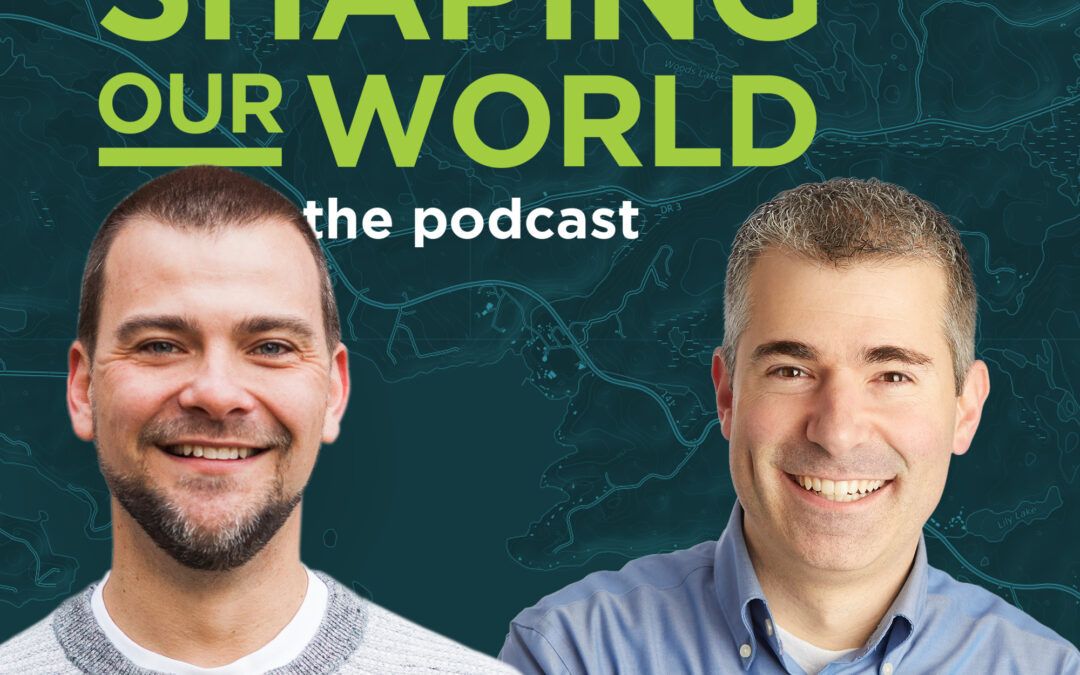
Well, hey everyone, I’m Chris Tompkins and welcome to the Shaping Our World Podcast. My goal is to invite you into a conversation that will leave you more confident in understanding and inspiring the young people in your life. Each episode we talk with leading thinkers and practitioners and offer some resources to help you dive deeper into the world of our youth today. Today we have Eric Walters on the show. Eric is one of Canada’s most celebrated children’s and young adult authors with more than 130 books and 100 literary awards, including the Governor General’s Award for Literature and the Order of Canada. His writing career began in an unexpected way, not because he had a dream of being an author, but because as a grade 5 teacher, he wanted to inspire reluctant readers and writers within his own classroom. His first novel, Stand Your Ground, was written specifically for his students. Drawing on his background as a teacher and social worker, his books tackle real issues young people face, from homelessness and war to climate change, poverty, and social justice. Always grounded in empathy and hope. Eric believes authentic stories come from firsthand experience and conducts immersive research, including climbing Mount Kilimanjaro, working with tigers, and walking across Kenya.
[00:01:40.690] – Speaker 1
Beyond his writing, Eric has spent decades speaking directly to students around the world and has co-founded Creation of Hope, a charity supporting orphans and vulnerable children in Kenya. I can’t wait for you to dive into this conversation with Eric Walters today. I think you’re going to gain a lot from this and be inspired to get your kids and young people in your life to be storytellers and readers. So let’s dive into our conversation with Eric today. Eric, it’s really great to have you.
[00:02:14.400] – Speaker 2
It’s fantastic to be here. Thank you for the invitation.
[00:02:16.710] – Speaker 1
Yeah, looking forward to this conversation. Our listeners know it’s called Shaping Our World, and we want to know what shaped your world and what is still shaping your world. So maybe take us through that. What were some of the biggest influences in your life that shaped you growing up?
[00:02:31.500] – Speaker 2
Well, there’s no question that one of the biggest influences— I was in grade 5. I’d just come from grade 3. I skipped grade 4. And in grade 5, my grade 5 teacher said to me one day, you could be a writer when you grew up, which I thought was ridiculous since I was obviously going to be an NBA player. But it turned out she was right. That teacher stayed in my life on and off. And I gave the eulogy at her funeral when she was 99— she died when she was 99 years of age.
[00:03:00.710] – Speaker 1
Oh, wow.
[00:03:01.420] – Speaker 2
And I just say to people, especially teachers, but also parents, you know, your words have impact, but you have no idea what impact they can have for positive or negative. Words are power. Words are fuel. Words are motivation. They’re inspiration. Be careful what you say. Be kind with what you say.
[00:03:20.380] – Speaker 1
Right. I have shared on this show before, I can remember, you know, my grade 8 phys ed teacher, you know, kind of speaking into me and calling out leadership, which is the first time I’d ever heard that, you know, someone name that. And I can still remember where I was sitting when I heard that and how that’s kind of shaped me. So you’re right, older people influencing young people, the words that we say. What’s shaping your world today? Like, help us get to know Eric kind of behind the scenes. What do you do for fun? Tell us about your leisure free time. Help us get to know you a bit better.
[00:03:54.460] – Speaker 2
I actually have leisure free time now, which is such a rarity. I spend my summers at the cottage up here in Muskoka. And what it means is I have family, grandkids, kids, their spouses, friends all join us, my wife and I. And we’re in a continual visitation stage. We have people here all the time. I love being up here. I’m on my— I’m out on the lake every day swimming. I kayak every day. I’m on my Peloton bike every day, just enjoying life. And of course, writing. I go— I don’t go any day without writing something.
[00:04:29.000] – Speaker 1
Well, tell us a little bit about that, because, you know, we’ve gone through your bio, but maybe even in your own words, tell us a little bit about what you’ve done professionally, particularly in how you’re shaping the world of young people today?
[00:04:42.390] – Speaker 2
That’s a hard and long one. I’ve had multiple careers, often at the same time. I originally came out of school with a Bachelor of— a BSW, Bachelor of Social Work. I was a social worker with children’s aid, with mental health centres, doing individual therapy, working at a hospital. Got my master’s from there, but I always wanted to be a teacher. So while I was working in the emergency department at Credit Valley evenings, I went back during the day and got my teaching degree. So I was teaching everything from K to 8 while I worked at the hospital 3 shifts a week, while I started writing novels, while I was coaching my kids in rep soccer and rep basketball. My days were pretty full with a whole lot of things. In later life, I guess 20 years ago, My son and I went to Kenya. My brother-in-law had died of colon cancer, and my son, who was then 17, raised $20,000 to build a school in his name. And he and I went there to build a school, but we also had someone from Kenya living with us for about a year, and she said, when you’re in Kenya, could you visit my family?
[00:05:46.110] – Speaker 2
And we went up in the mountains of Kenya and discovered a community with 500 orphans sleeping on the streets, eating from garbage pits. And between a Kenyan family, Mwani’s family, and my wife and I, we created an organisation that ended up— started with 1 orphan, then 5, then 6, and ended up with 300 orphans being provided for in the community.
[00:06:06.580] – Speaker 1
Amazing. We’re going to dive into some of the things you’ve done and your perspectives. And we kind of came across you because of your books. You’re a prolific author writing a lot of children and teen fiction. But I want to kind of get into the origin story, as you said that, even around your books and your writing, because what I love about it is you kind of, even though you were told you were going to be a writer, that wasn’t early path.
[00:06:34.310] – Speaker 2
Yeah. What happened was I always had classes that were like 28 kids, of which 24 were boys. And my class was generally good at 3 things: gym, recess, and lunch. They didn’t like to read. They didn’t like to write. And I wrote my first novel set in the school I was teaching, Vista Heights. It had a soccer theme because it was soccer that I played with the kids. The water tower beside the school, kids used to go there and have fistfights. That was incorporated. And with the permission of the kids, 6 of them became characters in my book. So I wrote this book basically for fun called Stand Your Ground. At the end of the year, the boys came up to me and said, Mr. Walters, your book is better than most of the garbage we’re forced to read. Why don’t you try and have it published? And keep in mind, better than most of the garbage is a real compliment from this group.
[00:07:22.290] – Speaker 1
Yeah.
[00:07:22.750] – Speaker 2
Yeah. So I wrote a book, sent it off to 6 publishers. 5 rejected me. 1 accepted me. I thought, okay, I’ve written a book. That’s it. I’m a teacher. Next year, the class came in and said, what are you going to write about this year, Mr. Walters? Apparently, I was a writer as well as a teacher, and I just started writing based on curriculum. So if I was teaching grade 7 and the War of 1812 was on there, I’d write a book about the War of 1812. If it was grade 5 and inventions was on the curriculum, I’d write a book on inventions and I’d write it in front of the class, reading chapter by chapter, getting their feedback, changing stories, being willing to risk my stories to help them to read their stories and write their stories.
[00:07:59.960] – Speaker 1
Yeah. And I guess the connection there was you were seeing kind of education come to life in a different way What’s the process for you to take like a curriculum idea? You know, like Diamond in the Rough is from a health unit and you mentioned a few others. Talk us through even maybe a little further about the power of stories for young people in making some of the learning come to life.
[00:08:22.570] – Speaker 2
Stories are power. If you think about parables, you think about stories, think about the Bible, nothing but a series of stories. Storytelling has power. And it was bizarre to me that when I wrote the book Run, which was the first book that Fox has ever let anyone write about Terry. I had the father at one point pull me aside and said, see this line that your character says to my son and this line they says back? I said, yeah. He said, I said that line to my son. He said the same line back. I never told anyone. How did you know that? I had Betty Fox say to me, I understand my son better after reading your story about him. Darryl Fox said, these are lines my brother didn’t say, but I knew he would have said. So you immerse yourself in the story, you get into the character, and I’m very much a method writer. So for that book, Run, I read everything I could find. I interviewed everyone. I ran at the track where Terry ran. I ran a marathon in every province that Terry ran a marathon, the same route, the same way.
[00:09:25.050] – Speaker 2
Those experiential things drive stories. And there’s little intangibles you’ll learn about. The deer fly that won’t leave you alone, the cars that would turn around and offer you a ride because everyone in the Maritimes is friendly as all get out. And Terry was continually frustrated by people offering him rides. He wanted to be left alone. And those are the things you get. You learn about the character not just in your head or your stomach, but you learn about it in your kneecaps. You learn about that buzzing fly. I love that sort of writing.
[00:09:56.270] – Speaker 1
And I wonder, as I’m hearing you, you know, you talk about the boys that you were teaching and, you know, how they weren’t— they were reluctant leaders— readers. They weren’t really engaging with the stories. And as I’m listening to you, I’m thinking, okay, you took something that was really relevant to them, their own school and their own experience, and they kind of were able to see themselves in the stories.
[00:10:20.500] – Speaker 2
There’s also something very Freudian there. You said reluctant leaders. And they were reluctant leaders as well as reluctant readers.
[00:10:27.290] – Speaker 1
Hmm.
[00:10:27.930] – Speaker 2
These are kids who didn’t know what they were capable of doing. And the job of the teachers is— in social work, you talk about differential use of self. You provide each client what they need to make that work. And it’s the same as a teacher. You look at each child individually. You treat them equally but differently. How do you bring out the best in these kids? How do you make them realise that they have these incredible capabilities? Because realistically, this generation is more connected, more capable in many ways, and knows so much more than we did at that time. It’s part of the complication of parenting right now.
[00:11:03.270] – Speaker 1
And I wonder, as you think about parents, like, if we have young people in our lives that maybe aren’t reading, they’re not, you know, they’re not engaged in the learning. Do you have any, like, tips or insight for parents to kind of help them find the stories that they will gravitate to?
[00:11:20.830] – Speaker 2
Society is moving against parents connecting their kids to literacy. We’re getting into fragmented bites, 15-second sound clips, kids not being able to flow of ideas. It’s important to put them in a literacy environment, to have stories that they like, but there’s ways to also do it to make it a family activity. I used to say to my parents, end of dinner, you say to your son or daughter, you You have 2 choices now. You can clean up all the dishes, do the dishes and clean up while I read a story out loud to you, or you can read out loud to us while we clean the kitchen. Your choice. Parents would tell me that the story would go on well after the cleaning, that people would just get into it, and they shared the story, they shared the ideas. Bedtime reading. It doesn’t matter how old your kid is, they should be reading, but you should be lying down beside them in bed and Those
[00:12:14.060] – Speaker 1
are really practical, helpful tips. What is it that stories teach us that, like, lessons or lectures or instructions can’t? What’s the power behind that for young people as they’re developing?
[00:12:28.630] – Speaker 2
They seem so real, and bad fiction lectures people. It’s pedantic, it’s preachy. You’ve got to get your message across in a way that’s genuine and legitimate. That you care about the characters, that you see yourself in them. One of the reasons I write first person almost exclusively is I want the young person to feel that they’re in the footsteps of the character. You can learn some incredible life lessons in a relatively safe way through literature. And certainly I’ve tried to be sensitive, but I’ve dealt with sexual assault, self-mutilation, genocide, infanticide, some pretty tough topics, but I’ve done it in a way that’s not exploitive, and I try and keep things off camera. I write them in a way that you know what’s happening, but I don’t have to be— you watch a Tarantino movie and there’s a whole lot of gore just because he likes gore. It doesn’t need to be in there. It’s just something that he does. I don’t need to put that there. I also, I’ve never used a swear word in my stories. I have 675,000 words in the English language. I can avoid 11 words. And the argument is, well, they hear them in the playground.
[00:13:42.090] – Speaker 2
Well, that’s different. It’s not hearing it from me, hearing it from their teacher, hearing it from their minister. There’s a time and a place. And I’ve been able to express things in a way that’s, I hope, very legitimate, but without being explicit or exploitive.
[00:13:59.020] – Speaker 1
Yeah, because it’s a real tension on how to handle very real and significant topics and still offering some hope and perspective. And that’s a thin line. Like, that’s a delicate balance. I wonder, as you’re approaching these topics, how do you tell stories that are about war and poverty and some of the topics you mentioned and still find a way to give kids hope, to have them enter the story And then also, you know, gain a different perspective and unique experience from what they’re engaging with.
[00:14:36.710] – Speaker 2
You use a word that I love— hope. I like ending with hope. I’ve just rewritten Romeo and Juliet. It’s a story called Julia and Romano. And it happened because I was in Campbell River, B.C., and a kid said, what would you write about here? And I said, well, half your community are lumberjacks and the other half are tree huggers. You must get along beautifully. And the story evolved. But in this story, it ends with Julia and Romano— his name is Cody Romano— overcoming the difficulties, bringing their families together, and working, working things out. There’s enough tragedy in life. Do I need to instil that into everything that I do? I want kids to come out thinking that regardless of the situation, there is hope. There is an ability to overcome. That while life is neither fair nor good sometimes, you have the ability to impact on your life and your future. And I guess my book, The King of Jam Sandwiches, won the Governor General’s as well as a lot of Children’s Choice Awards. And it’s roughly based on my life. I grew up in inner-city Toronto in a home with a mother, father, grandfather, and older sister.
[00:15:47.450] – Speaker 2
My mother died when I was 4, my grandfather when I was 5, my grandmother when I was 6. My father had severe psychiatric illness. I believe that you can overcome. But the starting point is you realise it’s not fair. Life really isn’t fair. But if you’re prepared to work hard enough and find the people and find faith in yourself, you can succeed. And I want kids to hear that you can succeed, that you do matter, that your being there has some significance.
[00:16:17.030] – Speaker 1
I think that definitely applies, you know, for parents, even if it’s not about writing. I think sometimes we try to avoid some of these difficult topics because we’re not sure how to speak about them, and we don’t even know how to bring that message of hope into it. And I just love how your response there to help us think through the same thing you were talking about with your stories, I think we can do with life too, to be able to— Not shy away from some of the things that are happening around us, but enter into them with hope as being the final word at the end of it, which is sometimes hard to find and difficult to navigate. But I think that’s a really great perspective for all of us to take when it comes to coming alongside young people in our lives and helping them navigate the things that they’re facing every day.
[00:17:07.600] – Speaker 2
I’ve been bumping into mattering theory everywhere. And mattering theory is just letting people know that they matter, that they count. And there’s so many basic things to mattering theory about just saying, you’re important. I care for you. Putting down the phone and spending time with face-to-face time, not FaceTime, to take the time to ask questions, to let them know that they’re important, to give them focus and task. The human animal needs to have task. We feel good about doing things, whether it’s a 4-year-old putting the dishes in the dishwasher or a 75-year-old doing volunteer work. We need to have focus. We need to know that what we do matters in life, that we matter.
[00:17:46.160] – Speaker 1
I wonder, you kind of mentioned your upbringing and you also mentioned kind of earlier in our conversation just your work as a social worker and working in the hospital. That was kind of early days in your experiences. What were you seeing and experiencing that kind of fed into your work as a teacher and an author working with young people? What did you learn about young people in that kind of crisis situation that shaped how you approached your teaching and your writing down the road?
[00:18:15.760] – Speaker 2
Crises seem as a bad thing. Crisis is opportunity. The idea being that it allows change to happen at that moment. People almost need to be put into chaos before they can be brought into calm. That idea that you can comfort people, but sometimes situations that are uncomfortable are allow the power to make changes. I worked for Children’s Aid in Simcoe County and down in Peel. I worked at a treatment centre. I’m a trained family therapist. I have a master’s in social work. I spent 18 years, 3 shifts a week, working in Credit Valley as a crisis social worker. It also gives you perspective on life. You see people at their worst, but you see them at their best. You see what the human spirit is capable of overcoming Which comes down to that whole idea of resiliency theory. Why do some people flourish and why do some people crumble? And how do you build resiliency? There used to be a theory that it was almost like eye colour. This is the colour of your eyes. This is how much resiliency you have. But resiliency can be built in. It can be encouraged. And mattering theory actually helps build in resiliency.
[00:19:20.960] – Speaker 1
Yeah, I think that’s really good. And I wonder if, you know, if we kind of took that perspective into more of our parenting or working with young people, you know, I think we We always try to avoid crises and we do whatever we can to help young people be kind of free of that. We’ve talked about this with a lot of other episodes. There does feel like a bit more of a tendency with today’s adults to swoop in really early to rescue and to make sure that the things that we’re afraid of don’t happen. While yes, no one wants the kids we care about to go through difficult things, if we’re just removing from situation right away, there is something about not learning how to stand in, to endure, to make it through, and to have that as part of who we are to say, hey, yeah, I can do hard things. Like, I walked through that and got to the other side. And I think That’s a really good insight. And I love your connection to how mattering is connected to that.
[00:20:28.590] – Speaker 2
You used to talk about helicopter parenting. Now they talk about snowplough parenting.
[00:20:31.640] – Speaker 1
Yeah, yeah.
[00:20:32.580] – Speaker 2
Clearing all obstacles away. Kids need the ability to fail. And when I’m doing class presentations or I’ll have 200 kids, I’ll say to them, everyone in this room is going to be a failure, guaranteed. We’re all going to fail sometimes. I’ll turn to a teacher and say, have you ever failed? Have you ever failed? We all fail. That failure teaches you how to succeed. My mistakes have taught me more than my successes have, and my mistakes have shaped who I am as much as my successes have. And you don’t want them to make fatal errors. There’s a difference between falling off a cliff and falling down on the living room floor. You’ve got to give them the ability to fall and get up. And that’s, again, resiliency. Everyone falls down. And I’ll say the difference between winners and losers is the winners get back up. And knocked down 10 times, get up 10 times, you’re still winning. Let kids have that. My wife has a term she calls emotionally involved bystander, where as your kids get older, you’re a bystander to what’s going on. You can’t control things, nor should you control things. The difficulty is that parenting now is more complicated than it was 20 years ago.
[00:21:42.440] – Speaker 2
or 10 years ago or 5 years ago. Social media and smartphones and the whole way that kids interact with the world has changed. They seem incapable of getting to basic flow. Flow meaning something you really love doing and you look up and suddenly you realise 2 hours has passed.
[00:22:02.640] – Speaker 1
Right.
[00:22:03.440] – Speaker 2
No one gets in the flow anymore because the phone buzzes or social media hits or That let people learn how to be bored. Let them get into the flow of what they love. Let them find their passions.
[00:22:19.810] – Speaker 1
Before we get back to the conversation, I want to let you know about a great opportunity for families. Muskoka Woods is giving away one free week of camp for a child aged 6 to 16 in the summer of 2027. That’s a camp experience valued at $2,250. Including all accommodations, meals, activities, new friendships, and more fun than you can imagine. At Muskoka Woods, young people grow in confidence, try new challenges, and make memories that last long after the summer ends. And entering is easy. Just visit muskokawoods.com/winaweek. You’ll need to fill out a form and confirm your email. No purchase is necessary, and the winner will be drawn on March 3rd, 2027. That’s muskokawoods.com/winaweek. Enter today. I want to go back to something because you talked about how you extensively kind of research, and you talked about like walking in Terry’s footsteps and, you know, getting into the stories. Tell me a bit about that journey for you, why that’s an important part for you in writing, and how do you know when you’ve kind of tapped in and gotten the story and gotten to the emotional part of it? Like, what’s that journey like for you?
[00:23:51.430] – Speaker 1
Why do you really immerse yourself into the experience as you’re thinking about a story and developing it?
[00:23:58.480] – Speaker 2
It’s such an amazing way to get the reality of it. So I climbed Mount Kilimanjaro to write Between Heaven and Earth. I walked halfway across Kenya to write Walking Home. I crossed the entire country of Tunisia through the Sahara Desert to write Just Deserts. I had tigers that I hung out with on my front yard to write Tiger by the Tail. For Elephant Secret, I spent weeks with a herd of elephants. You get to really immerse yourself. There’s things that you find out that aren’t in the research books. You also feel things in the pit of your stomach, which is one of the ways as a good social worker or teacher, you read your physical body to understand what’s going on around you. And those things help enrich the story because I was there. I walked in somebody’s footsteps. I love experiential.
[00:24:45.230] – Speaker 1
Well, yeah, and it definitely has shaped the stories that, that you put together. And I think that that’s a really insightful way, which I think is a good lesson for for all of us as we are writing stories, whether technically, like you’re saying, or writing the stories of our life, is to get involved and participate. And that’s kind of what we’re doing with this podcast is we’re entering into the stories of young people and trying to work out what’s going on. And we always talk about that, engage in with your kids in what they’re doing and participate alongside them so that you better understand what’s unfolding around them and you as you’re navigating the complex world like you’re suggesting?
[00:25:27.690] – Speaker 2
Spending time with your kids is so essential. Doing things like playing sports and playing games, but just being there, being present. And often being present means put down your phone. Put it on the top of the fridge when you come in. Look your kid in the eye. Ask them questions. Engage with them. If they’ve got their phone out, say, why don’t we both put our phones up on the top of the fridge? Let’s just talk for a while. Let’s interact.
[00:25:51.230] – Speaker 1
You mentioned the world around us is more complex. And I think sometimes as adults, it’s easy to focus on some of the stuff that we’re hearing about generations and young people. And when things are new and complicated, it’s easy to see them at the surface level. And you spent a lot of time in your work as you go to schools, your whole history, but as you’ve done books and going and speaking and sharing with students today. What do you think we as adults underestimate or miss about this generation of young people?
[00:26:27.770] – Speaker 2
They are smart. They’re really smart. They have information, extra information, an overwhelming amount of information. The rate of change is also so dynamically different. It used to be that there are generational changes. Now generations are 2 years or 3 years. There’s this avalanche of new stuff that’s coming at them. I read something that half the inventions that have been ever made, ever invented, have been the last 35 years. Think about how the world is evolving and how quickly it’s evolving. We’re overwhelmed. They’re overwhelmed.
[00:27:05.420] – Speaker 1
So many of your books focus on helping us not just like enter into the story ourselves, but enter into the story of other people. And that’s one thing you’ll hear about this generation is their level of compassion and empathy for others, the whole idea of including others that are different from them. And I wonder if you can talk about the power of story to help us connect with kindness and empathy and compassion for others. How does Hearing and participating in a story help us literally go into someone else’s shoes.
[00:27:40.950] – Speaker 2
I get emails all the time, and I, I, when I go to schools, kids will say, I emailed you, and I’ll always say, well, I answered you, because I answer every email. But getting emails from kids saying— I just got one from a kid in, uh, Kyoto, Japan.
[00:27:55.890] – Speaker 1
Wow.
[00:27:56.520] – Speaker 2
Who read my books when he was little, explaining the life changes it had, and something I said to him 30 years ago that impacted on his life. I love when kids will email me and say, I’m Muslim. I read your book that you wrote with Kathy Kacer about the Holocaust and the Jewish experience. I don’t know anyone who’s Jewish, but now I understand that Muslims and Jews have a lot in common, don’t they? For people to be able to see somebody else’s world, it’s important for people to see characters and situations that reflect their world, but it’s equally important for them to see situations that are completely removed from their world. They can learn about how people, other people exist, the commonalities of life. If I share 98.7% of my DNA with a chimpanzee, how much different can I be than any other human being? Our commonality, the things that we share, those are common to everyone. This hardware that’s in my head, that’s in your head, we’ve been developing this for the last How many hundreds, thousands of years? The software may change, but the hardware is the same. Our emotions, how you feel, how someone else feels, that’s our commonality.
[00:29:07.500] – Speaker 2
That’s our humanity. We need to understand our shared humanity, and stories help us see the humanity. We see people as people. There’s a Joseph Stalin quote, and I don’t quote Joseph Stalin very much. He said, the death of a million is a statistic. The death of one person as a tragedy. We need to see the individuality. I heard someone say that they never say there were 6 million deaths in the Holocaust. They say there’s 6 million and one, because you focus on the one.
[00:29:38.950] – Speaker 1
I want to talk about your charity, Creation of Hope. You mentioned it earlier about building schools and supporting communities in Kenya and orphanages. Can you tell us a little bit about, like, a little more in-depth on how that journey kind of got going for you and what was kind of the pull for you to do something well across the world in another country?
[00:30:02.800] – Speaker 2
Yeah, I think it was a combination of empathy and stupidity. I didn’t understand the implications. Again, I’ll say to kids when they ask why, and I’ll say if there was an orphan sitting here on a chair, Starving. Raise your hand if you’d go and give them part of your lunch. Everyone raises their hand. I’ll say, I was there. I saw these kids. So once you see it and see them as individuals, you look them in the eyes, you realise you have to help. And it did start with one kid named Matuku, who’s now— he’s a minister. He has 3 churches. He runs chicken farms. He’s married. He has a home. He has kids. So he was number one. And 1 became 2, and 2 became 5, and 5 became 50, and 50 became 300. We worked on a complete accountability basis. For 10 years, I put out a monthly online report that listed every penny that had been donated and how every penny had been spent. And if I was at a school and a kid pulled 37 cents out of his pocket, he’d get back a thank you sign from a kid in Kenya holding a sign saying, thank you, Evan.
[00:31:09.470] – Speaker 2
and saying that that $0.37 planted a tree. We had complete accountability. These reports, which came out monthly, would be 30 to 60 pages with photographic evidence of everything. We evolved, became involved with an organisation called Hope Story out of Cambridge. They run the charity. They’re Canada Revenue affiliated. They’re a charity, and they do the day-to-day stuff. They take— make sure the money is accountable, and we make sure money is always accountable. That’s so essential. We probably impacted directly about 300 orphans, but we also did communities because we’d build water projects. And one of my favourite water projects is a Muslim school in Windsor raised money to build a well for a community in a completely Christian community in Kenya to change their lives. And I love that when people cross over, where they see the commonality of life, the commonality of humanity. So right now, Hope Story runs things. My wife and I have been involved in special projects, but we don’t do any day-to-day anymore.
[00:32:19.770] – Speaker 1
How does your humanitarian spirit intersect with your writing? And I know we’ve kind of ebbed and flowed to that. Like, how do those 2 parts of you kind of work together in the same voice?
[00:32:33.240] – Speaker 2
I think they’re so deeply connected. When you’re doing one thing, you can’t avoid the other. For Run, for example, being so involved with the Fox family and their association, I created the National Run Day for the Terry Fox Foundation. That was my idea. An incredible amount of work that brought the foundation from 4,400 schools to over 10,000 schools. Because you yourself get inspired by the characters you’re writing. How can you not have involvement with the life of Terry Fox and his family without feeling an inspiration to do more? And by the way, when you buy Run, all the money goes to the Terry Fox Foundation. I could never take a penny away from cancer research. That would just seem wrong.
[00:33:17.820] – Speaker 1
If we were gonna start with some of your books, and I know you’ve mentioned a few of we’ve gone through, which books should we start with? What are the topics? Maybe help us enter into The world of your writing?
[00:33:30.940] – Speaker 2
I’ve got 140 published books.
[00:33:33.370] – Speaker 1
Wow.
[00:33:33.910] – Speaker 2
I think of books as sort of like food. Not everyone likes sushi, not everyone likes lasagna. You’ve got to find what you like. I write historical fiction, contemporary serious, contemporary funny, mystery, sports, science fiction, dystopian, picture books, first chapter books, novels, and everything except fantasy. I’m not really a fantasy guy. Not that there’s anything wrong with it, it’s just not my thing. You’ve got to find the book that matches what your child is into. You’ve got to find the right book because the right book on the right topic at the right time can change lives. The biggest-selling Canadian book of all time, children’s book, is Anne of Green Gables. Wonderful story, completely inaccessible to male readers. Males never read Anne of Green Gables. So I just wrote a book called Sam. And Sam has red hair and fiery temper and freckles, and he’s an orphan, and he ends up in a juvenile detention centre called Blue Gables. It’s interesting how now male readers are reading Anne of Green Gables because within the story I included text from Anne of Green Gables. He ends up reading it as a, as a school assignment. And I get to expose readers who wouldn’t see Anne of Green Gables to this incredible character.
[00:34:49.760] – Speaker 2
So it’s interesting how you, you, you’ve got to find what works for them at that moment.
[00:34:54.490] – Speaker 1
That’s really good. And you mentioned, was it The King of Jam Sandwiches won the Governor General’s Award? Is that what it was called?
[00:35:02.740] – Speaker 2
Yeah.
[00:35:03.160] – Speaker 1
Yeah. What’s that book about? I’m just curious.
[00:35:06.850] – Speaker 2
Young boy living with a father with psychiatric conditions. It starts with him being woken up in the middle of the night, dragged downstairs. He’s about 12, and his father tells him he’s going to die that night. And, um, he explains to him what he’s going to do after he dies, explains the bills and how he’s going to live without— on his own. And my father used to drag me out of bed when I was 11 and 12 to tell me he’d be dead before the morning. The character has a parent who disappears sometimes for days at a time, leaving this boy with his dog. That’s my life. Life does some things that are unfair. You decide what you’re going to do with that. So that book is deeply personal. I actually wasn’t sure if I wanted it published as much as I wanted to write it to understand where I came from. So it’s a very intense story, but it ends with hope because life ends with hope.
[00:36:02.140] – Speaker 1
As we kind of wrap up our conversation today, which has been super inspiring and enlightening. I’ve picked up a lot of interesting and helpful things along the way. I wonder if we could just leave our listeners with, you know, a thought or two. If every child or young person picked up one of your books and read it, and again, I know that the unique story for them would be there, but what’s one thing that you hoped that they would pull away from reading an Eric Walters book? What’s one sort of lasting memory or development experience that they would get from your writing? What would that be?
[00:36:43.840] – Speaker 2
I hope they develop an appreciation for literature, that they would like the story, that they’d want to read something else, that it would be a stepping stone to the next book they want to read. I want to develop readers. I want to develop literacy, but I guess I want humanity. I want them to see themselves as human beings and with the potential that they have. We’re all capable of great things.
[00:37:05.110] – Speaker 1
And as we kind of wrap up, I wonder too, if there are parents that are struggling to get their kids engaged in reading or enter into stories, what’s a word of encouragement you would give them today?
[00:37:20.580] – Speaker 2
Provide a reading environment, have books available, let them see you reading. Your 13-year-old may not seem like they like you much at this moment, but you actually are their hero. If you read, they’re more likely to read. If you read out loud to them, if you stop and are engaged and let them know that there’s magic in these words, they’re going to look at that magic too. And put away the phones. Just put away your phone. If you’re on the phone, you’re saying to them, the phone matters, you don’t matter. Make sure they know that they matter, that the most important thing in your life that you’d do anything for them. And then don’t just say it, do it.
[00:38:02.770] – Speaker 1
Thank you, Eric, for your time today and for all you’ve done and your, uh, the charitable work that you’re doing and the writing that you’ve put forward for kids and young people. Really appreciate your time for us today and everything you’ve done to help shape this next generation of young people. Thanks for being with us today.
[00:38:18.580] – Speaker 2
You’re very welcome. Now I’m going to go out on the lake and kayak.
[00:38:21.630] – Speaker 1
Yeah, good for you. You go for it.
[00:38:23.500] – Speaker 2
You take care. Thank you very much.
[00:38:28.180] – Speaker 1
Bye. Well, that’s it for today’s episode. If hearing from Eric Walters inspired you to think differently about the power of stories and how books can spark empathy, courage, meaningful conversations, and hope, why don’t you head over to muskokawoods.com? There you’ll find a blog post with key takeaways from today’s episode. And a link for you to listen again. And don’t forget to subscribe to Shaping Our World. And share this episode with a parent, teacher, educator, or anyone passionate about inspiring lifelong readers and helping young people better understand themselves and the world around them. Thanks for listening, and we’ll see you next time on Shaping Our World.