[00:00:12.890] – Speaker 1
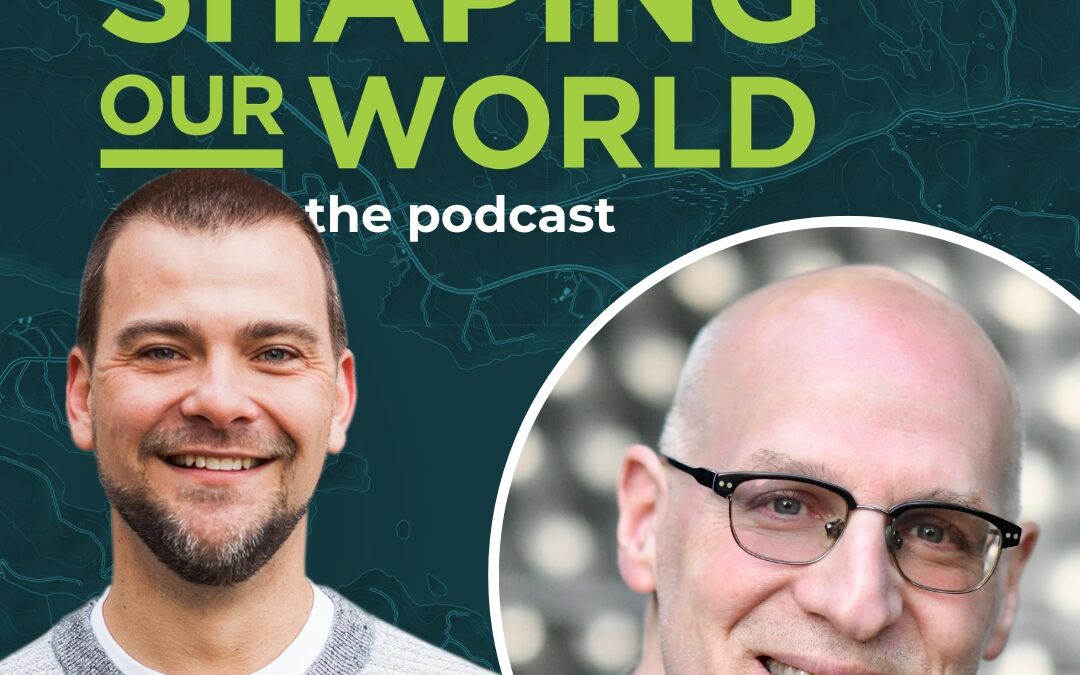
Well, hey everyone, I’m Chris Tompkins and welcome to the Shaping Our World podcast. My goal is to invite you into a conversation that will leave you more confident in understanding and inspiring the young people in your life. Each episode we talk with leading thinkers and practitioners and offer some resources to help you dive deeper into the world of our youth today. Today we have Hannah Dannecker on the show. Hannah is the managing partner of Better Together Group, helping organizations attract, hire, and retain top talent. In this role, she works closely with employers to help understand and engage the next generation entering into the workforce. Hannah’s a professional speaker focusing on Gen Z, workplace culture, and bridging generational gaps. She’s also the author of Well, Shit, Time to Grow Up, a memoir that explores navigating imposter syndrome, uncertainty, identity, and life after graduation. She’s passionate about helping young adults navigate major life transitions with resilience, self-awareness, and purpose. She’s also the creator of the Wonder Workshop, a children’s book series designed to introduce kids 4 to 8 to a wide range of careers through engaging storeys and relatable characters. She believes that career exploration should start early and that exposing children to diverse possibilities helps them dream bigger futures.
[00:01:42.770] – Speaker 1
She advocates for helping young people discover who they are before deciding what they want to do. And the one thing I’m most excited to introduce about Hannah is that she’s a former guest and staff member of Muskoka Woods. That and her extensive experience make this conversation a great one that I know you’re not going to want to miss. So let’s jump into the conversation with Hannah Dannecker. It’s great to have you, Hannah.
[00:02:22.260] – Speaker 2
Thank you so much for having me. I’m so excited to chat today.
[00:02:25.170] – Speaker 1
And it’s kind of fun because we, you know, Hannah, without, you know, giving too much away, is a former staff member at Muskoka Woods. So we’re excited to have her bring her expertise, but also she’s got some context of the world that we live in. So it’s great to have you and looking forward to this conversation, Hannah.
[00:02:41.710] – Speaker 2
Absolutely. I love talking about all the kids’ book stuff, the Gen Z stuff. It’s so much fun. So I just appreciate the platform and you bringing me on.
[00:02:50.150] – Speaker 1
That’s great. Well, can’t wait to dive into it. But as we start off, a lot of our listeners know, based on the name of the podcast, Shaping Our World, we want to kind of go beyond the bio to see what has and is shaping your world today. So let’s start off by what shaped your world growing up? What were some of the biggest influences in your life when you were a kid or a teenager?
[00:03:11.120] – Speaker 2
Yeah, not to be— I’m sure this is so many people’s answers, but my parents were the biggest things that shaped my world. And I, my Mom and Dad both specifically in very different ways, but were very interesting humans to me. I loved listening. They always called me ears when I was a kid, like little ears, always listening. And my favourite thing was just sitting in the back of the car and listening to the two of them talk about the business or church or anything that was just kind of going on in their lives and learning from them from very adult conversations, but just enjoying and taking all of that in.
[00:03:49.570] – Speaker 1
So what’s shaping your world today?
[00:03:51.940] – Speaker 2
Yeah, I think the biggest thing to continue on that trend that shapes my world today, or the things that I want to do or invest time in and put, put energy into, are things that I hope or deem would create a better place in the world for my future kids one day. I think a lot about the craziness of what the world is right now and the beauty of what every individual human can really do and kind of the benefit of how they can give back to the world. And I always think about that in the light of, okay, well, what will my kids experience in 25 years and 40 years? And that’s really what shapes where most of my energy and extra time goes for sure.
[00:04:34.180] – Speaker 1
And that definitely weaves into your professional career too. So tell us a little bit about how, uh, you are shaping the world of kids and teenagers through the work that you’re doing.
[00:04:44.370] – Speaker 2
Yes. So I am a public speaker and an author, and I specifically talk to mainly HR professionals, but my favourite is when I get parents in the crowd who get a lot of information. But I talk to them about how to recruit and manage Gen Z employees. So we talk all about who Gen Z is and why they are the way that they are, and then why they should be excited about those things and how there’s going to be challenges that they face and barriers that they experience while they go through it. But then ultimately how to create a space where everyone wants to come back tomorrow. And that, I mean, that shows up at work. But like I said, when I get parents in the crowd who are like, you have helped me understand my kids in a way that I never could have before. That is— it makes me cry every time it happens. But, and then in line with that, I write these kids’ books, and I have a couple books that started out just with my passion. I loved writing. It was the first thing that, that got me into it.
[00:05:41.630] – Speaker 2
But the heart of what I really love to write is children’s books that explain different kinds of careers to kids. And I’m sure we’ll talk about why that’s so important. But I love that series.
[00:05:52.290] – Speaker 1
Perfect description of all that you’re doing and love hearing that. Maybe elaborate a bit, like what got you interested to really put kind of your career energy towards helping young adults and kids navigate topics like identity and vocation and work?
[00:06:10.260] – Speaker 2
Well, I was a teacher. I always worked with kids for the longest time. I always worked with kids, whether it was a Kayak instructor at Muskoka Woods, or I was a camp director after that, uh, both in Canada and then in the US in Orlando when I moved down here. And then I was a substitute teacher, loved it, always wanted to work with children. But then the pandemic happened, and naturally everybody knows the borders were closed in the middle of the pandemic. And so as I was graduating from university, I was looking at all my options and desperately wanted to do teaching full-time, really was excited about that opportunity. But with the borders being closed and the 14-day quarantine being necessary, I didn’t want to only see my family in the summers. I wanted the chance to be able to see them consistently throughout the year because we’re really close. And so I moved back to Ontario where my family was and started working for my family’s business in the middle of the pandemic. And they are a staffing consulting agency. They do payroll, and I As a teenager, did not get it. I was like, boring, who cares?
[00:07:17.560] – Speaker 2
I don’t understand. It’s not cool. It’s not fun. It’s not children. And then the more I started working in it, I fell in love with everything that they do and talk about and the joy of what it was to support people with finding a career that helps them feed their families every day. They, they go to work, they come home, they put food on the table. And that was something that I didn’t know or value enough as as a kid, but then because of those circumstances just kind of fell into. And then because of the nature of the business and the recruiting process and what that talks like, I just started posting about it on social media. And so very separate from TikTok and Instagram, I was really working in LinkedIn a lot and posting a lot in LinkedIn because I was using it as a sales tool and had no idea where it would take me. But somebody out to me one day and was like, hey, you have a voice in this area, would you come and give a presentation for me on it? And I was terrified. I had never given a public presentation before, but I was like, sure, like, let’s, let’s do the thing.
[00:08:24.780] – Speaker 2
And so then in that time, I was like, now what do you want me to talk about? And she was like, you tell me, I don’t know. And so that was kind of where the whole thing came from. I could take you back to the very location, the seat I was sitting in, the it happened, and I was just like, you want me to do what? And at that time, we had just started bringing in a bunch of Gen Z employees into our business through this internship program. And I learned a lot about what they liked and what they disliked. And naturally, through my own experiences as a Gen Z myself, I was able to kind of work through the best practises to really collaborating with them in a workplace. And I fell in love with the idea of helping professionals connect with Gen Z because there was such a misconception that they have this really big wall built around them or they’re really hard to work with or XYZ, whatever. So many people struggled with it, but I was able to communicate with people and help them see the value behind working with the generation and the how-to of what that actually looked like.
[00:09:34.590] – Speaker 2
It was so exciting, but From that, I was seeing every single time I got up on stage, people were like, this is great information, this solves my problem today, but I don’t know about how this solves my problem in the future. This funnel has been a problem for years. We’ve struggled to recruit young people into underrepresented careers forever. And that was where the Wonder Workshop kids book series kind of came through and was excited because I wanted to do something rather than just see the problem. And we loved writing from a couple books that I had done previously. And so I had this idea one day of explaining careers and could not figure out how to make it interesting for children. But then that light bulb went off in my head and it was like, just put them in a magical transportation ship and take them to a magical world. And like, it doesn’t need to be super complicated. And from there, once I had that idea what the actual, like, Wonder Workshop machine was, I was just so excited. And I mean, from that, I have so many books that have just poured right out of it.
[00:10:46.660] – Speaker 2
But it’s a really cool experience.
[00:10:49.710] – Speaker 1
I love that you, you brought that up because I think it feeds into kind of my next question. And one of the things that I think you address and I love that you kind of tackle is this idea that, you know, career exploration and identity formation around work happens a lot earlier than maybe we would expect. And your book series kind of tackles that. And so can you tell me a little bit about like what’s important about that window, childhood, elementary school age? Why is that really important in shaping early, you know, something we often think doesn’t start till like the end of high school or university?
[00:11:27.390] – Speaker 2
Yeah, absolutely. So kids are asked for the very first time what they want to do when they grow up between the average age of 4 and 7 years old. And this is when they have beautiful dreams about what they want to do one day, everything that is flashy and gorgeous in the world around them that they can see, or what their parents do. But the education around opportunity exposure is really minimal. And so they see a firefighter, they have Paw Patrol, there’s a couple things out there that really help explain some careers to kids, which is fabulous, but it doesn’t stop there. And so what that does is it can create some really unrealistic expectations for the career field. And then as they’re getting older, from 9 to 11 years old, these dreams are turning into goals. And so now they’re not just these crazy fabrications of future ideas, but they’re things that they are actionably starting to think about doing. And then by the time they’re 12, they’re choosing the classes that they take in high school at 12 and 13, which already begin to streamline them towards the secondary education that they can have, or post-secondary education.
[00:12:42.420] – Speaker 2
And so what I wanted to do was help them see all of the opportunities, because what we see right now is about half the population is incredibly unsatisfied with their careers, which is breaking. And because of that, there’s overconsumption and substance abuse and depression that’s skyrocketing across everywhere. But if we just think about the, the very simple Maslow’s hierarchy of human needs and creating self-actualization in people, if we can help people connect to the careers that would give them that self-actualization sooner and take all of the barriers of entry away, we’ll create an environment where people are happier, less depressed, consuming less, and much less substance abuse. And that’s really the heart of what it comes back to is, yes, we want to teach them these things so that they have the opportunities. More than that, it’s that we want to set them up for success so that when they’re adults, they’re just as happy doing what they’re doing as a salesperson or as a makeup artist as they would have been to be a content creator, because they understand the value and the beauty of both of those things.
[00:13:57.220] – Speaker 1
Yeah, I love that. What, what could parents or teachers or, you know, adults who are involved in the lives of elementary school-aged kids— what would we do to kind of help along with what you’re suggesting here? What are some practical things that we can do to help kids get exposed to what a career is about and, you know, what satisfaction in a career— back to your point— beyond just Oh cool, I want to be a firefighter because my favourite Paw Patrol is a firefighter.
[00:14:27.060] – Speaker 2
Yeah, so I mean, Muskoka Woods is supporting this in the most incredible way. I am just launching this summer. It’s a summer activity book that takes about 30 days to go through, and every day there’s a different self-exploration activity. And so my goal isn’t to say, hey, you should do this career. The goal is to say, hey, look at all of these amazing opportunities. Now, what do you want based on who you are as a human? And so each day works them through a different kind of activity. So for example, it could be a quiet or loud space, it could be sitting or standing, it could be working in a team or alone. And every day it’s created to be really easy for people to do on the move, on vacation, very casually. But it’s a parent-led programme where say, for example, if it’s quiet or loud space day, you give your kid a puzzle and they do it alone in the room by themselves in the quiet. And then you take them to a coffee shop and you sit them down and they do another puzzle. And then you have self-reflection questions. Which one did you like more?
[00:15:36.760] – Speaker 2
Which one gave you energy? Which one made you tired? Which one were you excited about? If you were going to do it again, which one would you choose? And so these kind of questions each day will help them figure out who they are and the ways that they really like to work. And then at the end of the summer, they do a little bit of research based on what they learned about themselves to figure out what kind of jobs and careers they would be interested in. And so if any parents go through that this summer and complete it, Muskoka Woods donated a week of camp for next summer, summer 2027. And anybody that’s, like I said, just completed it and given me feedback to make it better gets entered into the draw to win that.
[00:16:16.370] – Speaker 1
That’s great. And we’ll provide ways to get connected with that through our normal channels here. And we’re excited about that and excited to see kids get to participate in that really cool activity that is beyond just, you know, doing something throughout the summer. It’s got a purpose behind it. And I love that intentionality. I think it’s great. I want to kind of transition from younger kids into, you know, the kind of next generations.. And one of the things that we spend a lot of time, because we hire so many young people, is thinking about Gen Z and work and leadership. And we’ve just completed a research project over the last couple of years to dive deeper into that. So this is a topic that I’m really interested in myself and for our work here, but also I would love to hear you kind of build on some of the things that we’ve seen and learned from your own experience. I want to talk about kind of Gen Z in the workplace. And some of the work you do is connecting, you know, employees that may be older, employers, and how that kind of works together.
[00:17:20.120] – Speaker 1
So what’s one thing that you think us older generations maybe have got wrong about Gen Z in some of our assumptions or stereotypes or putting people together in one box? What are we missing about this generation?
[00:17:35.390] – Speaker 2
Yeah, I think it’s a great question. I think a lot of people in older generations, millennials and up, have a perception of Gen Z that they either don’t want to work or don’t want to work hard, which is not true. Generation is very excited to work and get their hands dirty. And I think the biggest issue that that comes back to is really a communication problem. Is that Generation Z seems to be very closed off to other generations and communication, which can be horribly challenging for managers in so many ways because managers are pretty used to coming into a room and saying, XYZ, whatever, let’s get the team excited and we’re going to go with it. And Gen Z, because of the way that they were raised, with influencers around them, with content creators around them, people trying to really influence them in a bunch of different ways. What Gen Z has done in so many ways is built this really big wall around them, which makes it feel like they’re fairly disconnected. And what I have seen a lot is that managers, when they come in and they’re super excited and they start giving team spirit and immediate direction, it creates not a fear, but perhaps a distrust from Gen Z to that management system.
[00:19:05.660] – Speaker 2
And by taking just a little bit of time to ask questions and try and understand who that Gen Z is and why they took that job and why they’re excited to be starting this role, or whatever it could be— there’s so many things that they can learn about— but by simply taking a little bit of time to get to know them, they really get the chance to take those bricks down and take that wall away. And when they do, they start to see a generation that they have drive and they have excitement and they have energy towards everything. But prior to that, it can be really challenging for them to find a common ground where they feel like they’re collaborating well. And so I think that’s the biggest thing that I’ve seen when talking HR managers is that they come in and they’re like, they don’t want to listen. And I’m like, have you, have you tried asking them any questions? And just when they go back and go through that process, like really getting to know them, is when it starts to break down those barriers. But we’re in such an efficiency-driven world that that can be really hard to do.
[00:20:13.990] – Speaker 1
Yeah, I can relate. A contextual storey for that, that I think even when you have good intentions and there is trust, you know, how those walls are are kind of continued to be built. We often will cheque in with some of our senior leaders and maybe in a group, and maybe that’s part of it, go around and we would do it, we call it a temperature check. Just how are you doing? Thumbs up, thumbs down. Sometimes we do what we call fist to five of like zero’s not good, five’s doing really well. And it wouldn’t be uncommon for leaders to give a thumbs up or a four or five, and then later, not in too in the distance future, hear that they’re really struggling with a part of their job, or they’re actually not doing as well as they were prepared to share. And I don’t think, you know, initially you can come and view that as like, well, that’s a lack of authenticity. And, you know, I know for me and my generation, you know, I would want to kind of deal with people— I’m assuming there’s not a problem until you tell me there’s a problem, you know.
[00:21:13.340] – Speaker 1
And I think we have a lot of assumptions about that. And so what I’ve learned, and based on what you’ve said is sometimes it takes off to the side, uh, intentionality to probe a little bit further and not just ask like, are you doing okay? Uh, to have a little more targeted questions. Tell me something about your work right now that you’re excited about. Tell me one thing that you’re feeling a little anxious about. How prepared do you feel right now? Is there any other resources you need to do your job? And then if you finish with like, overall, how do you feel like you’re doing? I think you’re going to get a better response because part of this generation, they want intentional relationships and they want to be seen and understood. And so I think sometimes when you handle that stuff, generally the walls that are already there will continue to be there. And yes, there’s efficiency and other things that maybe we work through, but even with good intentions, that still can be hard for Gen Z to kind of break down. I wonder if there’s any other, you know, assumptions or misunderstandings that older generations have about young people.
[00:22:17.100] – Speaker 1
I love that one. That was— that we really dove deep into that. But are there any others that you kind of can give us a quick hit on?
[00:22:23.880] – Speaker 2
Yeah, I mean, just on, on that note, I think that Generation Z, because of the way that social media has advanced through their adolescence, and they’ve been, I mean, plugged into social media for as long as they’ve had phones, and they’ve had phones for a very long time. And so, I mean, just Personally, I got mine, I think, at 13 years old, my first social media at 14. And that was not necessarily a healthy thing for kids to be doing. But what that is and what has that done to the generation is it’s created this world of ideal perfection and showing up in this very specifically curated way so that everybody sees you. Specific way and has this perception of who you are. And so a lot of times Gen Z desperately craves that authenticity because they haven’t necessarily had it, but they still try and present, uh, showing up as perfect as they can because that’s what they’ve been trained to do, which is just so, so challenging for managers as they’re working through getting to the bottom of what that question actually is. But another misperception that a lot of managers have is that Gen Zs will come into the workplace for a very short period of time and that we’re really quick hoppers, that we go from one job to the next really quickly, which is the opposite of the truth.
[00:23:52.080] – Speaker 2
Because Generation Z, based on the way that they were raised when they were really little kids, they had a recession that happened and they saw their parents hunker down and what that meant to get stable and get secure. And then they graduated from school and there was a pandemic that was going on and they were like, oh, hunker down, get safe. This is the stability. This is what I saw my parents do. This is what I saw that. And then with the advancement of artificial intelligence, this has changed a little bit because a lot of people feel very unsafe where they are. But for the most part, based on COVID, based on the recessions, Generation Z wants to stay where they are. They’re not really job hoppers. They like the concept of stability. And so a lot of managers come in and they’re like, well, why would I even spend time getting to know this Gen Z, or spend time working with this Gen Z to get them into a place where they can start being effective and, and good at the role that they’re in, because they’re afraid that they’re gonna run and just jump from one role to the next.
[00:24:57.320] – Speaker 2
But when Gen Zs have what they need in a role, which is, I mean, fair pay like everybody wants, that’s no different from anybody else, but a mentor specifically is one thing that they really crave. And flexibility they really crave. And then most importantly, them, they want growth opportunity. And when they have those 4 things, Gen Z is like, I am good where I am. Like, the grass may be greener over there, but I’ve got flowers. Like, this is just fine. I don’t need to leave. And so that’s another one that a lot of HR managers and managers just in general will struggle through and not necessarily see, but I think it’s— I could be off by a little— I think it’s 79% of Generation Z who says that they want to stay where they actually are and continue in the role that they’re in, which again changed a little bit because of AI, but for the most part they’re pretty stable employees.
[00:25:54.500] – Speaker 1
Yeah, and that would align with some of the research that we’ve just recently done that would say one of the top concerns Gen Z have in the workplace is that they’re going to make enough money to kind of have the comfortable life that they want. You know, there’s a concern about financial stability. And so I think that relates back exactly to what you were talking about, which may— if they have the right situation and it’s working for them, they might want to be planted where they are and, and stay. I think that’s really— that is something that I think tests the assumptions that we have about this generation. I wonder, what are the You may have covered a few of these as we’ve gone, but what do you find yourself giving managers as your, like, top 3 or 4 tips or pieces of advice to work with Gen Z based on some of the things that we know to be true about them?
[00:26:46.700] – Speaker 2
I think the wall analogy is really helpful when talking to managers and just telling them to take it down. But one of the other things that I talk a lot about is that older generations see technology as a tool that they can use to do the things that they’re trying to do, which is fair. That’s exactly what it is. It’s something that they’re using to complete a task that’s been given to them. But I like to explain technology more as a limb for Generation Z. And so it is a piece of their body in some sense. It is a part of their everyday life. Like, for example, I, I have on my hand right now an Oura Ring that tracks my heartbeat and my sleep schedule and all of these different things. And it’s connected to my phone, which is certainly within arm’s reach for me right now. And there’s 110 reasons that Gen Z struggle to put technology down. And a lot of managers get really frustrated by, I saw them on their phone XYZ when I walked in the room. Or I don’t even want it in their back pocket. And with the caveat of there are roles that need to have very specific guidelines around what can be distractible and what cannot be.
[00:28:03.830] – Speaker 2
But in a lot of ways, I help try and explain to managers that by allowing Gen Z just to have access to their phone in some capacity, it takes a lot of anxiety and ease into what that Gen Z is feeling. And so whether it’s I am tracking my little brother to make sure that he got home from school on time, or it’s I’m messaging my mom to tell me when to come pick me up from my shift, or it’s any number of things that kind of plays into the life that they’re living. But it creates a space where they feel comfortable and don’t feel scared, which is one of the biggest struggles for Gen Z when they’re in the workplace, is that there’s so much fear and so much anxiety. But by allowing them to keep that piece of technology, which again, to most people seems crazy because they’re like, why do you need your phone? It’s— they don’t even necessarily have to look at it, but by having it in their back pocket, they’re going to be more present and more aware because they don’t have the fear of what they’re missing on the other side.
[00:29:12.500] – Speaker 2
And I think that’s a really big thing for, for managers as they’re working through that. But Yeah, I think just simply allowing them to keep that tech with them creates a really big safety blanket. But then again, yeah, that, that wall, that’s really challenging. And then flexibility is also a really big one. I think most managers, when they think about the concept of flexibility, they say, okay, well, not everybody can work from home, but it’s certainly not what all flexibility means. I, I loved— when I was starting my career, I loved the idea of learning about social media and marketing, but I was a salesperson. And so I did my sales job, and every day, all day long, all week, making the phone calls, pick it up, put it down, make the email. But 5 hours a week, I was given our social medias to take control over. And every afternoon on Friday at 12 o’clock, I would put my sales brain off and turn a marketing brain on. And that was flexibility for me. That was an opportunity to try something different and to learn something new. And by giving Gen Z the opportunity to flexibility, it really creates a space that they’re additionally excited to come back into.
[00:30:30.280] – Speaker 2
And so I always encourage managers, yes, ask them what flexibility means to them, and then kind of you can work through that.
[00:30:38.000] – Speaker 1
So I want to kind of tackle into this idea that you kind of COVID in the Quarter Life Clarity group. And I love the honesty behind that, that sense of like, you get to graduation, you smile, you take the photo, you hold the degree, and then inside you immediately start to panic about what’s next. And you’ve kind of written about that with some honesty in your book, Well, Shit! Time to Grow Up. So tell me, why do so many young adults feel lost in that transition period?
[00:31:09.830] – Speaker 2
Yeah, well, I think we’re set up to prepare for high school in elementary school. We’re set up to prepare for university in high school, and then we’re set up to graduate in university. But beyond the actual curriculum that we’re being taught, which is typically applicable to what you do post-grad, there’s not much that really helps the soft skills to set yourself up for success as you’re graduating from university. And so there’s not a bunch of courses that teach you how do you create work-life balance, or how do you have a 9 to 5 and still see your family and your friends and get your chores done and save money and all of these other things. And so when I was graduating from university again, middle of the pandemic, I kind of had a what the heck do I do now moment. I had been a college athlete. I absolutely loved what sports were for me in college. I absolutely loved being a student. I would meet people. I’d be like, hi, I’m Hannah. I’m an HR. I’m a senior. And that, that was who I introduced myself as, was I am an HR major senior at Liberty University.
[00:32:34.980] – Speaker 2
And that took so much of my identity in so many different ways. Or I am a wakeboarding college athlete, and that took a tonne of identity in so many ways. And what I had built my entire life was to get to that point. And then as I was there, the whole goal The whole goal was graduation and there was no preparation for how to be a human after that. And so when I graduated, I was like, I’m a human, and I didn’t know what to say after that. I was like, I don’t know where to go from here. I’m not a student anymore. I’m not. But I didn’t yet identify closely with work. And so what I wanted to help people understand is that Yes, you’re a college athlete, but you like, you like being active, you are competitive, you are determined, and you can carry that forward for the rest of your life. And yes, you’re an HR senior, and that’s great. But you’re curious about human and you love communication, and you love conversation, and you can carry that forward. And so the quarterlife crisis Club is something that we run all of our interns through, and I have a separate group that I do with individuals, or just individuals should that be something that they’re interested in, but really just trying to help them take a big step back from the titles that they’ve been given and more lean into the identity of who they associate to be.
[00:34:12.160] – Speaker 2
And so that’s a horribly challenging process when you’re when you’re graduating from university and trying to figure out who you are as this new independent unit, but it’s very rewarding at the other side.
[00:34:27.120] – Speaker 1
As you were saying that, I, I, I remember one of the things that I learned, uh, as I was in that transition myself is— and I’ve been reflecting on that a little bit— is this idea that through school, the unit of time in a year is so significant, right? You have a certain grade and it takes a year and you need to complete that to move to the next one. And there, there’s this 1-year progression through your entire school career, including high school and university, and every year really matters and counts. And then you graduate and units of time disappear, right? Like, there’s no time to that. And so I think because of that, we’ve grown up with this intense pressure to make like a unit of time, a year, kind of really count, that it puts so much pressure on us to figure this out. Because if you don’t finish that grade 9, you can’t do grade 10, right? But that’s not true of our vocational career after school. And yeah, there is progression, but it’s not— most often is not in those kind of same units of time. So all of a sudden, what we would feel pressure to do in an amount of time kind of disappears.
[00:35:40.130] – Speaker 1
So I remember being stuck because I was figuring out what I wanted to do and I had an opportunity to do something and they wanted a 3-year contract. And in my mind, that was my entire life. I was like, I can’t do 3 years. Like, I was trying to convince them to just do a 1-year contract because I didn’t want to jump into something if it was the wrong thing. And then I would quote unquote waste 3 years of my life. Now I look back and all the, the work I do with young adults is like, don’t worry, like, there’s no waste of 2 to 3 years in your 20s. Like, as long as the situation’s not demoralising or destroying you and your soul, there’s stuff to learn, and there’s opportunities to gain, and you’re not kind of wasting your time to get on with life by exploring different careers and getting into things and, you know, give things an opportunity. So I think that’s one thing that’s kind of stuck with me. And in that pressure is like, oh no, what’s now? And then I’ve got to make this count. And there is pressure for this generation.
[00:36:42.260] – Speaker 1
I see it too in having like the perfect plan laid out. If there is fear and anxiety in, you know, how I’m going to afford the life that I want, and it’s not extravagant, just a comfortable life, and I’ve got to get the right job to meet the economic needs that I have and all these other personal internal things. What would you say to coaching young people who are are in that season where they’ve put so much pressure on themselves to find the right thing and the perfect thing, and sometimes to the cost of like this decision paralysis. They don’t really do anything because they’re waiting for the, the perfect thing. What do you do to come alongside young people in that season of life if that’s what they’re wrestling with?
[00:37:25.050] – Speaker 2
Yeah, I love that you, you said decision paralysis. So I have this saying that I, I created after my first book, the Well Shit book. And I wish that I could go back to that book and instead of having it say, “It’s time to grow up,” because that’s how I felt in the moment, have “It’s time to grow up” and have just a little bit of separation behind what you think needs to happen versus the reality of we are all still growing up no matter how old you are. Like every year we are growing a little bit older, but in that I had this concept that perfection will paralyse the process of progress. I love the idea of being perfect. I, again, because of social media, because of the, the curation of a perfect life that so many Gen Zs have seen, we want that for ourselves. We want to present that to other people, but we will dive so desperately into trying seek perfection that will paralyse ourselves from actually moving forward at all. And so I encourage people to write that on a sticky note and stick it on their, on their dashboard, on their mirror, on anything, whether it’s their computer or whatever that may be.
[00:38:44.150] – Speaker 2
But just to really let go of perfection. And I had somebody when I first took my first management role that came to me and said, Just because somebody does it differently than you does not mean that it is wrong. And I was like, what do you mean? Like, there is a right way, there is a perfect way. And it took a while for me to take a step back and say, okay, even my greatest efforts in this thing, this area, XYZ, whatever, it’s still going to look different from the person sitting next to me giving their best efforts. In some way. And there was some freedom and beauty that came behind realising no one knows what you’re trying to create. No one knows what that perfect world looks like in your head. All they’re seeing is your final product. And if you can keep pushing to be good and yes, push to be great and try to do things well, but don’t let your pursuit of perfection again paralyse the process of progress from moving forward. And I just really encourage people to put that everywhere in front of them because it’s It’s so easy to forget, but it’s so important to remember.
[00:39:55.010] – Speaker 1
I want to go back to a topic that you kind of touched on just before that. It’s all kind of interconnected about just identity and our careers. And I’ve dealt with, you know, I know friends who are adults that when they move on from a career, so much of their identity had been tied up in that. Like, I am, and then insert the career title. Camp director at Muskoka Woods, uh, whatever that is. And, and I think that’s true for so many of us, particularly when we’re like looking at kids and saying, hey, as we start as early as 4 to help them explore what kind of careers they’re getting into and what they’re interested in, what can we do to ensure there’s that healthy separation of our identity outside of that career or vocational, like, is always going to be a part of us. But how do we not let it be too much of our identity?
[00:40:52.250] – Speaker 2
Yeah, that’s a battle we all have to fight every single day, I think, because every day that we’re in that role, every day that we do that thing, we continue to tie our identity back to it, which can be incredibly challenging and can be so hard for a child to work through, for an adult to work through, for somebody who’s retiring, like at any age group, this is really challenging. But I would say when people think about the role that they play, the job title that they have, taking a really big intentional step back and saying, for example, Camp Director, I am an enthusiastic person. I care about making good experiences for other people. I care about creating community. I care about all of all these different things that play a role in that, and then taking that into other places. And so it’s, it’s recognising it, and then it’s utilising it somewhere else. So say it’s, I love creating that community. You can do that anywhere. You can do anything you want to do. This is the craziest thing. So you could go to your neighbour’s doorsteps and say, hey, we’re gonna do a neighbourhood bonfire in our backyard tomorrow afternoon, would love to have or you can go and create community anywhere.
[00:42:16.880] – Speaker 2
If it’s the creative aspect, it’s taking a big step back and saying, I’m going to make the next mural I’m going to hang in my house because I can do that. And that’s— what a crazy thing. I would never have thought to. I don’t necessarily associate that to myself as a camp director, but I have the kids help me with something like that this summer, and it’s driving into Finding those things and identifying those things for yourself, but then not leaving it there and taking it another step further to showing yourself that they can be in other places outside of your career. And I think that by doing that as a parent, you really mirror what that can look like for your kids. And so then you talk to your children about, okay, you’re a 4th grade student who loves science. That’s Fabulous. Now let’s try a science camp. Let’s try an experiment at home. Let’s pick up this book and learn about it. And you’re a learner. You’re curious. You have questions. And again, just taking a big step back, but then applying it in places outside of that dominant location where that identity really ties to.
[00:43:26.800] – Speaker 1
That’s really good. One thing that I would add that I’ve experienced and it’s been helpful for me is thinking about how my life outside of my work continues to inform my identity, particularly through relationships. And I think when we get into our careers and, you know, so much of our work can consume a lot of part of our lives, we can often find that the relationships we have outside of work where we’re known for who we are, that has nothing to do with what we put on the table or how productive we are, they can often kind of wash away and be not as significant because we just don’t have the time for them anymore. And I read a book by Arthur Brooks called Strength to Strength about the second half of life and thriving in your career. And one of the things he said, particularly for people that are in really significant leadership roles, is they find that a lot of their relationships are all— he talks about real and deal relationships there are these friendships that, you know, you have because of the nature of that, right? And then as soon as work disappears, you look around and loneliness sets in because you haven’t got a strong network of friendships outside of work.
[00:44:38.580] – Speaker 1
And so that’s one of the things that I know I’ve really thought about and tried to pursue in my own life and career is to have really healthy, strong relationships that those people, they’ve got nothing to gain from my professional career, you know, that I I’m nothing to them as the CEO of Muskoka Woods necessarily. And so they care about me for who I am and all those other things that you said, right, that are part of our identity and who I am when I show up in this role. And I think that’s an encouragement even for all of us is to continue to develop those friendships that continue to form our identity beyond the work. And it’s always good to have friendships at work. That’s one of Gallup’s questions in their employee engagement is about having a best friend or a friend at work. And that’s important to us. I think sometimes we invest in our work at the cost of other things. And so I think that’s an encouragement that I would say even for young people that are getting into a career is to make sure that they’re building those, those relationships outside of their career and vocational world that really help them grow as, as a person.
[00:45:41.300] – Speaker 2
So I love that. I call those situationships in my book.
[00:45:45.350] – Speaker 1
Yeah, yeah. Okay, so there, that’s perfect, right? So how do we have build relationships that are kind of beyond those. So that’s awesome. I wonder, as we kind of are wrapping up this conversation, Hannah, and it’s been so insightful, I mean, maybe a few things to kind of wrap up. Number one, uh, give us— we’ve talked about your books and your work, but can you point us in your direction again where we can find information, uh, on what you do and your writing, and maybe some like recommendations for different categories, parents and employers you know, start here, go here. And then anything else for resources of parents who are kind of interested in these topics or employers, what can they do to kind of grow in their awareness and understanding and knowledge in these things we’ve talked about today?
[00:46:31.010] – Speaker 2
Yeah, so I would send everybody just to my website, which is hannahdaneker.com, and I give all of my books away for free. I hate the idea of— I am just such a bad gatekeeper. I can’t do it to save my life. I really believe in what the books can do and what the summer activity book can do and the support that it has to offer just because they’re so different from everything else. So yes, if you love flipping pages, I love flipping pages. I love putting books on counters, like looking behind you, the colour coordinated. That’s also fun. I love it.
[00:47:03.910] – Speaker 1
Thank you. Thank you for noticing that.
[00:47:06.520] – Speaker 2
It feels like a little trophy sometimes when you do it. You’re like, I really read that. It’s fabulous. But never let that be a roadblock. Like, if, if you want to have all of them, find all of them, read all of them, go through them all with your kids this summer. And so they’re all on my website, and then it’s kind of split up between the Wonder Workshop, which has all of the information about the kids’ books, all of the links to each of the kids’ books, and then my speaker page has a tonne of information about how to connect with Gen Zs and what that looks like. But if you want want more information than that, give me a call. I cannot stop talking about it, so please, I just love to think about it. Yeah.
[00:47:45.030] – Speaker 1
Okay, so thank you for that. That’s great. And I encourage all of our listeners to go cheque out the resources you have and get some of your books, especially if they’re free. That’s fantastic, Hannah. Thank you. Uh, I maybe want to wrap up with, um, you may have already covered this, but I’d love for you, for you to give a piece of advice for each of these categories. So let’s start with parents. What’s your best piece of advice for parents to come alongside their kids who really want to help encourage them to start exploring their careers? And then I’ll take them one at a time.
[00:48:18.230] – Speaker 2
Yeah, for parents, I think specifically it’s— I am not a parent, not yet. One day, very soon, I hope. But it’s not, in my personal opinion, about pointing them towards a specific career. Uh, according to a study done by Harvard, 30% of kids end up doing exactly what their parents do because that’s the influence that they see. And so kids often so desperately want to do what their parents want them to do because we want to please them. But more than that, it’s so much more about diving into figuring out and helping your kid figure out who they are and what they would want based what that looks like for them. And I think that sometimes our own egos can get in the way. And I know that that will certainly be something that I will face as I, as I go through this with my own kids one day. I’ll be like, be an author, be a public speaker, it’s so much fun.
[00:49:11.820] – Speaker 1
Right, right.
[00:49:12.380] – Speaker 2
But more than that, I want them to be excited about the things that uniquely make them who they are and helping them find the beauty in the careers that tie to that really well. Because There is a great job for everyone and a great person for every job, but they hardly ever end up together.
[00:49:29.820] – Speaker 1
Okay. So what’s your best piece of advice for a parent who has a young adult or a coach or a teacher or an adult who knows that 20-something who’s in that transition into the workplace, you know, from school, who’s in that quarter life crisis time?
[00:49:47.530] – Speaker 2
Yeah, I think really diving back to what you said a lot about there is no perfect timeline. We all are in kindergarten together and then first grade together and then second grade together, and we’re on a trajectory that seems so mapped out, but that by the time we graduate high school and then university, we feel like we need to stay in rhythm of what’s happening with the peers that we’ve known for forever. But realistically, we’re all going in so many different directions and just continuing to reinforce enforce the concept that you don’t need to have a significant other at the same time that your best friend does, and you don’t need to have the perfect career that the person you’re following on social media does, and you don’t need to hit these milestones at the same time as other people. They are all so uniquely for your path and your plan. And the, the more we can share that with them, the more that we can explain how we’ve done that in our own lives and seen that in our own lives, the more comfortable they’ll feel, I think, actually acting that out and being okay with that in, in their own lives.
[00:51:00.960] – Speaker 1
And last one, maybe for employees, older employees that are in a season where they’re maybe struggling or finding it a bit challenging to figure out Gen Zs in the workplace. What’s an encouragement or a piece of advice you could give them?
[00:51:14.840] – Speaker 2
Older Gen Zs I would say it’s not wrong and it’s not right. Back to the concept of perfection does not exist. And beyond the concept of the timelines, because I hope that by about 30 years old you are very comfortable with the fact that everyone is on a different timeline. But specifically when they’re talking to parents, when they’re on social media and they see somebody that bought a house or they see somebody that’s having a kid or just got engaged. I mean, there’s this whole consistent joke right now that it’s everybody that’s an older Gen Z is having a kid, running a marathon, or buying a house. And it’s like you open social media up and these are the things that you’re seeing every single day. And what you’re doing is not wrong. But it’s also not right. Like, there’s no, there’s no perfect answer. We’re all just kind of trying to move forward. And so when you make that decision, it wasn’t wrong that you made it, but it also wasn’t necessarily the perfect choice either. And so you don’t need to be afraid to step back from that. And I think a lot of older Gen Zs are experiencing that right now where they’re like, I got into this position because I wanted to be here.
[00:52:32.090] – Speaker 2
I had grown up thinking about it and now I hate it and I don’t know what to do. And it’s like, you know what? You spent a couple of years figuring out a lot about yourself and learning a lot about what it means to show up in different ways. And it’s not wrong to take a big step back from that. And especially considering we are a very hunkered-down generation and we struggle to let go of stability, it doesn’t mean that it’s wrong or right to make different decisions. But I’m really curious what your answer would be to that. Give me a piece of advice as I’m going through it.
[00:53:03.830] – Speaker 1
Yeah, I mean, I think it would be very similar to, to what you were sharing. I kind of would come at it from a different perspective. I think one of the things I encourage with that generation is I think sometimes there’s an expectation for employers, like if we’re talking about like that employee-employer relationship, like older folks like me to work out what it means to lead the next generation. And I would encourage younger folks, older Gen Zs, to be curious about the older generation too. As you enter the workplace and you see your bosses leading in a certain way, rather than just going, well, that doesn’t align with where I’m at, how does my boss better create a work environment that suits me? How do you understand where your leader is coming from? Why are they approaching a topic a certain way? What’s their experience in the workplace? What are their sort of expectations? How have they grown? And so I always encourage like people like myself and older to get curious. Like, that’s the whole piece. And I know you’ve talked about this a bit too. It’s like, get curious about Gen Zs in the workplace.
[00:54:12.050] – Speaker 1
Like, rather than just going, oh, this and that, and, you know, this doesn’t work for me, or why are they that way, is to be like, huh, I wonder why it is like that, you know, have a posture of curiosity. So I would give that advice as well. When you enter the workplace, be curious about about the workplace you’re entering into. Why are certain things the way they are? What’s the history behind some ways that things happen, the culture that’s there? Because that will also help you. It doesn’t mean it’s, again, right or wrong. It is, and for you to better understand maybe where older people are coming from and why they are the way they are, that helps us work together and get to the same page. And I— someone who’s on the podcast before talked about, you know, just like a red strand and a blue strand. And the idea is Well, does a red need to become blue and the blue becomes red? It’s like, no, actually, what does purple look like? How do we come together to make a different culture and environment that works for all of us? Slightly different than what exactly our lane might feel like.
[00:55:14.580] – Speaker 1
How do we come together and do that? That’s probably what I would share. Okay, I’m going to give one last piece of advice, selfish. And this is very direct for you. I probably wouldn’t ask anybody else this. Kayak, because you’ve been here. When we’re recording this, we are 2 days away from welcoming 380 16 to 25-year-olds onto our summer staff. We have all these young generation of people that are coming. Um, share with me something I could share to our full-time staff as an encouragement about what it means to lead the next generation. A piece of advice, a tip, because you’ve been there. You’ve been the kayak instructor. You’ve seen what an experience like camp— and And we can make this applicable, any other older leader can think about this, but give me a piece of advice. What can we do? Encourage us in what we’re about to do as we lead a group of, you know, a large group of young adults in the next season.
[00:56:07.980] – Speaker 2
I think it’s so common for them, for management to have the mentality that the guests are coming for a week of a lifetime. That they’re so excited to invite them in and to create the experience that they will never forget. But I think one of the best things about Muskoka Woods is the staff. I mean, the facilities, the activities, it’s all incredibly amazing, but the staff, the counsellors, the community, and the relationships that they have the chance to build with the guests is so valuable. And the referrals that they bring, bring more of them in and continue the cycle of having really fabulous people run your camp and be in front of all of these kids that are coming for a lifetime. And I think that by encouraging them to remember that the staff is also coming for a summer of a lifetime is really valuable. It’s— they came as campers and they were obsessed with it, or they’re coming from halfway across the world because because this one person that they knew was once a counsellor there and absolutely loved it. And your international presence is insane. And so those people are also coming for the summer of a lifetime.
[00:57:27.190] – Speaker 2
They look at the camp and they go, what an incredible place to be. And so, yes, have them do what they need to do. They are there for a purpose. They are employees. Absolutely. But don’t disregard that. They are just as excited to be there and dive into the excitement statement of what the camp store is, of what the messy night is, of, of the beauty of what it is to be just in the environment. And so alongside the, the craziness and the hecticness of preparation and everything that needs to be done, just those little bits and pieces of extra fun, of extra flexibility, can be really beneficial. And I take that experience to a whole different level.
[00:58:16.420] – Speaker 1
Yeah, thank you for that. We’ll share that on because it is true, and I think that’s not just true for us at Muskook Woods. I think that’s true for any organisation, that your staff need to embody everything you want your service, product, whatever it is your business does, your nonprofit, whatever— your staff embody that. And if they don’t, uh, you’re not going to be successful at the end of the day. And so I think that’s a great reminder to pour into our staff to create the kind of environment that they actually— we always say, like, I can sit as the CEO and come up with our vision statement and our core values and all the things, but I’m not sleeping in a cabin with kids anymore. So, the staff actually bring everything we want to be true to life. And so, we need to pour into them and lead them in a way that that’s true, that they have that experience for themselves. And I think that’s applicable people all across the board because we encounter people when we deal with most organisations anyways. And so, yeah, I think that’s great encouragement. So, thank you so much, Hannah, for your time and for all the work you’re doing.
[00:59:20.820] – Speaker 1
It was so good to see you again and to be with you in this conversation. Really appreciate it and thank you.
[00:59:26.490] – Speaker 2
Yeah, thank you for having me in the space that you guys are creating. I mean, just for parents and for people to continue to learn and work. I really appreciate the invitation. Thank you.
[00:59:35.720] – Speaker 1
And we look forward to welcoming the winner of your contest next summer.
[00:59:39.340] – Speaker 2
Yes, absolutely. So exciting.
[00:59:42.000] – Speaker 1
Awesome. Thanks, Hannah. Have a great day.
[00:59:44.300] – Speaker 2
You too. Bye.
[00:59:47.660] – Speaker 1
Well, that’s a wrap for today’s episode. If hearing from Hannah Dannecker encouraged you to think differently about career exploration, confidence, identity, and how we can better support young people as they navigate life and work, why don’t you head over to MuskokaWoods.com? There you’ll find a blog post with key takeaways from this conversation and a link to listen again. And don’t forget to subscribe to the Shaping Our World podcast and share this episode with a parent, educator, coach, employer, or young person who’s navigating questions about purpose, career, and what comes next. Thanks for listening, and we’ll see you next time on the Shaping Our World podcast.