[00:00:12.820] – Speaker 1
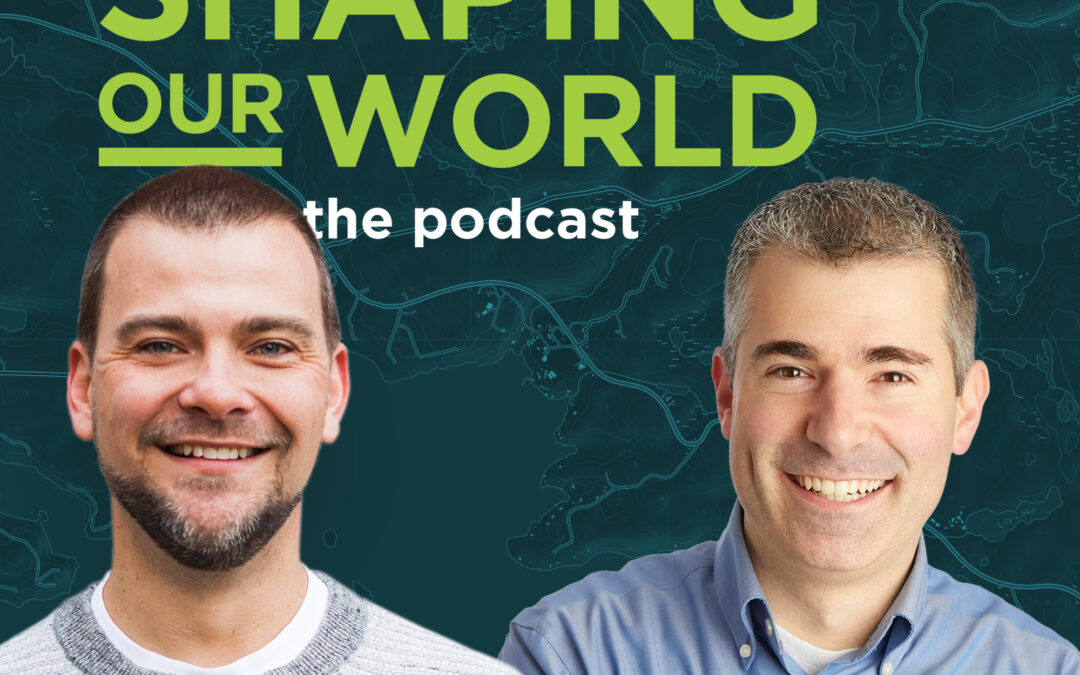
Well, hey everyone, I’m Chris Tompkins, and welcome to the Shaping Our World Podcast. My goal is to invite you into a conversation that will leave you more confident in understanding and inspiring the young people in your life. Each episode, we talk with leading thinkers and practitioners and offer some relevant resources to help you dive deeper into the world of our youth today. Today, we’re joined by Gordon Korman. Gordon is one of Canada’s most beloved children and middle grade authors. He has more than 100 books to his name, over 30 million copies sold worldwide, and readers in more than 30 languages. His writing journey began at 12 years old when a classroom assignment turned into his first novel, This Can’t Be Happening at McDonald Hall, which was published later when he was 14 years old. For nearly five decades, Gordon has captivated young readers and their parents alike with unforgettable characters, laugh-out-loud adventures, edge-of-your-seat suspense, and stories that explore belonging, identity, prejudice, resilience, and what it means to find your place in this world. Through countless school visits and conversations with young readers, he spent a lifetime listening to kids, bringing their hopes, struggles, and humour to life in stories that continue to resonate across generations.
[00:01:43.330] – Speaker 1
I can’t wait for you to hear our interview with Gordon. As we were preparing for this, I kept thinking back to reading stories to my daughter, and many of you will be familiar with the name. And if you’re not, you’ll be familiar with some of the stories. So let’s dive into our conversation with Gordon Korman. Gordon, it’s really great to have you with us.
[00:02:07.580] – Speaker 2
Thanks for having me.
[00:02:08.640] – Speaker 1
I know this is an exciting conversation for many as they’re going to listen and go, I recognize that name. I’m pretty sure I’ve got some books of his on the bookshelf. So looking forward to this conversation and diving into some stuff with you, but maybe help us get to know you a little bit better. What shaped your world when you were growing up? What were some of the bigger influences in your life?
[00:02:30.260] – Speaker 2
Well, for me, and I’m probably not your typical example, the biggest influence on me was just the fact that I got started writing really young, right? I wrote my first book when I was in Grade 7. It was published when I had just started high school in Grade 9. So I literally grew up writing for kids. This is back in the late ’70s, early ’80s. My experience was just so atypical because I did my first school appearance when I was 14. And I was always going on trips and promoting books. I interacted with— a tonne of adults compared to most kids my age. And I think that gave me sort of a unique perspective way, way back when.
[00:03:20.660] – Speaker 1
It is interesting, right? Yeah, your story is very unique, and we’re going to dive into some of that today more specifically. But tell us a little bit about your world today. What’s shaping your world? What are some hobbies, some interests? Help us get to know you a little bit better, Gordon.
[00:03:35.100] – Speaker 2
I mean, I don’t have any hobby hobbies like, you know, stamp collecting and crocheting and racing motorcycles. or whatever. But you know what, um, I would say 90% of, of my spare time is just, uh, spent doing things with my kids. You know, my kids are old now. I mean, they’re, uh, 27, 24, and 21. But I’m amazed that the dad gig, uh, never ends, right? We’re always helping somebody move or helping somebody get settled in a new job or, you know, attending a concert or a sporting event with our kids. Uh, my My youngest is still in college, so we’re always visiting him at his university up in Wisconsin. It’s amazing how the parent gig that starts with these little ones so long ago kind of continues as everybody becomes an adult.
[00:04:28.600] – Speaker 1
Yeah, that’s true. I have an adult child myself. Well, just entering adulthood, so I know what that’s all about. When people bump into you out there and don’t know who you are and you describe what you do, what do you tell them about your vocation and your work? Like, tell us, we’ve done the full kind of bio, but maybe in your own words, tell us about what you do and are currently doing for the lives of young people.
[00:04:53.160] – Speaker 2
Yeah, so the first thing I’d say about myself is I’m a kids’ book writer. I think most people, their first thought is picture books, but I write middle grade. People usually confuse it with young adult, which is sort of the genre a little bit older, which is like real, I guess you’d say, teen audience writing. I’ve done a few books like that, but the majority of what I’ve done has been middle grade, which I’ve heard it described as 8 to 12, 8 to 13, 9 to 14, but it’s that sort of upper elementary school, middle school kind of audience. It tends to get forgotten Right? But I think most people as adults, when they think back to a kid’s book, right, they, they usually think of something middle grade, right? Uh, something that they read, you know, grade 4, grade 5. It’s a super important time in your life because I think it’s a time where you kind of become in command of your own opinion, right? It’s the first time in your life where you decide what you like and what you don’t and what you choose to be a fan of. And that’s why I am always amazed at how many of my— I guess I call them ex-fans, right?
[00:06:14.260] – Speaker 2
People who read my books when they were kids, even now in their 50s and sometimes early 60s, you know, still remember, oh yeah, Bruno and Boots, or I Want to Go Home, or one of those books that I wrote, you know, when I wasn’t much older than they were as readers. And yet they still have a really clear memory of the experience of not just the story, but how that book made them feel because it was such a major foundational time of deciding who you are.
[00:06:49.960] – Speaker 1
Yeah, it’s interesting you say that because, again, as I was preparing for this and looking through a list of books, I remember literally reading some of the 39 Clues to my daughter and I could like actually go back in time to that moment and remember kind of where I was and what we were doing. And it kind of does transport you back to that season of life as you, you know, think about, you know, the books and, and the time and what you were, you were doing when you were reading those things. So I, I do think that’s, that is really interesting.
[00:07:23.440] – Speaker 2
I guess it’s similar to music, right? You know, that you remember those songs and what you were doing that summer that that song was really big, or I mentioned before, it makes me feel super old. I’m actually very, very close to the 50th anniversary of when This Can’t Be Happening at McDonald Hall was published. It was published in January of 1978. Let’s own it, right? I’ve been at this a super, super long time. But at the same time, it’s awesome to feel like I’ve really participated in people’s lives as they’ve grown up.
[00:08:00.830] – Speaker 1
I mentioned I was doing this interview with one of our staff members who’s, you know, maybe late 30s, early 40s, and I— he said— he just paused and said, I remember those books. And you could see him just kind of going to a different place, uh, you know. And so I think that’s great. But I want to go back, like, right to the beginning. You mentioned This Can’t Be Happening at McDonald Hall. And you wrote that when you were 12 because a teacher gave you freedom to kind of go with your own creativity and a story that you had, and you wrote that. And then later you kind of pushed that and got it published yourself. And I’m wondering if you can, as you look back, what did that experience help you learn about what happens when caring adults really allow kids to be creative and allow creativity to come out of them? And can you maybe speak to us as parents or caring adults about what we can do to help young people see what they’re really capable of early in their lives?
[00:09:06.070] – Speaker 2
Yeah, I mean, I think it was kind of, for me, a perfect storm of, of adults being supportive, but also adults kind of getting out of the way and not, uh, pushing me in any specific direction. So with respect to the teacher, he was not an English teacher. He was the gym teacher, really. He was a kind of a track and field guy. In fact, if you go for the time, it was 1976, and he had been in training for the 1976 Olympics, which were in Canada that year, right? And I remember he lived in Maple, Ontario, which was 13 miles from our school, and he used to commute to school by running. And when he told us we’re all going to write novels, we just assumed he had kind of sprinted one block too many in there and scrambled his brain. But I mean, for me, I mean, this was just the most amazing project ever. But he gave us a little bit of structure, right? We gave him an outline the first week and sort of a chapter a week after that. But if you take that book, and you look at one chapter of This Can’t Be Happening at MacDonald Hall, it is still exactly one week’s work when I was in grade 7.
[00:10:26.390] – Speaker 2
So you really see the bones of that project in the book as it looks today. But I did have a lot of help. My mom used to be a newspaper writer in Montreal when I was really little. And so she knew her way. First of all, she knew her way around a typewriter because for me it would’ve been, you know, click, click, click. But also she was supportive, right? She drove me to Scholastic the first time they wanted to meet with me to sort of assure themselves that I had really written this thing. She was an amazing editor for me. She was supportive of me. I mean, she helped, right? My mom is quite elderly today, still lives on Thornhill where I grew up, but she still helps me with my writing. And I think a lot of people look at a 62-year-old man and be like, his mom helps him? But that was everything to do with how I got started writing. It’s like I wrote my first book when I was 12. Who’s gonna help? Mom! So I think I had, you know, as I say, perfect storm, like a really, really unique combination of support, but not too much support to kind of express myself creatively back then.
[00:11:54.680] – Speaker 1
Yeah. You’ve said that every story begins with something real before your imagination kind of takes over. I wonder, where do your best ideas come from and what do young people notice about the world that maybe adults miss? And I’m thinking back to like some of your early stories when you were growing up.
[00:12:15.970] – Speaker 2
You know, I think there are ways that kids see the world that adults don’t. Again, another one of my early books, my first non-McDonald Hall book was called I Want to Go Home, which is about summer camp. And I guess my experience of summer camp was that, you know, they want you to have fun so much that it almost becomes like oppressive. You know, we want you to have fun. We need you to have fun. We insist you have fun. You will have fun or else.
[00:12:53.130] – Speaker 1
Yeah, start smiling, please.
[00:12:54.660] – Speaker 2
Yeah, exactly. Exactly. And I think that those are sort of the observations that a kid would make that very few adults would. I find that there are certain feelings that are pretty universal, right? Like that, that the idea of something being unfair, right? I mean, as a parent, I’m sure you hear it, or as a teacher, you You hear the word unfairly 800 times a day, right? That’s not fair. It should be fair. And that’s because those are things that kids sort of feel much more acutely than adults do, right? Another one, the idea of being a sort of an outsider, right? Not one of the cool people or the beautiful people being on the outside looking in, right? Those are emotions that adults feel too, but not nearly as sort of sharply as kids.
[00:13:54.000] – Speaker 1
I wonder, as you’ve gotten older, how has your creative process changed from, you know, early days as a child and a young person, you know, being interconnected with the world that you live in, like we just talked about, to today? Where are your ideas continuing to come from, and how do you keep them connected to what’s happening in the lives of young people today?
[00:14:16.590] – Speaker 2
Yeah, it’s a good question. I don’t want to think about it too much for fear that it will stop working.
[00:14:23.740] – Speaker 1
Right. Yeah, you don’t want to overanalyze it. I get that. Yeah.
[00:14:26.230] – Speaker 2
But I do remember when I was visiting schools as a really young author, when I was like 15 or 16 or 17, people would always say to me, it’s like, oh, well, yeah, it’s easy for you to relate to kids because you’re so close in age to them. But I almost feel like as I’ve gotten older, I’m kind of better at it just because the 10,000 hours theory that you really master something if you do it for 10,000 hours. You just get good at it, right? But I will say this also about remembering how it feels to be a kid. There are kids in grade 7 who have already forgotten how it feels to be in grade 6. And there are 90-year-olds who remember exactly how it feels to be a kid. Like, some people, it just sticks with you. And I mean, I don’t mean to to overspeak about my mom, but she is like a master at this, right? She has a summer birthday, and it always bugs her when she has her birthday because it almost feels like summer’s starting to end when it’s over. You know, the, the back-to-school sales come on TV the next day, and it’s like, oh, I don’t know if I, I like that.
[00:15:40.980] – Speaker 2
And I always say to her, like, Mom, you know, what do you care? I mean, you’re not going back to school. You haven’t gone back to school since the 1950s. But I think that feeling of being a kid has stayed with her, even though she’s quite elderly today.
[00:15:58.930] – Speaker 1
Yeah, that’s great. Whether it’s Bruno and Boots in McDonald Hall, Donovan in Ungifted, Chase in Restart, or the students in The Unteachables, your stories often centre on young people that don’t quite fit the mould. They’re pranksters, outsiders, misunderstood kids who are underestimated by the adults around them. I wonder what keeps drawing you to these characters, and what are you hoping children and young people find in these characters to connect to? And, you know, what’s kind of the message kind of behind the stories as you focus a lot on these characters that just don’t of fit in?
[00:16:40.960] – Speaker 2
Yeah, I mean, I just really— I love those characters. I don’t know, I was drawn to movies like that and books when I was a kid where the misfit kind of wins, or the underdog, you know? I mean, it’s obviously really, really satisfying where somebody who doesn’t have a place in a world sort of manages to carve that spot or comes to be accepted. So, uh, you know, Ungifted is the ungifted kid in the super gifted school, and odd couples sort of figuring out how to kind of live together, um, finding your place in kind of an environment where you really, really don’t belong. I think there’s, there’s something, uh, really, really satisfying about that, including in sports stories where sort of the underdog team somehow against all odds manages to win it all or show that they can do it. I don’t know. It just— it, you know, maybe that comes from the fact that, you know, as a kid, I certainly wasn’t the most popular kid in school. I was never sort of on the middle school A-list or anything like that. So So those stories may have extra resonance for me just because I’m still refighting the battles from my own past.
[00:18:11.310] – Speaker 2
But either way, I think they’re great stories.
[00:18:14.590] – Speaker 1
Yeah, they really are. And it is true, we do, I think regardless of our own journey, really resonate with characters like that. And we want to cheer for the underdog and we get behind it. But I know, like, as we read it, we can connect. But I know sometimes with parents, If our own kids feel like they’re not fitting in socially or academically, it can be quite concerning. And so after spending decades writing about stories like this and meeting thousands of kids, what would you say to parents who are, yeah, we read it and we feel like the underdog, but in the midst of that story for our own kids, it can be maybe disheartening or concerning to go like, how do I help? What can I do? What would you say to parents about those characters that you write and how maybe they can see that in their own kids as well who might be struggling to fit in?
[00:19:09.330] – Speaker 2
Absolutely. And I’ve experienced it with my own kids. And I feel like we are good at detecting those moments in our kids’ lives when they feel like that they’re having trouble fitting in somewhere or they’re being bullied in some way or They feel like they have been pigeonholed as a certain kind of kid. The only thing I would caution other parents about, and this is, you know, from really from my experience as a parent rather than as a writer, is that we are good at detecting when our kids are in a situation like that, but we always are not so good at assessing the severity of the situation, right? Because a lot of times, we’re ready to go to, you know, like DEF CON 1 over, you know, oh, my kid’s being, you know, is not being appreciated in science or something like that. And then, I don’t know, a weekend goes by, one thing happens, and like everything’s cool. But at the same time, we could be missing something else that’s major. So I think it’s great for parents to be concerned and obviously inevitable for them, you know, to involve themselves. But at the same time, I think you have to approach it with humility because you’re just not, you’re just not the person that it’s happening to.
[00:20:35.480] – Speaker 2
And you don’t want to get too involved in your kids’ lives and maybe throw them in a direction. You don’t want to be part of the problem, you know, and add to the complexity of the problem.
[00:20:52.470] – Speaker 1
Before we get back to the conversation, I want to let you know about a great opportunity for families. Muskoka Woods is giving away one free week of camp for a child aged 6 to 16 in the summer of 2027. That’s a camp experience valued at $2,250, including all accommodations, meals, activities, new friendships, and more fun than you can imagine. At Muskoka Woods, young people grow confidence, try new challenges, and make memories that last long after the summer ends. And entering is easy. Just visit muskokawoods.com/winaweek. You’ll need to fill out a form and confirm your email. No purchase is necessary, and the winner will be drawn on March 3rd, 2027. That’s muskokawoods.com/winaweek. Your writing has evolved from, you know, laugh-out-loud comedies like McDonald Hall to edge-of-your-seat adventures of suspense like Island to the previously mentioned Linked. I wonder what’s prompted that evolution. And do you find that as your readers grew or the world changed around them, you wanted to— well, your stories, your writing to help young people navigate the world around them?
[00:22:28.320] – Speaker 2
I mean, I don’t think that it was sort of, you know, I didn’t feel like it was my mission, you know, that, oh, it used to be fine to be just funny. But I mean, I think I got older. I got better at what I was doing. I had a lot more experience, and I began to experience and experiment with different types of stories. And just as a creative person, I find that I really succeeded whenever I put myself out of my comfort zone, right? So I’ve been writing these funny stories, and I think when you when you get really, really good at something, it’s, it’s actually kind of time to worry, right? Because, because you may not be sort of really doing the greatest job when you feel like, oh, I got this, I know how to make people laugh, I know how to sort of put all these hilarious characters kind of in, in position around each other. But when I first wrote Island, my first survive— it was my first survival story, it was my first non-humorous story, right? So you don’t have those regular payoffs of, I’m reading this to get to the next laugh.
[00:23:38.560] – Speaker 2
And it was also the first story of mine that required a tonne of research, which I had not really done a lot of because I’d written from a lot of experience being at the time really close in age to my characters. So I kind of put myself behind the 8-ball, and I think I did a really, really good job. Because partly, let’s face it, I was afraid that I wasn’t going to be able to do it.
[00:24:05.800] – Speaker 1
Right.
[00:24:06.510] – Speaker 2
And whenever I’ve been in a situation like that in my writing, right, you know, the Adventure Series, which were different, the Titanic Trilogy, where suddenly it’s historical fiction on top of everything else, the 39 Clues, where it’s a multi-author project and I’m only contributing the occasional book to this entire series, writing fantasy, which was always a little bit unusual for me because most of what I write is kind of realistic fiction. Like, whenever I’ve sort of given myself that extra level of challenge or complexity, it’s, it’s always come out well.
[00:24:48.200] – Speaker 1
Yeah. And I— what I love too about a lot of your, your writing is you have like the hilarious antics of MacDonald Hall, to also difficult themes. You know, you cover antisemitism and hate in Linked. And your books have a way of tackling difficult topics, but often you weave humour into it as well. So can you tell us a little bit about why maybe humour and laughter is a way for young people to enter into other emotions or tackle deep topics? There’s kind of an intersection there that I think is interesting that can come out in some of your writing and your work.
[00:25:26.690] – Speaker 2
Yeah, sure. Well, humour for me has always been the number one goal, you know, whether, whether I’m writing Linked, which is a book that, that tackles very, very serious topics— racism, antisemitism, prejudice, vandalism, right— or a series like island or Everest where, where some of the characters might not make it, right? They’re in very, very grave danger. Uh, I still feel like there are moments for humour. And, and in a way, when, when you’re writing about something that is very, very serious, the humour hits harder. It may not be there as much, but I think there’s something really, really powerful about a moment of laughter in a really, really tense kind of situation. Right. But I mean, more generally, why do I love humour? It’s just who I am, right? Like when I was 2 years old, the cartoons on TV that were my favourites were the ones that made me laugh the most often. Right. And growing up, family dinner, some uncle tells a joke and everybody laughs. And I always kind of admired that. Right. I wanted to be the guy who said that thing that got a big reaction from everybody, you know.
[00:26:51.180] – Speaker 2
So I think a lot of it is just, is just growing up sort of thinking that humour is, is important and, and excellent. And, um, there are psychologists and people more learned than me who can speak to whether humour helps you process, you know, the more difficult things that you’re going to go through in your life. I mean, I kind of agree, but I’m just kind of talking out of my butt a little bit in that area. But in the end, when I think of myself as a writer, the first thing I come back to is I love humour.
[00:27:28.320] – Speaker 1
As you’re saying that, I can remember growing up, my dad, you know, he’s a police officer and then a minister. And, you know, he’s an easygoing guy, but pretty serious in life. And I can remember him like knee-slapping out loud to like Bugs Bunny cartoons, like the Road Runner and the Tasmanian Devil. And just, I have that picture of him, you know, not coming alive because I don’t want to make it sound like the rest of his life he wasn’t living full, but like just in that laughter piece and comedy, he just transcended to a different space, you know, in time.
[00:28:00.690] – Speaker 2
Yeah, I remember, um, sometimes, uh, humour also is is, you know, how much you laugh when you see something is the context, you know. So there are certain friends that you’ll get together with and you just find a different type of thing kind of funny because being with those people sort of puts you in a different place. I remember when I had graduated from university, I went to university in New York City, I came back to Canada, and I remember seeing my, my college friends for the first time, you know, like a year later or something. And we went to see the movie Dumb and Dumber, right? And I remember, I mean, I’m amazed I didn’t have to be taken out of that theatre by paramedics. I was just like screaming with laughter. Uh, I thought it must have been surely the funniest movie that had ever been made in the history of Hollywood. And I remember seeing the movie later, you know, on TV, and I was just like, really? Like, this is the movie that— not that I didn’t like it or that it wasn’t funny, but it wasn’t this, like, life-changing, cathartic experience, right?
[00:29:19.080] – Speaker 1
Yeah.
[00:29:19.660] – Speaker 2
So humour is also— I mean, it’s about what you’re being exposed to, but it’s also where you are inside at the moment when you’re exposed to that humour.
[00:29:29.870] – Speaker 1
So you’re saying there’s a chance. Yeah, I remember laughing out loud to that movie too, but you’re right. That’s really insightful. If you look back now after such a long career, are there any books or series that you hold maybe a different place in your heart, that either the stories you were telling or when you were telling them or what responses you’ve gotten just maybe I don’t know if favourite is the right word, but you just, when you think back, you have really fond memories of writing or having written that book or series. And maybe a different way to ask this, and maybe they’re not the same, so feel free to answer them separately. If you had a parent who was coming to you to say, okay, I haven’t read any of your books, where should I begin with my middle-aged child? Where would you point them? to kind of enter in?
[00:30:23.310] – Speaker 2
Right. I mean, I don’t know. You know, I think writers have a tendency to be the most focused on what’s newest. I mean, I have a book called Sleepless that came out a week and a half ago, right? There is literally no chance that as many people have read Sleepless than have read some of my others. So I’m just more focused on it, right? you know, I’m thinking, is it going to be popular? You know, is it going to be successful? Are people going to buy it? Can it make the bestseller list? And it’s not that it’s better than all the others. It’s just, it’s what I’m the most focused on now. But every book sort of gives you a unique kind of writing experience, right? I wrote a book called Slacker that was sort of inspired by my oldest son, who is not a slacker, but kind of like a video game addicted couch potato slacker. So whenever I wrote about Cameron Boxer and his gamer friends in Slacker and then Level 13, I just pictured my kid, Jake Hormann, wearing, you know, the Xbox Live headset, sort of gaming over the network. And that connection has always been unique in that book, right?
[00:31:43.470] – Speaker 2
I have a series called Masterminds. which is a little bit more— I wouldn’t say fantasy, but a little more speculative, right? It’s these kids and they discover their perfect lives are a lie and they’re actually part of this kind of pretty twisted experiment, right? So that was interesting writing because for the first book of the series, my narrators didn’t really understand what was happening to them. Right? Like, I was narrating the book from the perspective of clueless people. It got more normal as they sort of figured out what was going on. But that experience was very, very challenging and fun in a different way, almost like I was doing this gigantic jigsaw puzzle where I only got a couple pieces at a time. Right? And I think that every Every book sort of offers something, either a challenge or a connection, that makes that writing kind of unique and special.
[00:32:49.410] – Speaker 1
Mm-hmm. Mm-hmm. You’ve been writing books for kids for, as we said, 50 years, 5 decades. And their world has changed dramatically, you know, from smartphones and social media to where you know, technology, and it’s changing even more rapidly as we get, you know, closer to today. You’ve been with kids and around them this whole journey. I wonder, like, are kids changing? What’s— is there something timeless about being that age group that you’re noticing? Because I think sometimes it’s easy to be like, oh, kids today are so different. And on some level, that might be true. The world might be different. But also, there’s just something unique about being a kid at that age and stage. What’s your kind of view on kids today and how they’ve changed and how they’ve stayed the same?
[00:33:42.290] – Speaker 2
Yeah, I mean, this is going to seem really, uh, kind of a cowardly answer, but I would say yes and no, right? Uh, I mean, circling back to the earlier part of our conversation where we talked about those things, those feelings of this is unfair, or I’m on the outside looking in, Those kind of feelings, I think, are absolutely universal. And you can find them in books written, you know, in the 1920s. And you can find them in books written today where kids get an iPhone when they’re in grade 4 or grade 5, you know. So I wouldn’t be obsessed with the technology too much. I think there is something really, really unique about being a kid. And the area I live in is pretty hilly. And, you know, it’s kind of an older neighbourhood, so the drainage isn’t amazing. And so when we get like a really, really strong rainstorm, there are streams up and down those hills. And I was amazed at how my own kids, who are obsessed with like every technology known to man and their phones and computers and iPads and whatnot, whatever, would just love making paper boats and then running them up and down those streams, which is something you could picture kids 100 years ago easily being excited to do.
[00:35:12.570] – Speaker 2
But every year I’ll go to an interview and someone will be like, oh, these kids, they have all this technology. How could they possibly be reading again? How could books compete with all these amazing things they can do on TikTok and— Computers and video games and whatever. And the amazing thing is I’ve been writing a really long time. And in the early part of my career, I remember the same lecture, you know, oh, these kids, you know, they can play Pong on their TVs at home, you know.
[00:35:43.680] – Speaker 1
Right.
[00:35:44.070] – Speaker 2
Yeah. Sega in television, and they can rent VHS cassettes and watch movies on TV. Why are they ever going to to read books? And the answer is that those technologies do compete for our kids’ attention, and they do sometimes seem like they’re winning our kids’ attention. Kids still love good stories. There is something about storytelling and curling up with a good book that may not always win the battle for kids’ attention, but it’s always going to have its share.
[00:36:22.220] – Speaker 1
Going off of that, you’ve said that the middle grade ages, the middle grade readers, that’s right at an age where young people start deciding and figuring out what they like and are working through who they want to become. Why do you think those years are so formative, and what role can stories play in that time in helping shape their identity?
[00:36:47.270] – Speaker 2
I don’t know. I just think they do. Maybe that’s sort of interesting that the movie of the summer is The Odyssey. And then I haven’t seen it, so this is not a commercial for this movie. But this is an ancient story that comes originally from an oral tradition. And I guess it’s considered to be one of the earliest stories that somebody ever actually wrote down. Right? And that story has captured people’s imagination in 2026. And I think there’s something about characters that you can relate to, even if you don’t find yourself similar to them, you want to root for them, or for whatever reason you become wrapped up, their tribulations are yours, right? There is just something unique about that. that a technology is not going to change, right? Like, that story can be delivered on YouTube instead of, you know, in an epic poem. But the idea of it being a story, a human story of people out there doing human things, there’s something really, really appealing about that. And that will transcend, you know, what the Yeah, I think that’s really good.
[00:38:15.730] – Speaker 1
I know, like, as we’re growing up, you know, starting in that age, that middle, you know, elementary school age into adolescence, we’re working through these big developmental questions. Who am I? Where do I belong? What contribution can I make in this world? And I think the power of stories, just building off what you said, is We get to see other folks, people, characters who are working through the same things and in different ways and different experiences. But we have an example and a picture of what that journey looks like. And we also realise we’re not in it alone. It’s not just us working through these things in our own lives, even though we might not have the words at those ages to to put to that. I think that’s truly why we resonate with those stories. And yeah, I did see Odyssey already. And the power of that is it’s a story of homecoming, what it means to come back home again. And—
[00:39:18.640] – Speaker 2
Am I gonna like it? Should I see it?
[00:39:21.190] – Speaker 1
Yeah, it’s good. Again, especially if you’ve read the original and know a bit about the story and have journeyed with it, I think Christopher Nolan does a good job. So I would encourage you to see it.
[00:39:31.600] – Speaker 2
Okay, okay. You know, the other thing, You know, just listening to how you expressed that made me also think that, you know, there’s something really special about seeing a character and kind of identifying with that character. But I think middle grade might be the first time, you know, the first time that you do it. So it might have a freshness.
[00:39:54.760] – Speaker 1
Yeah.
[00:39:55.660] – Speaker 2
You know, I was in Grade 4 the year a very old Judy Blume book called Tales of a Fourth Grade Nothing came out. And I bet many of your listeners of all ages read that book at some point in their lives. And I remember in my class, it was just a thing, right? It was like, I can’t believe that we figured stories were all about, I don’t know, some guy living in England. And here’s this story about a kid in Grade 4 just like us.
[00:40:26.250] – Speaker 1
I can remember the Hardy Boys. That was early reading for me. And, you know, being— I think now that I’m thinking back, what I loved about those stories is, you know, there’s adventure, and every, every young person maybe dreams a little bit of that adventure. But it’s also like we’re like solving real-life problems, you know, as— and as kids, we can do that. And so I— yeah, I do think— I think you’re— I think you’re right. I think that, you know, grade 3, grade 4 is— and probably links developmentally to where cognitively we can do that is start to see ourselves in others and other stories. So yeah, I think you’re right on with that.
[00:41:04.870] – Speaker 2
And I think too, I mean, you know, nothing against picture books, right? But the picture books that you love, it’s usually got something to do with, you know, oh, my dad used to do these great voices, you know, or my mom read them in this amazing way. And, you know, there was always something about the experience But it wasn’t just you. Whereas like middle grade is where it becomes, this is me by myself in my bedroom or in my hammock or whatever it is reading. This is something that, you know, that it really is entirely mine.
[00:41:42.970] – Speaker 1
Yeah, that’s great. This has been a great conversation, Gordon. As we’re kind of coming to the end, I wonder what I love about your story is, uh, it began with a 12-year-old putting pen to create, you know, and imagination and creativity. And I wonder if there are young people out there who have a dream, have something stirring in them, um, that maybe, you know, they’re not pursuing yet or haven’t had the— haven’t kind of had it laid out for them. Based on your experience and your story, what would you say to young people who are starting to discover something that they love? And what would you tell them about pursuing that or going for it?
[00:42:27.530] – Speaker 2
Well, I would say that, you know, the time to do it is always now, you know, and this is an experience I have from both kids and adults. Adults actually are worse, right? So I’ll be travelling and, you know, someone’s like, you’re a writer, I’m going to write a book one day. And they start to tell me about it and it seems really developed. So I’m like, oh, Sounds great. You know, how’s it going so far? And the answer is always, oh, I haven’t started yet. Right. And you just know that they’re waiting for this magic moment where the planets align and the universe says go, and it’s just never going to come. Right. So what I would say to kids is make writing a part of your life or make whatever it is that you love a part of your life. Make it something that you do I mean, I say every day. It really doesn’t have to be every day, but many, many days. It’s not a special occasion to do this thing, right? It’s something that happens a lot because the time to start is always now.
[00:43:35.080] – Speaker 1
Yeah. And what would you say to parents or caring adults to come alongside kids who maybe see some of that to help them to seize the moment and make the time now? What would you say to parents? who are listening?
[00:43:50.290] – Speaker 2
I mean, that’s a trickier one because, you know, you don’t want to be the pushy parent. But, you know, so that’s why I always talk about the weird kind of perfect storm of me because it was sort of a nice mix of support and getting out of the way, right? So I would definitely encourage those hobbies that you see your son or daughter doing naturally on their own, but not necessarily to the point where, you know, you’re hiring 5 outside coaches and make sure they’re doing it 27 hours a week. You know, again, I’m not an expert, right? One of the things about being a parent is, you know, everything you’ve learned so far is completely inapplicable to the time that’s right ahead of you. But don’t be afraid to encourage, but be careful of making it sort of a chore for your kid.
[00:44:51.050] – Speaker 1
That’s really good advice. I love that— support and get out of the way. Gordon, thank you so much for your time today and for allowing us to get under the hood a little bit on your life and your journey. And I know as I said, thinking about this interview today, it took me back to the Cahills and the Vespers and 39 Clues and all the books that I read with my daughter and back to my own childhood. And so thank you so much for this conversation. It was encouraging to me and I’m sure to all of our listeners as well. Thank you.
[00:45:24.210] – Speaker 2
No, this has been fun. Thanks so much for having me.
[00:45:29.140] – Speaker 1
Well, that’s it for today’s episode. If hearing from Gordon Korman inspired you to think differently about the power of stories, the importance of embracing what makes young people unique, and the role books can play in helping kids navigate life’s challenges, why don’t you head over to muskokawoods.com? There, you’ll find a blog post with key takeaways from today’s episode and a link for you to listen again. And don’t forget to subscribe to Shaping Our World and share this episode with the parent, educator, librarian, coach, or anyone passionate about helping young people discover the confidence, curiosity, and courage to write their own story. Thanks for listening again, and we’ll see you next time on Shaping Our World.