[00:00:00.160] – Speaker 1
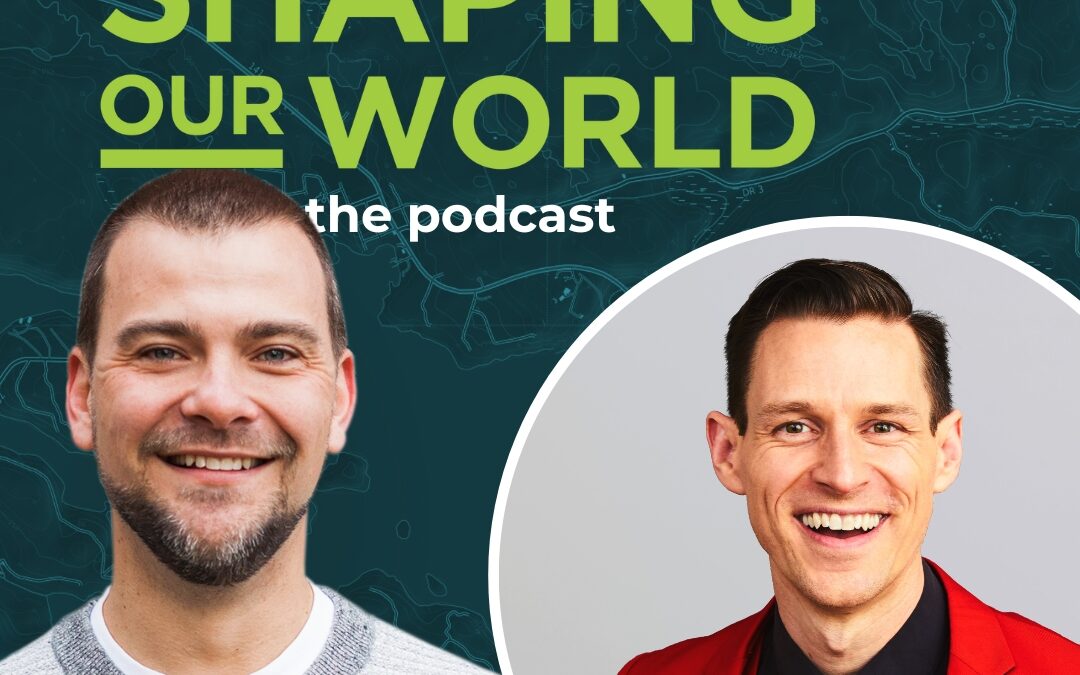
Well, hey everyone, I’m Chris Tompkins and welcome to the Shaping Our World podcast. My goal is to invite you into a conversation that will leave you more confident in understanding and inspiring the young people in your life. Each episode we talk with leading thinkers and practitioners, and we share resources to help you dive deeper into the world of our youth today. Today we have Sam Demma on the show. Sam is a speaker, author, and youth advocate. He’s delivered over 750 keynotes to young people all over the place. He’s one of the youngest certified speaking professionals in the world. Sam’s also an author, having written the book Empty Your Backpack, and a children’s book called Be Someone’s Taco. Not sure what those are about? You’ll find out in our interview today. Sam’s also the founder of PickWaste, a youth-led movement removing thousands of bags of trash and garbage from across Southern Ontario. Sam had a key turning point in his life when at 17, he had a knee injury that ended his dream of professional soccer. Faced with this major setback, he had to forge a new path, one that’s been inspired by his grandfather’s example of service and some wise wisdom from a trusted teacher.
[00:01:30.180] – Speaker 1
Sam’s guided by his core belief that success isn’t what you achieve, it’s how you serve. He’s devoted his life to helping young people fill their backpacks with purpose, empathy, and courage. I think you’re gonna really enjoy this show. Our producer, Roz, told me that she laughed and cried already at the beginning. So I can’t wait for you to hear our interview. So let’s dive in today. Sam, it’s great to have you.
[00:01:58.030] – Speaker 2
Chris, thank you so much for having me.
[00:01:59.670] – Speaker 1
Can we talk a little bit about you growing up? Like, what shaped your world when you were a kid? What were the big influences in your life, Sam?
[00:02:06.110] – Speaker 2
The massive influences in my life as a young person were my parents, my grandparents, specifically Nono Sam, who I have the same name with, who just led like a servant leader and inspired me a lot. Books and also teachers and athletic coaches, those are some of the biggest influences in my life growing up.
[00:02:25.190] – Speaker 1
What continues to shape your life? What do you do in your free time?
[00:02:28.910] – Speaker 2
One of the things I enjoy doing the most right now is skiing. It’s a newer hobby, started about two years ago. A buddy and I try to get out multiple times throughout the winters, and I would say it’s, it’s one of my favourite downtimes when I’m not writing or speaking or doing professional work.
[00:02:45.290] – Speaker 1
Well, great segue into your professional work. Why don’t you tell us a little bit about what you do professionally?
[00:02:51.650] – Speaker 2
It’s so hard to define yourself as a professional because I find I tried putting myself in a box when I was an athlete. And when I stopped playing soccer, which we’ll talk about later, maybe.
[00:03:00.290] – Speaker 1
Yeah, yeah.
[00:03:00.850] – Speaker 2
It was really hard to see myself as anything else. So these days I define myself as a heart-centred human being that wants to serve. And I do that in different ways, primarily through writing and speaking. But I also take acting classes, and maybe acting will be a part of it in the future. And, you know, I also like kids’ books and cartoons, and I write poetry. And so, you know, writing and speaking are the two main things professionally.
[00:03:29.040] – Speaker 1
And you kind of travel the world talking to audiences about leadership and service. And like you said, you’ve written two books. But before that, you kind of mentioned it, your storey begins in like a very human way. You’re chasing a dream, you face a setback. So how did— and we’re going to kind of preempt what happened, but how did you— how did losing your soccer pathway kind of redirect you into your calling to what you’re doing with your life? What was the moment you knew you weren’t just like reacting to disappointment but discovering your purpose? How did Setback lead to purpose.
[00:04:07.790] – Speaker 2
When I was five years old, all I wanted to do is play professional soccer. That was the only thing I cared about. And I carried that dream for eight years until the age of 13, when a professional club called my family and asked for their permission to move me to Italy for six months of my childhood. Dad was so excited, Mum was bawling her eyes out. Yeah. And I did move there for six months, fell in love with the game, didn’t sign a pro contract, but knew it was what I wanted to do after having that experience. Came back home, dedicated my entire life in high school to sport. And for a parent listening to this right now who has kids that are in sports every single night, you know, it’s like having a second job. You know, my parents were driving me an hour to practise, spending two hours with me, driving me back home. Yeah, they were just as invested in the dream as I was. And by the time I was a senior, I got a full-ride Division I soccer scholarship opportunity with Memphis University, hinging on them watching me play one more time at a big tournament in Florida.
[00:05:07.040] – Speaker 2
Long storey short, I ended up having three major knee injuries, two surgeries, lost the scholarship, spent two and a half years trying to get back on the field before making the decision to stop pursuing that goal. And I had a two year period of time after that where I felt like I was just floating through life and very uncertain, felt useless. I didn’t have any other value to provide to people or the world. And I was very fortunate that I had a teacher who helped shift my perspective after the first knee surgery. And I would say that was really the turning point that made me recognize the value of a goal is not reaching the goal. It’s the person you become in the process of pursuing it. And it changes your character, it changes what you tolerate, it changes the choices you make, it changes what you read and who you hang around. And, you know, I think it was conversations with my teacher and my parents and also reading books that taught me similar messages like that, that helped me realise our value as young people is not in our talents, accomplishments, or achievements, but in our effort.
[00:06:13.260] – Speaker 2
Are we doing our best? And are we becoming a character-driven human being?
[00:06:18.990] – Speaker 1
I want to kind of dive into that a little bit because that’s pretty inspiring. Not everybody would have that as part of their story, especially kind of at a young age. So give me like, how did you move from that into stepping into speaking and writing, like finding that path? You’re probably already in it, but how did you make that transition to kind of letting go of that athletic dream into finding purpose in something else that’s very different at the end of the day?
[00:06:47.620] – Speaker 2
It was not intentional at the start. I did not sit down after my injuries, grab a piece of paper, write yearly goals at the top, and then put write books and deliver speeches. I had a teacher who helped me recognise that if I wanted to make a change or improve something in my life or make a positive impact on the world, it could all happen if I chose to take a small, consistent action. And that was what my teacher, Mr. Laford, always said, small, consistent actions. And he challenged us to go in the community and take a small action toward a problem we were passionate about solving. That led to picking up pieces of garbage, walking home from high school. And then a buddy saw me 4 months later, pulls his car over, dude, why are you picking up trash? And I told him what Mr. Laford taught me about small, consistent actions and how picking up garbage was my first attempt.. And he’s like, we should do something together with this, with our whole school. And so we started going around convincing people to help us pick up garbage on our weekly Saturday morning cleanups.
[00:07:48.780] – Speaker 2
And I thought, man, if I speak in front of the whole high school, we’re going to get tonnes of volunteers. So I asked my principal if I could have 2 minutes at our Thanksgiving assembly. And at the end, I told this really short storey and encouraged people to give us their email address so we could send them the information for our weekly cleanups. And the speech sucked, Chris. I have the video of it. It was so bad. But we got over 60 students giving us their information. And I thought, man, if we do this at all the schools, we’re gonna get so many volunteers. That led to 12 more of these 2-minute promotional talks. And at the end of one of them, a principal pulled me aside and essentially said, Sam, they didn’t fall asleep. You need to come back and do this again, but for 30 minutes. And in my head, I was like, I don’t know what I’m going to say for 30 minutes. But, but his belief in me made me feel like for the first time after sports, I was useful again, or I made a contribution.
[00:08:43.910] – Speaker 1
Yeah.
[00:08:44.030] – Speaker 2
And I was enjoying it. So I went back and spoke for 30 minutes. And that was back when I was 17, 18 years old. And I just haven’t stopped.
[00:08:52.190] – Speaker 1
I mean, there’s so— not even young people, but older adults could take so much from that about, you know, when we hit setback or failure and things seem to take a hard left turn, you know, what, what does it look to reorientate and find meaning and purpose in something different? And I love that. We’re gonna get into that small consistent steps in a second here, but I wanted to jump into this concept of Be Someone’s Taco. And I know that’s taken on huge emotional meaning for your audiences. It’s also the title of your recently published children’s book, but we’re not talking about tacos here, right? Like, Walk us through what a taco moment represents and why that simplicity resonates so deeply with people.
[00:09:35.790] – Speaker 2
During the pandemic, I had a friend who was really down, struggling. I called him one afternoon. First thing he told me was that he was still lying in bed and it was 2:00 PM in the afternoon. I thought to myself, man, if this guy is still in bed at 2:00, he’s probably doing pretty bad. Maybe there’s something you could do to make him feel better. Phone call ends, I go on his social media searching for something that he liked. Came across this post that read, my vote for dinner tonight is #tacos. Simplest idea, like, Andrew likes tacos, I’m gonna surprise him with tacos. Go on Uber Eats, find a taco dinner, punch in his address. You know when you order on Uber, you can watch the car drive down all the streets? Yeah, yeah, yeah, yeah. I’m staring at my phone 25 minutes watching this vehicle Finally get the notification the tacos have been delivered. Less than a minute, my phone rings. FaceTime call from Andrew sitting on a barstool in front of his kitchen countertop, box of tacos open behind him, bawling his eyes out. And I’m like, dude, it’s, it’s a box of 2 tacos, like, relax.
[00:10:43.680] – Speaker 2
Yeah, yeah. And he’s like, dude, it’s not the food. Like, you didn’t know me and my wife had to shut down our business. And laugh an employee, and we’re not sure how we’re going to put food on our table for the next 6 months. Maybe for you it’s just 2 tacos, but for us, this is a moment that we’re going to remember for, for a really long time. And we hung up the call minutes later. I felt really good but was also emotional. Go about the rest of my day, go to sleep, wake up the next morning, 500 text messages from Andrew of 500 individual taco emojis. The next year, every time we talked, he’d bring it up. That year on my birthday, sends me a logo of a bright yellow smiling taco. And above it, it says, be someone’s taco. He said, you know, it’s not about buying people food, but recognising that one of the most meaningful ways to live life is in the service of other people. And to be someone’s taco is to simply be whatever someone needs you to be. If someone needs an ear to listen, be an ear.
[00:11:46.010] – Speaker 2
If someone needs a shoulder to lean on, be a shoulder. If someone is hungry, be a taco. No, send them food. But just if you’re in a position to fill somebody else’s need, when you recognise them, do what you can to do so. That’s really the whole message behind Be Someone’s Taco. And we took that real-life storey and, like you said, turned it into a children’s-friendly picture book that introduces these topics of kindness and empathy to little kids.
[00:12:10.400] – Speaker 1
That’s so good. I love that. And I love, you know, we often are in these kind of conversations on this show and other places where it’s all about paying attention and just like you said, the small things and knowing, like, you could have sent him anything, but you did the work to find out the meaning behind the taco. And like, yeah, for you it was just like, it’s just a taco, but you tapped into something. And for us who want to come alongside and care for people, and whether that’s our own kids in our lives or other people, I think there’s a great message in that. And I I just wonder for parents listening who are watching their kids go through kind of that season of life, same thing, like they’re not getting out of bed, like what can I do for them? Apply that for them. Like what could they, what could you do as a parent to be someone’s, your kid’s taco? Like what would that look like?
[00:13:01.180] – Speaker 2
How would we do that? Explicitly telling your children that you’re proud of them no matter what path they choose to pursue. Is, in my opinion, one of the most important gifts you could give your own children. And it’s hard because I think when I’m a parent, I’m going to have an idea of what success means for my kids, and, and it’s based on my unique life experiences. But when I was struggling with my mental health and a few years into high school, I had the injuries, and then I took a gap year in a fifth year to try and keep my dream alive. And then I went to university, and then I broke down crying and told my parents, I’m not sure I’m supposed to be in university. City right now. Rather than them telling me what they thought my life should look like, they looked at me and said, that’s okay, Sammy, we’ll figure this out together. If you want to take some time, do some work locally and try this dream of yours out, we have— like, we’re here to support you. And I think that’s the greatest gift my parents gave me, and any parent can give their kids, is to say, like, I love you and I’m proud of you no matter what you choose to pursue in the future.
[00:14:08.650] – Speaker 2
And I’m here to support you. And they— that for me gave me permission to fail. And I did until it started working out. So I think that’s probably one of the things that I would suggest that’s been helpful for me with my own parents.
[00:14:22.370] – Speaker 1
That’s really inspiring. You mentioned the teacher that kind of helped you and that phrase about small, consistent actions. Is that— did I get that kind of right? Like small, consistent steps? Yeah. Can you talk about like the power of that versus— because I think sometimes As human beings, we think like it’s got to be that big moment, the shift, the decision, the choice, the moment, the graduation, whatever it is, rather than these small, consistent steps along the way. And that obviously framed a lot of what you did and your storey that you shared. But can you tell us a little bit about that, the impact of that versus just these big moments?
[00:15:03.510] – Speaker 2
Yeah, I mean, if I set a goal to get in the best shape of my life, going to the gym and eating healthy food would be the correct choices. But if I only did them biweekly, like once every 2 weeks, I would never reach my goal. I wouldn’t improve my health, even though it’s the right choice and the right thing to do. If you don’t do it over a long enough period of time consistently, no change occurs. I believe there’s 2 parts to the equation of change. There’s the labour which we’re responsible for doing, showing up and working. And then there’s time, and the time is going to pass whether we labour or not. And so putting in the time each day with the correct actions, when you add the labour and the time together, massive things can unfold. I also think about how often we make big choices versus how often we make the little ones. You know, we graduate once or twice in our life. We buy vehicles a few times in our lives. We buy homes maybe once or a few times in our lives. We choose our life partner, hopefully once or maybe a few times in our lives.
[00:16:07.670] – Speaker 2
And it’s, it’s big choices, but they only happen very few times throughout our lifespan. Yeah. And if we’re just basing our changes in life on those big few choices, we’re missing out on the thousand small choices we make every single day. And I would argue there are thousands more small choices every day we make. That if we took ownership and responsibility over, we can make massive changes. And I think that’s really how I think about small consistent actions and why it’s mattered to me.
[00:16:39.790] – Speaker 1
Yeah, that’s great. And the connexion between these small consistent changes and choices to the big ones as well, right? Your example of getting married, right? You don’t decide to get married without all these little investments in who you are as a human being and the partner or the person that you’re involved with leading up to that, you know, how you date or, you know, interact. Like, they all kind of connect. It’s not— you don’t become a husband or a wife or a spouse or a partner in one decision. It’s a lifelong of these small choices before and after the big choice, right? At the end of the day. Yeah, I think that’s really helpful. What I like about this too is it makes change accessible, especially in a world that, like, rewards the big and the bold. And I know you speak to a lot of young people. So how do you take this message towards impact for young people, especially for those that feel like, I don’t have a voice, I’m small, I’m insignificant, I can’t bring about change?
[00:17:41.530] – Speaker 2
I always tell young people, you don’t have to change the whole world to change one person’s world. Like everyone walks around in their own unique reality that’s based on their relationships and their conversations and their challenges that most of the time we know absolutely nothing about. You can make a massive contribution in changing one person’s world with something so small that you think is insignificant, simply because you don’t actually know what’s going on in their individual reality. You know, I tell this storey now sometimes. A habit that I’ve gotten into that I love doing is early before the holidays, like a week before the December holidays and Christmas time and New Year’s, I send voice notes to people in my life who have made a big impact on me. And this year I included my massage therapist because I travel a lot and my back’s always sore and he gets me fixed up all the time throughout the year. So I just sent him a voice note appreciating him.. And he responded back with this 3 full paragraph message thanking me, which felt really over the top. And a few weeks later, middle of January, I had my first massage of the new year.
[00:18:52.360] – Speaker 2
I get into the little massage room and he usually just asks me where I’m in pain and then helps me fix it. But this time he crossed his arms and he leaned against the wall and it got really serious.. And he was like, why did you send me that message? I was like, dude, I do this thing. I like appreciating people toward the holidays. And you’re someone who made a big impact on me. He’s like, no, but why did you know? Did you know my dad passed away in November in his 60s? We just buried him. It’s been the worst 2 months of my life. I listened to your voice note over 2 dozen times. I’m like, do I have to graduate to learn how to send a voice note? Do I need an MBA or a PhD? Do I need to be an adult? Yeah. Like, we think that making an impact in a person’s world requires all these grand things. It doesn’t. It requires someone who cares, who notices, who chooses to act with love and compassion despite not understanding what other people are going through. You know, I share storeys like that with young people to remind them your existence and your actions and intentions change the world.
[00:20:03.020] – Speaker 2
You don’t have to go and solve the biggest problems.
[00:20:07.220] – Speaker 1
That’s so good. And we don’t know what everyone’s walking through or carrying. And that kind of segues into your other book, Empty Your Backpack. And you use the backpack as a metaphor for emotional and mental load that people carry. And in your talks, you bring it on stage, right? You walk with a big— you put a big backpack on. What inspired you to pull that metaphor? What’s it about? And why do you think it lands so strongly with young people when you’re speaking to them?
[00:20:39.040] – Speaker 2
Well, I had a conversation with a young person during the pandemic years ago that told me their biggest goal in life was to have 50,000 followers on TikTok. I didn’t understand why, but when they told me, it shocked me. He said, Sam, if I had 50,000 followers, kids would stop bullying me.. And I thought, man, how, how tragic is it that this young person who could have such a bright future is allowing other people’s negative words about him to change the way he sees himself and chooses to show up in the world? And I wondered how long he’d been allowing that to happen or carrying those other thoughts. And at the time, I was writing a spoken word album called Dear High School Me. It’s very inspired by this rapper named Russ. And after that conversation, I was inspired to write a poem about letting go of negative words and thoughts from others. And I thought, well, if you’re not letting go, you’re holding on. And what do young people hold on to in school?
[00:21:35.120] – Speaker 1
Backpacks.
[00:21:35.320] – Speaker 2
So I was like, oh, well, if you’re holding on to a lot of things, a lot of negative thoughts, maybe you have a really big backpack. And, you know, that led to journaling this stick figure with a giant bag on their shoulder. And then I went on Google and searched giant backpack and went down this whole rabbit hole.. And what I was trying to do essentially was figure out a way to help young people understand one of the most important assets they have is their own beliefs and the storeys they tell themselves. And so the backpack is a metaphor for our minds, and it serves as that attempt to share that message with young people. You know, if you’re a parent listening to this, one of the things that helped me the most empty out my own backpack is journaling. And I don’t have kids yet, but I hope and would be blessed to have a family in the future. And if and when I do, one of the habits I will participate in with my kids is before we go to sleep, we will sit at the kitchen table or somewhere comfy, and we will each pull out our own blank journal and write about the things that happened that day.
[00:22:35.140] – Speaker 2
Some days it’ll be harder than others to put stuff down. Other days we’ll fill 2 or 3 pages together. And I have about 15 journals now. All of my goals and dreams, all of my challenges and mistakes and learning lessons are all captured in those pages.
[00:22:49.240] – Speaker 1
If all young people are kind of carrying this backpack that’s filled with beliefs, experiences, stories, you gave a practical example of what parents do, but what role can parents play beyond like that practical one in what goes into the backpack in the first place? You know, we have listeners who have kids that are really young, and so, you know, we’re obviously as parents are the primary relationship that young kids have with adults. And so What role do we play in it and what advice would you give to parents as they’re packing full their kids’ backpacks, maybe unintentionally, right, at the end of the day?
[00:23:27.820] – Speaker 2
Yeah, fair. And I’ll start by saying, you know, I have so much admiration and respect for parents, period. It’s such a big opportunity and responsibility. And as someone who’s not a parent yet, giving advice is sometimes a belief I carry in my backpack that I don’t give myself permission to do because I haven’t had the experience personally. So please take or leave this. Take what you find helpful and leave the rest behind. I would say, you know, firstly, understand the world you grew up in is very different than the world your young kids may be growing up in today, which means your path to where you got today should look very different to where your kids, you know, path is going to take them. And that’s okay. Instead of imposing what you think the path should be on your kids or the young people in your life, get curious and ask them questions about the things they’re excited about and act as the enabler for your kids’ curiosities. You know, oh, you really like creating video games. Let’s do some research to see how we can connect you to someone locally in the community who makes video games as their career, and maybe we could visit them for a day.
[00:24:38.910] – Speaker 2
And have a conversation. But I think seeing the parent as like an enabler of kids’ excitement and curiosity is really helpful. I would also say ask open-ended questions to get more context from your young people instead of questions like, how was school today? Which can only be answered with, you know, good or bad. You know, what did you enjoy the most about school today? Hopefully starts more of a dialogue and conversation with the young people in your life. So I would say understand the pathway looks different. So try your best not to impose your definition of success or pathway on your kids based on your own life experiences. Be the enabler of their curiosity and ask some good questions.
[00:25:19.190] – Speaker 1
I have a thought, but before I kind of share that, to build on that, I wonder if you could just share, you talked and you’re, I’m assuming without asking how old you are, that you’re on the younger spectrum of life compared to where I’m at. And you said the world’s different. Help an old guy like me who’s 50 understand what are some of you think that the main differences are that kids are experiencing today that maybe us older folks didn’t?
[00:25:48.560] – Speaker 2
Yeah. You know, previously to get the information you needed to finish a test or an assignment and homework, you had to go to the library and cheque out a book and find the right book. And if it was already checked out, you had to go find someone who already checked it out and get it from them. And it’s like today you could pop open Manus AI and, and it will actually write you a book in 15 minutes. Like the tools available are, are remarkable. But young people are also spending so much more time on screens. And as a result, I believe building less social skills and not connecting as much with other human beings, which in my experience speaking in schools has led to a lot of mental health challenges and loneliness and anxiety and ADHD and all of these things that are coming to life as a result of less human connexion and interaction. I think that’s also a massive change. The opportunities in the marketplace for work are dramatically shifting. You know, maybe a couple of years from now, a lot of the jobs that, you know, we thought about working in, even myself, might be automated and replaced.
[00:26:56.030] – Speaker 2
And The marketplace could potentially look totally different on the opportunities that are available to the young people going through school right now. School itself will likely be disrupted in the near future with all the different evolution and technology. So I think that there is just so much change that it’s hard to predict the future. And young people are kind of in the middle of all of it.
[00:27:16.150] – Speaker 1
Yeah, I think you’re bang on. The rapid pace of change is a big thing that young people have to deal with. We all do, even as adults, but particularly young people. And yeah, you’re right, access to information and, and what kids are exposed to on all spectrums, the stuff that’s really helpful for them and the stuff that maybe not be so helpful, uh, is definitely changed to when I, when I was a kid. Uh, I just want to add for parents too, listening back to the backpack piece, because you get some really good insights into that. I’d add a couple things just from my own perspective and listening to lots of guests on this show, just to remind some of our parents. One is like, what rituals do you practise growing up, uh, in your family? Things that are like kind of sacred and important, that invest in relationships and deepen, um, the connexions you have together that kids, you know— we, we have Friday pizza night in our house all the time, and I think those kind of ritual things are things that kind of do start to fill up the backpack and drawing off of your— you can quickly access what your teacher shared to you about that value statement or the thing that was really important about that small consistent steps or choices.
[00:28:32.830] – Speaker 1
And so what are your family’s, your important mottos, sayings, things that really shape your values as a parent? What’s most important to you? And again, I’m not talking about the values that we might subtly bring in, like, you know, materialism or, you know, drive or success or whatever, but the things that, that are really help shape you and your life and you want your kids to remember, like, long after you’re gone. And those things, the rituals and the kind of sayings, the values, because those are the things that are going to kind of counteract some of the other stuff that they start picking up in the backpacks. Like you talked about the bullying piece and wanting to be— if I was recognised or had that kind of credibility, then that might change that. But I think the deep love of a parent or an adult that cares also can counteract some of that stuff too.
[00:29:31.590] – Speaker 2
So how do our kids know that and feel those things right at the end of the day? Yeah, I couldn’t agree more. I think something else that was helpful for me to hear when I was going through some challenges or I heard shared with other young people is that no one who is healthy and happy and grateful is going to spend time tearing you down. And so if someone in your school is tearing you down, know that that person is struggling and dealing with some pain that they don’t know how to effectively deal with in their life. And so the bullying or the challenges with others are likely not because anything is wrong with you, but because they’re not sure how to process it in their own lives. I think that’s an important reminder for young people that are dealing with bullies at school as well.
[00:30:15.030] – Speaker 1
So I just want to keep on this backpack idea, but again, help us understand young people today, because you spend a lot of time with young, you know, young people speaking and interacting with them and sharing all the great stuff that you’ve accumulated over the years to inspire them. What’s one thing that you think young people carry in their backpacks that you’d love to help them take out? And then what’s one thing that they maybe should carry more of that maybe isn’t in their backpacks as much?
[00:30:45.050] – Speaker 2
The thing to take out would be the desire to, to fit in. And I use the words fit in very specifically. It’s one thing to have community and connexion, but to fit in, in my perspective and my personal experience, is to take yourself, if you are a square peg, and, you know, dull the edges so it’s round, so it fits in a hole. That maybe it’s not supposed to. And I share that because when I was in school, I thought that if I was making different choices than my friends, that I wasn’t going to fit in. That if my definition of fun wasn’t going out and drinking in high school and dating lots of people and playing video games, but instead going to the gym and working toward my soccer career, that I was somehow doing something wrong. And so I tell a lot of young people, No, it takes courage to be yourself. It takes courage to make different choices. And it doesn’t mean you’re not fitting in. It means you’re following your, your own intuition and building the life of your dreams. If it’s true that every single one of us have a different gift and different dreams, we should all have different choices.
[00:31:49.220] – Speaker 2
They don’t all need to be the same. Yeah, I really hope that my work helps young people recognise that and gives themselves permission to be themselves and to follow those curiosities. And something I would encourage every young person to pack in their backpacks is mentors. You know, if I went to my parents when I was 19 years old and said, you know, I want to be a keynote speaker, an author, my parents have never written books. My parents have never spoken in front of groups of people. It would be unfair for me to expect my parents to tell me how to make it happen. And so I think as a young person, if you have a dream and goal, your parents can give you life advice, but it’s also okay for you to seek external mentors who have done the stuff you want to do and ask them, hey, Obi-Wan Kenobi, how did you become a Jedi? Because I want to be a Jedi too, you know? And, and so, yeah, I would say from the student perspective, pack mentors in your backpack, people who have already walked the journey you want to go. And as parents, know that you don’t have to have all the answers.
[00:32:49.430] – Speaker 2
If your kid comes to you and tells you they have a dream and you don’t even know what the dream means, be the enabler to help them find someone who’s doing it already and to make those connexions and have those conversations.
[00:33:04.180] – Speaker 1
Yeah, that’s really good. Really helpful. Early on, you kind of talked a little bit about in your journey seeing leadership as service and this whole thing came out and you talked about what you were doing with the garbage and pickup and all that kind of stuff. But can you just kind of talk to us about like how, how you view leadership and how you see it as more serving others than just status or position? And when did that shift happen for you personally?
[00:33:35.270] – Speaker 2
How did you kind of gather that up? Yeah, I’ve been very fortunate to have examples of phenomenal leaders in my life, whether it was soccer coaches that made a significant impact on me or it was my godfather who has a big leadership position in a city nearby. And, you know, conversations with them helped me realise that leadership, true leadership, is not about you. It’s actually about the people you serve. The reason you’re the leader is to enable and help grow and move toward a vision that is helping everyone who’s following you. You know, a leader only exists because there are people that are looking to them for guidance and support and enablement. And so, yeah, there is no— there is no leader without people. And, you know, another resource that kind of shifted my lens on leadership was Good to Great by Jim Collins, which is a phenomenal book. And he said, you know, great leaders, when things go wrong, they look in the mirror and take responsibility. And when things go right, they look out the window and give praise to others. Which also shifted my lens on leadership a little bit. But I would say, yeah, leaders exist because of the people that follow them.
[00:34:50.400] – Speaker 2
And there’s an, you know, there’s a massive opportunity to lead the people that follow you. And I think that’s why it’s been about service for me.
[00:34:57.550] – Speaker 1
And I learned most about it through people that have been great leaders in my life. What a fortunate privilege to have those people model that for you. What would you encourage young people? What’s the belief that they maybe need to pack in their backpack early on so they grow up seeing leadership as, you know, a responsibility to others, as service, not as status? Because we’ve got a world that’s like first ahead, get to the position, move yourself. Even, you know, even I would say one of the huge pressures that young people face is to like, you got to graduate the top of your class and get the best grades to get where you want to go. And that’s kind of built in.
[00:35:39.360] – Speaker 2
How— what can we start to help them pack in their backpacks early to help them reframe that? I would tell young people that leadership is not a title, but it’s a choice. You know, we have thousands of choices every single day. When you choose to put your best foot forward, to go the extra mile, to do the right thing, even when it’s difficult and everyone else is making the wrong choice, those are all examples of acting like a leader, or having leadership traits, or, you know, being a leader yourself. And so I think that’s what I would start by saying is that it’s not a— the reason we call someone a leader is it should be because of the choices they make that are helping everyone else and moving a mission and vision forward, not because that person is a leader. We’re giving them a responsibility to act like one when we give them a title. And, um, yeah, I think that simple distinction should help kids shift the way they think about leadership from a role or a position to a daily choice we all have access to.
[00:36:40.800] – Speaker 1
We had a guest that talked about just exposing young people to service early as well, like giving them an opportunity to go out and participate. And so helping— because, you know, when you’re young, you don’t, you don’t always kind of self-create those service opportunities. So as, as parents, if we can kind of find them, which is great for us as well, or invite them along. And I would say even for other adults who have young kids in their lives that they care about, it’s like, how do you bring them along? Uh, I, I’ve told this storey before, but when I was a little, a younger kid, uh, we would go over and my friend’s dad was a pastor, and he spent a lot of time with a man who was an alcoholic and was just really challenged at organising his own life and world. And we will go over every Saturday and cut this guy’s grass, and we, we do it for free. I mean, he may the dad may have slipped a few bucks in our pocket, but we got to see, watch him care for this man and help him in the day-to-day stuff in his own life— meal, organise his house, and we’re out cutting the grass and, you know, different things like that.
[00:37:50.790] – Speaker 1
And so I, I, I’ve never forgotten that, right? As that was probably when I was like 10 or 11 years old with the lawnmower. And so that stuff sticks with you. And I, I thought of my Uncle Keith, who who took us to go. And that actually shaped me early and put something in my backpack about what it means to help other people that I’ve kept with me for most of my life. That’s a beautiful story. I just kind of want to land the plane now a little bit with a few thoughts and ideas and kind of circle around some of the concepts and things we’ve talked about already in the show, which has been amazing. Sam, thanks for the conversation. It’s so good. A lot of parents listening, or even adults who care about kids, are, you know, are concerned about some of those pressures and things. Things are different for young people today because of screens, peer pressure, social comparison, all that sort of stuff. What’s one mindset shift you would offer to parents who want to raise resilient, service-orientated young people?
[00:38:55.340] – Speaker 2
What’s one thing we can do and help them kind of reframe the way they think about that? One of my mentors, Dan Martell, always said, be a lighthouse, not a tugboat. You know, we see a lighthouse and it shines its light. And if we choose to, we walk towards it. A tugboat is when you, you know, you’re trying to pull someone along. And I think there’s a lot of parents, not just parents, but in any relationship, folks who have an idea on how they can help somebody and they try and convince them, you know, putting your phone down and getting outside is the right thing to do., and, and, and, but that kid’s in the tugboat, they don’t want to move. And so the parents are trying to like drag them out the door and, you know, put their phones down. I think instead of trying to be a tugboat, we’d be a lighthouse, meaning are we role modelling the behaviour that we want the people around us to also participate in? You want your kids to be curious. When was the last time you read a book? When was the last time you took a new course?
[00:39:50.490] – Speaker 2
You know, like if your kid sees you failing and then, and then and then processing the fact that it’s okay because it’s a part of life, it shows them that it’s okay. And so, yeah, I would just say not even just parents to kids, but in any relationship, role model the behaviour you want to see in others. And I think that’s the biggest and best inspiration to get someone moving.
[00:40:14.830] – Speaker 1
Yeah, it’s really good. And in a busy world that we have with the temptation to take a break in screens and the same thing that we’re fighting kids to do, I think that’s also a great reminder for us, for our well-being and wholeness, you know, so that we can show up in the lives of kids in the right space as well. So not only is it just to model it, it’s for our own, our own good at the end of the day as well. I’m wondering, Sam, just as we’re wrapping up, if there are are some resources or places that parents can go to encourage? I, first of all, like, where can we get your books? Remind us of the titles and give us that so that parents who are listening can go, I need to get someone’s, be, you know, Be Someone’s Taco.
[00:41:02.840] – Speaker 2
And where can we track that down? Be Someone’s Taco, Empty Your Backpack. If you search the titles on Google, they’ll pop up everywhere. We, we have our own store. It’s shop.samdemma.com. Folks could buy books there. If they buy more than one, they can get some special discounts. I’m working on a third book right now called Return on Goodwill. And the premise is that when you give expecting nothing in return, ironically, life throws a lot of cool stuff back at you. And it’s oftentimes just really magical moments in your heart, but sometimes it’s really cool experiences. And that book will be released in September as well. Other resources for parents, I mean, there’s millions. I’ll tell you, as a young person, a book I read that had a big impact on me when I was in high school was called How to Win Friends and Influence People. And it taught me a lot of these soft skills in dealing with other humans that I think would be so beneficial for young people today. So I just keep it there.
[00:41:57.330] – Speaker 1
Like, cheque out that book and maybe read it with your kids and then maybe mine. Yeah, well, or yours and then that one, whatever the case. You grew up in the competitive sports world. One of the things that I know is part of the pressures that kids face today is around athleticism and sports and competitiveness. You lived in that. You kind of came out of it through an injury. Some of these parents are in the thick of that right now. Any advice you could give to them about navigating being a hockey mum or dad or that type of stuff? Just even maybe from a kid’s perspective, have being in that anything?
[00:42:38.630] – Speaker 2
That maybe you’d want them to hear or know from your experience in that world? I often ask myself this question: why did I fall in love with soccer? And I can’t answer it because thinking back to when I was 5 years old and started falling in love with the sport, I don’t know why I did. And so I make assumptions. Was it because I actually enjoyed kicking the ball, or was it because every time I played, you know, we’d finish the game and my mum would come give me a big hug and a kiss and congratulate me for scoring a goal and then take me to Tim Hortons and buy Timbits?. And I got this like positive reinforcement as a young person that when Sam plays soccer and hits ball and net, Sam gets Timbits and a hug and kiss from his mum. Yeah. And regardless, at a certain point over time, that repetition continues. And then if you have an off game, it’s quiet in the car sometimes. And it’s just like weird emotions as, okay, when I don’t play well, I don’t receive the Timbits and hugs. And so your self-worth starts to get attached to your performance on the field or on the pitch..
[00:43:39.200] – Speaker 2
And so I think it’s so important for a parent or an adult to tell a young person, my love for you doesn’t change based on your athletic performance or your marks in school. I’m here to support you. Sports for you are going to develop you into a phenomenal human being. And whether you win or you learn, whether you play pro or not, you’ll be better off because you’re pushing yourself and doing your best. I’m just here to support you and love you regardless..
[00:44:06.370] – Speaker 1
And I think that would be super helpful to tell your, tell your kids. It’s been so good, Sam. So many great things. I wonder if you can— we often get teachers and youth leaders and people that may be like, hey, Sam could come speak to our school. Where can we find you on that? And how can we get in touch with you? And what, you know, give—
[00:44:23.410] – Speaker 2
maybe give us another high level on this kind of stuff you speak on and what you share. Yeah, I share human little storeys like the one with my massage therapist. But I have hundreds of them. And they illustrate this point that we have way more similarities than we do differences with other people. I feel like we’re at a place in the world right now where we can’t respectfully disagree, but still see the humanity in another human being. And so yeah, a lot of the messaging is around just being a good human, leading with generosity and compassion and empathy. I talk a little bit about mental health and servant leadership. If people want to bring me in to speak, they can. You can reach out across any social platform or through a website. But next fall we’re doing 10 ticketed live shows across the country. So stay in tune for that. I’d love to see your whole family come to an event— parents, grandparents, and kids. You know, our vision is to do intergenerational events for the entire family.
[00:45:20.150] – Speaker 1
So would love to stay in touch and please reach out. We’ll have notes about where to find you online and all that sort of stuff coming out of the show. But Sam, again, thank you for today and the interview. You know, I’m not sure where your life would have gone, uh, if you had kept playing soccer at that competitive level. I’m sure so much of the stuff that you had in you would have shown up there. But I can honestly say it’s a— it’s been a pleasure to talk to you today and know that you’re, you’re out there speaking and shaping the lives of young people. Because I think the more I get exposed to people like you, the more I see how good these, you know, our next generations, how good hands they’re in. So appreciate what you do and Just what you’ve shared with us today, really insightful. Thank you. Thanks, Chris. Well, that’s it for today’s episode. If hearing from Sam Demma inspired you to rethink leadership and the power of small, consistent actions, then head over to MuskokaWoods.com. There you’ll find a blog post with key takeaways from this conversation and the link to listen again.
[00:46:24.200] – Speaker 1
Don’t forget to subscribe to Shaping Our World and share this podcast with a parent, an educator, or a leader who’s passionate about helping young people build resilience, serve others, and create meaningful change in their communities. Thanks for listening, and we’ll see you next time.