[00:00:03.720] – Speaker 1
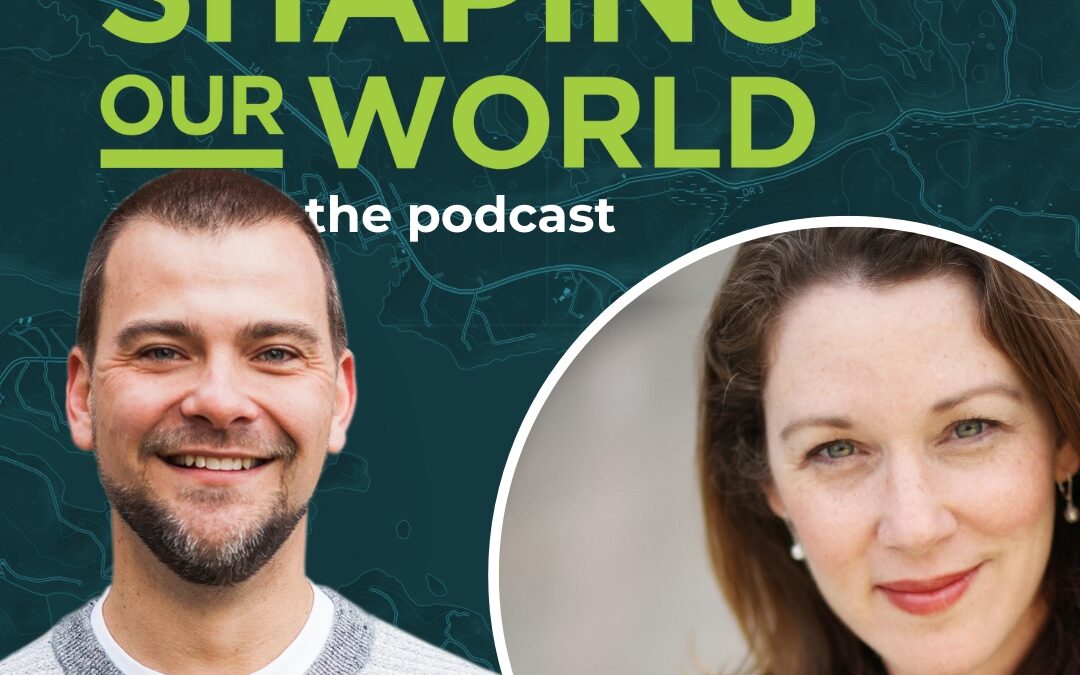
Well, hey everyone, I’m Chris Tompkins and welcome to the Shaping Our World podcast. My goal is to invite you into a conversation that will leave you more confident in understanding and inspiring the young people in your life. Each episode we talk with leading thinkers, and practitioners and share resources to help you dive deeper into the world of youth today. Today, if you like science and the brain, we’ve got a great show for you. And even if you don’t, there’s going to be some really great things that you’re going to hear from Dr. Jean Clinton. Dr. Jean is a clinical professor in the Department of Psychiatry and Behavioural Neuroscience at McMaster University and a staff psychiatrist at McMaster’s Children’s Hospital. She serves as a senior scientist at the INCH Lab, which is Infant Child Health at McMaster. She’s been recently appointed as an educational advisor to the Premier of Ontario and the Education Minister. Dr. Jean is internationally recognised for her work in child and adolescent brain development and for her advocacy on child’s mental health and well-being. She champions early learning and care for all young children. She’s passionate about ensuring that children and youth voices are heard and respected.
[00:01:32.380] – Speaker 1
You’re going to hear us talk about that in our conversation near the end. She’s also the author of Love Builds Brains, which core message is simple but profound: love builds brains. Connexion isn’t optional, it’s biologically foundational. She brings her passion not only to research and policy, but to her own family as the proud mother of five adult children. She also brings that passion into our conversation today. I think you’re really going to enjoy this conversation. So let’s dive into our conversations about child and adolescent brain development. Welcome, Dr. Jean. It’s great to have you.
[00:02:15.340] – Speaker 2
Thank you. It’s great to be here. I’m looking forward to this conversation.
[00:02:18.860] – Speaker 1
Yeah, me too. And my science background is kind of buzzing as I think we’re going to get into a little bit of brain science and all that fun stuff. But before we get going, one of the things we like to do on our show is beyond the bio that we read, just help us to get to know you a little bit better. What shaped your world when you were growing up? What were the big influences in your life?
[00:02:41.100] – Speaker 2
Well, I would say that the My biggest influence was music. I really, really loved music. It’s carried me through many, many things. I went on to have a degree in music. But, you know, I was thinking about the question, and the other thing that shaped me was Camp Marydale, another camp. But it was— and we’ll talk about, I think, when I loved being with the 6-year-old boys. And I was reading a book then called “Dibs! In Search of Self” about play therapy. And it was decades later I made the connexion that as I was a 13-year-old and reading that and being with kids was a projection of me being a child psychiatrist.
[00:03:35.300] – Speaker 1
It’s funny how when you look back, you see those little, you know, seeds of things that you at the time would have no knowledge that that— you weren’t 14 and said, oh, I know exactly that’s what I want to do. But it seeds something in you that down the road plays out in your career. I think that’s amazing.
[00:03:51.900] – Speaker 2
Yeah.
[00:03:52.520] – Speaker 1
I just want to fast forward a little bit, help us to get to know you. What shapes your world today? Maybe music still does. I’m sure it does. But help us to get to know you just a little bit in your personal life. What are your hobbies, interests? Things that you’re kind of passionate about beyond your kind of career and vocation?
[00:04:08.490] – Speaker 2
Well, do you know, one of the things that is a blessing for me is that my career and my life are very much in sync. So what shapes my life is my 5 kids and my 9 grandchildren and care. You know, thinking about care. Care for others, cares for my husband, care for myself. So care has really entered into my life. My hobbies used to be playing music, stitching, I love stitching and knitting, but I find now that I don’t have very much time for it. So what is shaping my life now is stress and responsibilities.
[00:05:05.590] – Speaker 1
I’m sure there’s a lot of people that can resonate with that for sure.
[00:05:09.590] – Speaker 2
Yeah.
[00:05:10.170] – Speaker 1
Tell us a little bit about kind of your vocational journey, what you do now, and particularly how you shape the lives of families and kids with your work.
[00:05:20.510] – Speaker 2
I was very interested in how the brain worked from probably, when was it? Probably grade 12. So 17, 18. I was really interested in that. I was also very interested in how people thought. I remember thinking about people and their minds. So I went into music, a music degree. It was an interesting path because I didn’t have any high school music other than the band. And I played bass clarinet. So I had to very quickly learn how to play piano. So I played piano for a year and a half, working away, working away. And I actually got admitted into the McMaster programme. In grade 12 though, I was also interested in medicine. So I went for this huge long walk trying to decide, should I go into science or should I go into music? And I thought, would I want to teach science? Sorry, Chris, I wouldn’t. I know your background in science. I didn’t think so. But my heart said do music. And McMaster just happens to have a medical programme that you can get in with any degree. So I believe I was the first, I think I may have been the very first, music degree person that got into McMaster.
[00:06:56.380] – Speaker 2
That’s amazing. Oh, it really was quite something. So then I did medicine. I did my training. During my training, I was interested in the brain. I wanted to go to Boston and see neuropsychiatry, how the brain and psychiatry interlink. And then I had a fabulous teacher. In psychiatry. And I was sold on being a psychiatrist. And then I did my child psychiatry rotation and bang, I had to be a child psychiatrist.
[00:07:32.330] – Speaker 1
Oh, wow.
[00:07:32.810] – Speaker 2
So the influence of significant people is huge for me. That is huge for me. I haven’t had a path that, Krista, you know, that I said, I’m gonna do this and then I’m gonna do that. Not a single thing has been planned like that. So I didn’t go to Boston because I got married and wanted to hang around with my husband rather than taking off to Boston. And then became very interested in how the brain worked in a different way than I did as a child psychiatrist.
[00:08:14.070] – Speaker 1
Okay, yeah.
[00:08:15.350] – Speaker 2
Because as a child psychiatrist back in the ’80s, we didn’t know all of what we know now in terms of the brain. So, you know, I knew that, okay, the serotonin reuptake inhibitor has to do with that part of the brain. But, you know, we had the decade of the brain in the ’90s. And I got completely fascinated, became a complete and utter geek about how the brain works. It changed my clinical practise, that is how I interacted with the children and the families that I was seeing. And also has had a huge influence on my parenting my adult children, that because guess what? They don’t grow up and you don’t have to worry about them anymore. You worry about them all the time. And also with my, Also with my grandchildren. I remember though, in music, I still have a good friend in music, from music. And he thought all the time that we were talking, ’cause he knew my interest, he thought I was analysing him. I tell you, he is probably the last person ever that I would want to analyse. He’s so, so interesting and complex. Yeah, so I’m a brain geek.
[00:09:38.750] – Speaker 2
What can I say? I research. I find out as much as possible about how the brain works in kids.
[00:09:47.590] – Speaker 1
Well, that’s amazing. I know there’s some listeners probably like me that are like, oh, this is me. I’m already thinking of like, we could go on and on about all the questions that might come up from this. And I know a lot of people are going to want to hear a lot of the information and the little tidbits that you’ve garnered over all your years of work and your experience. And One of the things I’d love to— well, a lot of the stuff you do is around connexion and relationships and how it impacts the brain. And I think often when we think about relationships, we think about emotion, not neurological. So can you lay the groundwork for this conversation and help us understand what science tells us about relationships? And we’re gonna focus in on parents, caregivers, adults with kids, how that actually shapes a child’s or teenage brain, what happens when relational safety is absent, like what do relationships have to do with the brain development of young kids?
[00:10:46.170] – Speaker 2
Well, the reality is it has everything to do with the development of young kids, everything the brain has. So our brain is our master organ. It decides if we laugh, what’s funny, you know, what I decide to say to you. It’s the brain is the master organ. And we now know that that master organ, the brain, is not a fixed unit. You know, it weighs about 3 pounds as an adult. But what we’ve learned is The brain is in fact way, way, way more plastic, way, way, way more malleable, changeable than we ever thought when I was a medical student and when I was studying. What we now know is that malleability is called neuroplasticity. Neuro for neurons. So a baby is born, their brain weighs only about a pound and a half. But by the time they’re 3 to 5, their brain has doubled in size, almost 3 pounds. And it’s not that they got more of those neurons, that’s the main cell. It’s that the neurons have made all kinds of branches to connect with other neurons. And so what that connecting is driven by, particularly at times of change, but hugely in the early years all the time, those connexions are made.
[00:12:34.760] – Speaker 2
So the physical, neurological, those connexions are actually made through relationship. Is a nutrient for brain development. That means it’s important to think about how am I feeding the brain of my child? So big, big, big time in the early years. And when I first started reading about this, a great book, “The Brain That Changes Itself,” when I started reading about this, I thought, “Oh, holy cow.” I didn’t know this when my kids were under 6. And what we now know is it’s about good enough parenting does okay. And the crucial thing about brain development in the early years is the serve and return. So the baby, the toddler sends out a message, I like you, I want you, you need to be close, I’m crying, I need to be change. That’s a serve. And the adult has to learn how to read those serves and do the return.
[00:13:51.700] – Speaker 1
Yeah.
[00:13:52.860] – Speaker 2
So serve and return. One of the things that I worry about, to be honest, Chris, is that the iPhone of the parents is replacing a lot of that return. So relationship and connexion is changing, literally changing the structure of the brain. And the great thing is with neuroplasticity, you can have a challenging early childhood, but you get a whole new chance in adolescence because brain changing happens in adolescence as well. Not the same way as it did when little ones, because little ones are developing a million new synapses. That’s where they talk to, the neurons talk to each other, a million a second. What’s different is in the adolescent brain, there’s a lot of pruning going on. The snip, snip, snip. What is being used, like going to a camp. I’m gonna be talking to Big Brothers Big Sisters soon. Being a mentor, being a mentee, having relationships builds your brain in adolescence. And learning a skill builds the brain. Being in the band builds the brain. Having real friends that you look at and have serve and return, like conversation, builds the brain.
[00:15:37.040] – Speaker 1
Can you give us just a little bit about how that serve and return changes over time too? Like what does it look like in elementary school into teen years? Because again, that concept of a baby cries, we think they need food, we go back and forth. Give us a little more pictures of how that kind of goes as the child grows older.
[00:15:56.800] – Speaker 2
So connexion is key. So if we build the brain well. During the middle years, being available, being present when the child comes home from school, for an example. If you’re not at home, somebody should be at home in the early elementary. Having meals together. Imagine that, having meals together. There’s good research, it’s old but it’s still relevant, that the number of times people have meals together with their children is correlated with early use of drugs, sex, and rock, not rock and roll, but that, you know, that was a great song.
[00:16:53.260] – Speaker 1
Yeah, I know what you mean.
[00:16:54.380] – Speaker 2
One of the reasons that Back in the day, one of the presidents in the US said, let’s have Family Dinner Day where you do have dinner. Well, what does it look like? It looks like you’re making deposits in an emotional piggy bank. Saying I love you, being there, not judging, not jumping to conclusions, but recognising even in those middle years Who are you playing with? Are you playing? Being connected means involved in your child’s life so that they know that they’re safe, they know that they matter, and they know what they’re about.
[00:17:42.860] – Speaker 1
Maybe help parents who are kind of at that early teen time where we know developmentally young people are seeking independence. There’s that ebb and flow back. They long to be loved and cared for by their parents, but they’re also seeking independence. And that’s where a lot of the tension comes with parents and children.
[00:18:03.090] – Speaker 2
Yeah.
[00:18:03.960] – Speaker 1
What advice would you give to parents on that serve and return? I’m going to keep using your words there. When the kids are kind of trying not to be in the room or not with them, how do we do that in a way that is helpful and not, you know, trying kicking and dragging and screaming to form relationship, what advice would you have for parents as they get into those times of independence?
[00:18:28.360] – Speaker 2
Okay, so Chris, I’m gonna go with just what came into mind, and that is read Robert Munsch’s “I Love You Forever.” Yeah. Oh, I’m getting goosebumps just thinking about it.
[00:18:41.260] – Speaker 1
My mum used to read that to me, yeah.
[00:18:43.540] – Speaker 2
Yeah, yeah, no, it would make me bawl, cry so much reading it now. So what’s in that book is no matter what, unconditional love is what gets families through the adolescent years, which is from about 10 to 25. So what advice I give is the brain is under construction in adolescence. It’s under construction. Kids are not doing things to drive you crazy on purpose. The brain in adolescence loves novelty and risk-taking. Why? Because what’s happening in the brain is their reward neurotransmitter called dopamine When they have something exciting, it is fricking huge, way more than what we get as adults. Those pathways are developing. So they’re not doing these crazy stunts to get in trouble. But because of their brain development, when there’s an emotional climate that’s high, they are thinking, “I want this thrill of it.” Do they know it’s dangerous? Yep. But the danger, the danger little mouse in their brain, they’re telling it to shut up. “I want, I want this.” So it’s helped a lot of parents to know that the kids’ brains are changing. That when they come in, up to even including adolescence, when they come in and you ask them, “How was your day?
[00:20:48.530] – Speaker 2
What did you do today?” That’s the kind of things that we ask. And they say nothing. If they’re in a private school and they say nothing, you think, “What the frick? I’m paying all this money?” Or nothing.
[00:21:03.210] – Speaker 1
Yeah.
[00:21:03.610] – Speaker 2
Yeah. But they want to be with their peers. It’s a biological drive. It’s not that they love you less. It’s that they need to be with their peers. And when you think that’s happening in the brain, when you think about it, it makes a lot of sense because if our ancestors had hung around the cave, you know, it’s nice here, mommy, I’m going to stay. I don’t want to go out and see if there’s anything exciting out there. We wouldn’t be here as a species, right? They wouldn’t have gone out and did, you know, the sex, drugs. No, sorry. They did, they went. It’s a biological drive to affiliate. They’re not doing it on purpose. They still love you. They still need you. And you know, they need you as much as they did in babyhood.
[00:22:02.700] – Speaker 1
Yeah.
[00:22:03.740] – Speaker 2
Now it may not be time on a Friday night as they’re walking out the door with their friends. So the other part of the brain that’s under construction is the emotional part of the brain. So, you know, you’ve got this nice or Terrible. My dad used to say that I was either all sugar or all shite. Now it’s not swearing because it’s Scottish.
[00:22:33.960] – Speaker 1
When you say it that way, yeah, Scottish, I love it.
[00:22:36.290] – Speaker 2
Yep. Yeah, yeah, yeah. So that up and down, that up and down, back, oh. Why? Again, it’s the brain. But here’s the kicker. The emotional brain is getting developed. Ahead of the prefrontal cortex or the amygdala and all that. And so you’ve got a fast driving car with a brake that’s not there or doesn’t work, right? And that in the emotional stuff, when there’s emotional temperature around and it’s high, They think less and act more. What does that mean? How does that translate into parenthood? Big time. Tell yourself to stop, to pause, to get your own emotional brain under control and Connect before you correct. Connect first. Make deposits in that bank account. So, you know, I see you’re really upset right now. Oh, I hear you saying that it’s not fair at school. I hear that ‘You didn’t go to class today.’ So you’re acknowledging first and then say, ‘Tell me.’ You have to understand, you need to go and get the perspective of the child, the young person. Put yourself in their shoes. Oh yeah, no, they like you, they like you. They’ve never invited me to a freaking birthday party, Mum. What do you mean they like me?
[00:24:38.800] – Speaker 1
Yeah, yeah.
[00:24:40.400] – Speaker 2
Don’t do that. It’s not good for them. They know it’s not helpful. Not helpful.
[00:24:46.980] – Speaker 1
That was so, like, literally so much good in that, Dr. Jean. I wonder, because your book and the phrase that you use is love builds a brain, and you talked about that unconditional love, and in that answer. You gave us a lot of really great stuff, but is there a few other things that when you think about love building a brain that parents can really think about what that love looks like? What does that in the day-to-day stuff? What’s that unconditional love look and feel like?
[00:25:17.950] – Speaker 2
It’s creating safety at home, psychological safety at home. It’s about Dropping some stuff that’s not that important, like tidying your room. It’s very important not to lose it around tidying the room. Saying, “I don’t feel good.” I don’t feel good, or it bothers me that there’s all kinds of stuff on the floor. I’d really like you to pick it up. And you don’t then say, picking it up, ‘I’ll love you then.’ Kids told me so many times that their receiving of love was dependent on what they did rather than who they were. So think about that every single day. And lie in bed and feel guilty at the end of it. That’s normal. But so it’s dropping stuff. They want to get or they come home bald or with a purple spike, right? Thank God. That’s what I’m going to focus on rather than the drugs or whatever. So decide what you’re going to drop. Make a bug list. And discuss, have dialogue.
[00:26:53.900] – Speaker 1
So you mentioned earlier a few things you’ve said I kind of want to go back on. We’re going to pick up the cell phone thing in a minute, but I would love to, because you said this earlier, I think one of the tensions with parents when we hear about things like connection’s really important, and, but you know, if we missed a window when they were young or middle school, you know, it was really stressful time in our family’s life. Can you tell us a little bit about research or anything that you know about how much room there is to repair some of the things? You talked about malleable brain, like, can we go back? Like, what damage is caused? Is it permanent? Like, how do we kind of make up for lost time, for lack of a better term, I guess?
[00:27:37.570] – Speaker 2
Well, it’s such an important question, Chris. If it wasn’t true, that the brain can change, then child psychiatrists would be out of business. We’re trying to change the brain. The thing is, the only person who can change the brain is the person. So say you were really stressed as a family like you described. And you’re coming into adolescence, your kids are coming into adolescence, so they’re 10, 11, and they are defiant, you know, they’re F-bombs all the time. It would be really hard to say, you want me to connect at this point? And the big answer is absolutely. Don’t lose your shite as they’re losing theirs. Be calm. Lend them your calm. That’s really hard to do. It’s super important. We need to be thinking about our role as parents, our role as making the human as a top priority, not as something that you do when you get home.
[00:29:04.520] – Speaker 1
Right, yeah.
[00:29:05.260] – Speaker 2
We need to be thinking about it all of the time. Why? Because say you screwed up, say you screwed up big time, repair, repair is so possible and so important. Now, does it happen overnight? No. Repair is actually where the biggest growth is. Biggest growth. So can we repair? We can repair up to the day we die. Sometimes on deathbeds, there is repair. So it’s huge. Thank gosh for repair. With my 5 kids, oh my goodness.
[00:29:59.430] – Speaker 1
Yeah, every parent is saying amen to that right now to say, you know, because we all have moments as parents or quite frankly, even as adults that journey with kids where you just wish you had a moment back where you’re like, I can’t believe I said that or responded that way or didn’t respond that way or were absent and missed something. That you could not. I love at the heart of this conversation, Dr. Jean, is that for us to be a bit encouraged that the kids that we care about, their brains are continuing to develop, right? Up until 25, 20, you know, but we can continue. If there’s not, it’s not too late to build that connexion. And like, give me the brain science too. If we like continue to invest later in the teen years, like, does it still learn some of the stuff that maybe it got missed? And form synapses and neurons growing? Like how does connexion relationship happen even if we missed windows?
[00:30:56.880] – Speaker 2
Let me give you a medical physical example. The opening of the book, “How the Brain Changes Itself,” if I remember correctly, is about a professor of poetry who has a big stroke in his 60s. He has this big stroke and he goes to rehab. He comes home and he can’t walk or talk. He had a son who just happened to be a neuroscientist. So I said, the brain is plastic. And the brain develops from the bottom of the brain, primitive functions, up through emotional functions, up through cognitive functions. So let’s run it backwards with my dad, with Papa. So he crawled before he walked. He died climbing a mountain. Did he really have a stroke? When they did the autopsy, you betcha he did. He had rewired his brain, not with new neurons, but with new connexions. So say you were completely absent in the early years for a child. One of the things is think about others that were there for them because those, we call it attachment, those relationships are hugely important. But if you make those connexions, it takes longer, it’s harder, but you are in fact rewiring the brain when you are available, when you think this is my big-time job, when you let them sleep in on the weekends because their sleep cycle has changed.
[00:33:06.470] – Speaker 2
That’s making deposits in that emotional piggy bank. And you know, I used to think about and say, you know, the more you do love, serve, and return, the bigger that piggy bank is. And so when you have to take something out of it, you’re not tapping it dry. But my sister, we were talking about this the other day, she said, you know, I think of it as fuel. And I love that. I love that. We need to be keeping on putting the gas in.
[00:33:41.310] – Speaker 1
And I think that whole bit is so encouraging for parents too. You said it’s like, yeah, but in this season of my life, my job, the thing that I was— I just missed this window. And to know that, yeah, you can still keep depositing today. Like you can start, even start putting fuel in the tank or money in the emotional piggy bank, as you said. And I think that’s only going to be a good thing. And we shouldn’t be discouraged by the past. It should inform the way we make decisions about the future. So, um, I, I love that.
[00:34:12.660] – Speaker 2
Yeah.
[00:34:13.050] – Speaker 1
I want to go back. You talked about the phone, and I think it’s a big topic for parents. I just listened to a huge podcast about brain rot and social media the other day, and we’re hearing a lot. And you mentioned it from the perspective of even like relational disconnect, um, and we know that like from an emotional standpoint and what it does for teens and all that. But I’m wondering Is there research out there on cell phones and the brain with kids and how usage of devices or social media really impacts the developmental journey for young people from a neurological standpoint?
[00:34:50.830] – Speaker 2
Yeah, again, such an important question. Just a sec before we move on, for everybody who’s feeling guilty, including myself at the time, Being that perfect in sync with your little kids is not to happen 100% of the time. It doesn’t. In fact, the research shows it’s 30% of the time that we’re in sync. So the chances are you did it, you did the connecting. But if you as an adult have spent your kids’ brain development years, say, early on your phone, then the kids have sent out a serve and you’re not returning that.
[00:35:45.630] – Speaker 1
Right. There’s a lot of balls in your court. Yeah.
[00:35:48.580] – Speaker 2
Yeah. It is a huge issue because the brain is built by relationship and connexion. So you have to be there. You have to turn up. You have to be present for your kids. So really think about your phone use as an adult. We need to be thinking and changing the adult view. But what about the kids? I just had an interview with a guy who’s making a movie about some of this stuff. And he said, you know, there are people in the camp that are screen time and that kind of stuff and social media is bad. It rots the brain. You know, I want to see that podcast. It rots the brain. And then there’s others that say, no, it doesn’t. You know, it’s a connector, all of that kind of stuff. So that’s the problem. The problem is people are thinking of a binary thing. It’s either or. It’s a spectrum. It’s a spectrum. Is there research that shows excessive use, and that’s the key word, excessive use of screens has been clearly shown to increase depression, anxiety, and suicidal ideation. It’s clear, excessive, excessive use. But on the other kind of thing that’s really important is the context that the social media is happening in.
[00:37:40.340] – Speaker 2
So, Kids with social anxiety, I say thank goodness for social media because they then, through these texts back and forth that I would say that’s not much of a relationship, feels like a relationship to them. And so they start to see themselves as lovable. That’s important. And it is, you know, it is a way that kids connect with each other. They learn a little bit about each other, but huge misinterpretation happening. And it’s happening all the freaking time. So back in the olden days, oh, we thought televisions were going to be bad for kids, but Turn the TV off. TV’s off for the day, the evening. The cell phone, bing! What’s going on? 3 o’clock in the morning, it’s under their pillow, ding! So practical things, no cell phone use at home when you’re at the table having dinner. And by the way, have family dinners together. Relationship is so important. So no phones at the table. That is still true in my house. The kids don’t do that.
[00:39:19.080] – Speaker 1
I know a lot of folks that would also recommend not having them in their bedroom overnight as well. Well. I didn’t mean to steal your answer there, but—
[00:39:27.660] – Speaker 2
Well, you’re not stealing my answer. We’re on the same page. We love the kids. We want what’s best for them. Yeah, for sure, Chris. Yeah, so not to have them in the bedroom. Hello, mum. Hello, dad. That means you too. That means you too. But what if? That’s you too. You know, the issue of cell phones in schools You know who was trying to reach the kids the most and calling them?
[00:39:59.850] – Speaker 1
I know based on my work at the camp, it’s the parents.
[00:40:03.220] – Speaker 2
It is the parents. Oh, but there might be something going on. Call the fricking school. Something might happen. Okay, well, why don’t you, here’s an idea, build their brain to be anxious all the time. Oh, mum needs to reach me no matter what. There must be something going on. I think it erodes the sense of safety. Parents are always on the type and it does not build independence.
[00:40:38.930] – Speaker 1
We’ve been moving through our camp asking kids not to have cell phones as We’re kind of moving through and that’s been the biggest thing is parents say, well, what if I need to get in touch with my kids? And kids are conditioned to be like, mum needs to hear from me when I’m at camp. And we’re like, well, this is a safe environment. Like we’re doing a lot of fun things. It’s one week. You can probably let your kids have fun without the constant checking in on them.
[00:41:06.260] – Speaker 2
Oh, you know, I get it. I absolutely get it. My daughter, came to Muskoka Woods, I think for a 2-week period, and it drove me nuts that I didn’t know how she was doing. Is she okay? Is she being picked on? ‘Cause my other daughter had a bad experience with another camper. So it’s in my brain, is she okay? If she’s not okay, the camp is going to call you. ‘You have to trust the camp that we have your child’s best interests in mind. This is a place where the kids are going to learn to play. Outside, they have a phone childhood. Here, they have a play-based childhood.’ They’re the kind of things that I would be telling parents to ease their anxiety. That it’s actually very good for them to be without the phone. And you know, there’s some research that they’ve done this at camp and the kids feel fantastic.
[00:42:19.230] – Speaker 1
And you could see them even come alive without the phones in general, right? Because they’re engaged in what’s happening. The best thing you see now is kids sitting in a circle in free time just talking and building relationships, those connexions. You know, they’re not pulling out their phone to distract them or escaping from the, you know, what’s happening around them to transport themselves to a different place. They’re able to be present and enjoy what’s going on. And so we’ve seen a lot of benefit for that. But I love those really practical tips and advice. And I love even like parents too. Like, we have to model this. And to your point, we can’t build connexions when we’re constantly got a screen in front of our face or being distracted by what’s coming in. And it creates us anxious too. We’re heightened about everything going on around us.
[00:43:12.240] – Speaker 2
The rule has to go for the counsellors as well. You know, the 400 modelling.
[00:43:17.290] – Speaker 1
Yeah, that’s so good. We’ve heard a lot from you just about like stuff that maybe people aren’t as familiar with. You know, about science and the brain and other things that are part of your world and your research and your background. And you have described yourself a bit of a knowledge translator. You take these complex brain science things and make them accessible to parents, educators, communities. One thing I wonder is like, what are some of the things beyond what we’ve said that maybe get lost in the research that stays in those academic circles and that you might wanna kind of share out any other things beyond what we’ve talked about and why is that such a significant role for you?
[00:44:01.170] – Speaker 2
So one of the things that doesn’t get talked about as much as it needs to is what I said earlier about 30% of the time where we are in sync. That’s hugely important. It doesn’t mean that you don’t try to be present for as much time as possible, but not being in sync, when the brain comes across that, then growth is possible. That’s where growth happens. So it’s important. How does that relate to middle school? Failure is super important. Another area of research that is not talked about enough. When you fail, well, first of all, when you have created an environment in your classroom and at home where the kids feel safe enough, where they feel valued, and they know what they’re there for, safe, significant, and situated, my friend Stephen de Groote, then they’re free to make those mistakes that build the brain. Ooh, I didn’t get that. What did I do wrong? Connect, connect, connect, connect, connect. The brain is going wild. Do we allow that to happen with our kids? Uh-uh.
[00:45:35.870] – Speaker 1
That’s really interesting because for all the parents that kind of rush in to save and protect and help We’re putting in jeopardy some important developmental processes.
[00:45:46.710] – Speaker 2
Huge, important developmental processes. You know, when I was a kid, when we played musical chairs, we actually, Chris, took away a chair. And parents will feel, “Oh, that means somebody doesn’t have a place to sit.” Yeah, yeah. Is the point, right? So many of these old games were to make a point, including those whirly things that, uh, that it was death. Yeah, not so, not so hot. But it’s driven so much like playgrounds, you know, risky play Good for the brain. Excellent research. It’s not out there big time. It’s not out there. And you know, I think we need to be helping parents, not saying you’re doing it wrong, but saying, you know, we’ve learned more over time. I’ve talked to judges and I remember one judge saying, “This is what the science said. This is what I learned. And you’re saying something different.” And I said, “You betcha.” Isn’t learning and growth amazing?
[00:47:13.580] – Speaker 1
There has been some really incredible things you’ve shared. And there’s a few of these that are just percolating in my life. I love the “lend the calm” or however you phrase that.
[00:47:24.410] – Speaker 2
Lend them your calm. Means before that you have figured out where your calm is.
[00:47:31.960] – Speaker 1
Yeah.
[00:47:33.230] – Speaker 2
That’s like self-reflection is hugely important. I suck at it, but it’s really important to be able to lend your kids your calm.
[00:47:44.130] – Speaker 1
That just reminds me of a storey where there’s something going on in my daughter’s life. She’s now a young adult in university. But when she was a bit younger, there was something that was causing me a lot of anxiety. And, uh, you know, my executive coach, who’s a clinical, um, psychologist herself, uh, I just said, can I just ask you about, like, how do I navigate this conversation? And all she said is, like, this is about your anxiety right now. Let’s manage your anxiety. Like, we didn’t even talk about how I would talk, like, what the issue was with my daughter. She talked to me about myself.
[00:48:16.620] – Speaker 2
Love it.
[00:48:17.040] – Speaker 1
And helped me reframe where I was at and what I was thinking and what was I anxious about and working through that. And then it was like a 10-minute conversation. And then I entered in a different place into that conversation than what I would have before. And I’ve never forgotten that, as to your point, it’s like there’s some regulation for ourselves as we, you know, that’s the— I have to be calm first to lend the calm.
[00:48:43.750] – Speaker 2
Yeah. Well, do you know what? You just gave a beautiful example of how the brain is capable of change throughout life. When you learned that, you changed your brain. You changed your brain. Viktor Frankl, I think it was, described that between an action and a reaction, there’s a pause. We need to get into that pause. You know, I never told parents, take a deep breath, because I thought, what the heck? What does a breath do? That was in my early career. Now it’s huge. We now know the science. Take a breath. It gives you something in the pause. It changes Literally changes your brain when you sit back, when you stop, take a deep breath in, hold it, blow it out. Physiologically, it changes you. You become calmer. So it does, it does, hugely important. Lend them your calm, yeah.
[00:49:57.650] – Speaker 1
So you’ve given us a whole bunch of things, but I wonder just as we’re running out of time here, and again, I wish we could keep going, for even longer, but I think there’s been so many things for parents and adults that care for kids to really grasp. I know probably Roz and I have both been furiously writing notes. Roz is our producer off camera there. And I just wonder maybe as we finish, because you’ve devoted your career to ensuring children and youth voices are heard and respected in the everyday life of a family, what does that really look like? That’s kind of part one. And then last thing we’ll just finish with is you’ve given us so many words of wisdom, but is there one lasting piece of wisdom that you want to leave with parents about nurturing connexion? What would that piece of advice be?
[00:50:44.560] – Speaker 2
You put your finger on it when you gave your description. Having kids have a voice sometimes means as an adult, you have to shut the frick up, right? Know thyself, know thyself. So kid’s voice is often quieted. It’s appalling to me how much it’s in our education system that voice is shut down, not asked for. At home, Tell me. Magical two words. Tell me. Means you have to be in a place that you actually want to listen. Biggest issue that we have as parents is F2, find it, fix it. You want to find out what the problem, your child is getting bullied. Oh my God, who did that? Let’s go to the school. Hold your horses. That’s an example of find it, fix it.
[00:51:50.880] – Speaker 1
Yeah, yeah, yeah. I can feel that.
[00:51:53.620] – Speaker 2
Yeah. Give the child voice. Oh, that sounds terrible. Tell me. Tell me more. Go on. Don’t jump into I need to fix it because what you really want is for that child to figure out how to fix it themselves. Now, it may be with help, it may be with coaches, but you want the child’s brain to be developing, not you jumping in. That’s voice.
[00:52:30.420] – Speaker 1
I can remember the day my daughter looked at me through tears and said, Dad, I don’t want you to fix my problem. I just want you to listen to me. Me, right? And I was like, okay, like, again, I’ve never— rewiring— I’ve never forgot that because two Fs, I was trying to figure, you know, we don’t want our kids to go through distressing things or, you know, challenges, like, in our hearts. So yeah, I just remember her looking at and giving that voice like, Dad, and I’d like immediately was like, okay, tell me more about— you tell me about what’s going on, right? So Absolutely. I’ve had that experience myself.
[00:53:08.790] – Speaker 2
So that’s fantastic. That’s absolutely fantastic, Chris. Giving them voice also means sometimes hearing stuff you don’t want to hear. And it’s not that you then judge them, but be curious. Be curious. Now, you might be mad. You might be mad. But think of, how do I understand this from the child’s perspective? So here’s an example. What do you do when one of your children is brought home in handcuffs, had been in the back of a police cruiser, completely drunk? What do you do in that situation? Well, a lot of parents will go spare. When you think of this, what you do is go to bed. We’ll talk about this later. So you lend them your calm. Have they gone through enough already? You betcha they have. They’re in the back of a freaking cruiser. What did they do to get that? I don’t know. I’m pausing here. Go to bed. We’ll talk later. That is giving voice through action. The kid’s voice through action. I see parenting as progress, not perfection. If we’re trying to be perfect, Good luck. So progress, not perfection. And that means one of the things I’ve already said, you connect, connect, connect, connect.
[00:55:02.470] – Speaker 2
That’s building relationships before you correct. ‘Cause when you connect, that leads to clarity. Tell me. Clarity, that that leads to control and confidence. Again, that’s my great friend Stephen de Groote, Getting to Better. That’s my work. Did I do it perfectly? Nope. Progress, not perfection. But I’ve got 5 great kids.
[00:55:34.090] – Speaker 1
That’s so encouraging. So encouraging. Well, I thank you so much for all the work that you do and the people that you’ve helped journey along the way, and for what you’ve shared with us today. Again, there’s so many phrases, you know, all sugar and all shite. I love that.
[00:55:52.110] – Speaker 2
Oh, that’s the one you remember.
[00:55:53.800] – Speaker 1
Ah, that’s the one I’ll remember. But no, honestly, there were so many good ones through this conversation. So encouraging for me, and I know for so many of our listeners. So thank you for your time today. Again, you’re leaving me with so many things to think about as we go. So really appreciate it.
[00:56:09.460] – Speaker 2
My pleasure. It’s been great speaking with you, Chris, for sure.
[00:56:16.490] – Speaker 1
What an awesome conversation. And that’s it for the episode today. If hearing from Dr. Jean Clinton encouraged you to think differently about connexion, brain development, and the power of everyday relationships with kids or people that you care about in your life, head over to muskokawoods.com. There you’ll find a blog post with key takeaways from this conversation and a link to listen again. Don’t forget to subscribe to Shaping Our World and share this episode with a parent, an educator, or a leader who’s passionate about helping young people thrive through connexion and belonging. Thanks for listening, and we’ll see you next time.