[00:00:12.160] – Speaker 3
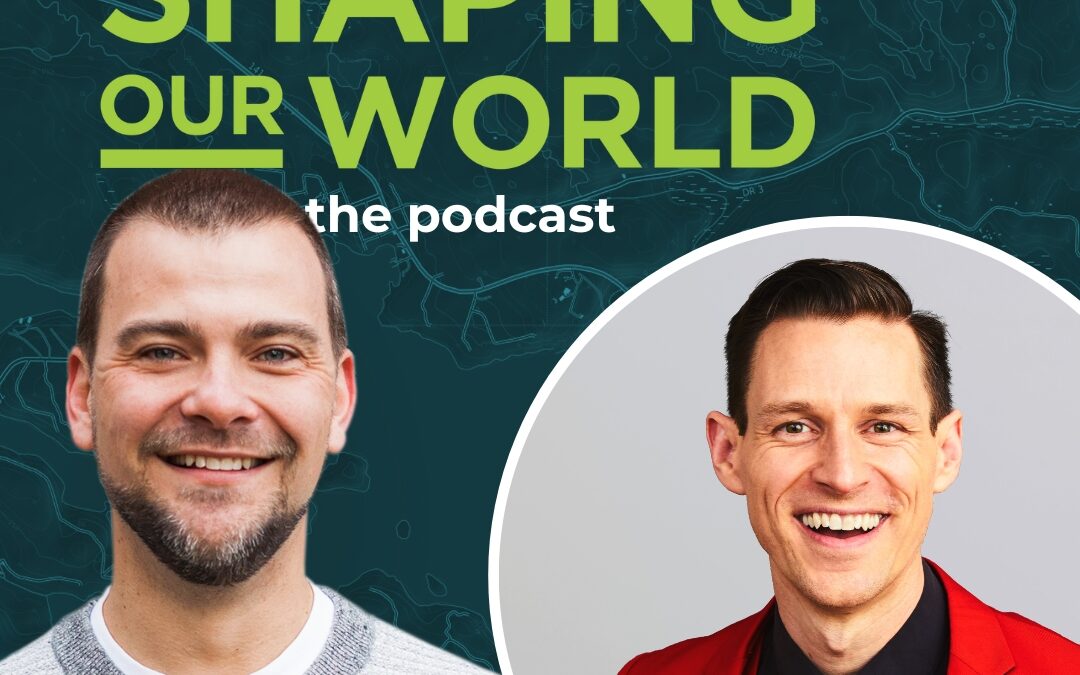
I’m Chris Tompkins, and you’re listening to Shaping Our World, a podcast dedicated to understanding and inspiring the next generation. Each conversation is designed to leave you more confident and better equipped to connect with the young people in your life. Over the next two episodes, we’re diving into a powerful two-part series on Generation Z, who they are, what shapes them, and how we can lead them in a world that’s changing faster than ever. Today, in part one, I’m joined by a returning guest and friend of the podcast, Dr. Tim Elmore. Tim is the founder of Growing Leaders and one of the most trusted voices on how generations work, grow, and thrive together. His new book, The Future Begins with Z: Nine Strategies to Lead Generation Z as They Disrupt the Workplace, couldn’t be more timely. In this conversation, we’ll explore how Gen Z is reshaping leadership, the workforce, and culture, plus what parents can do to guide them toward resilience and purpose. Then in part two, we’ll continue this exploration of Gen Z with Jennifer Deal, Senior Research Scientist at the USC Marshall School of Business Center for Effective Organizations, who led a study on the beliefs, challenges, motivations, and leadership potential of Gen Z staff here at Muskoka Woods.
[00:01:28.880] – Speaker 3
So stick with us for series where we’ll unpack the stereotypes to understand who Gen Z really is and how we can help them shape the future with wisdom and confidence. First, let’s kick things off with Tim. I work at Muskoka Woods as a CEO, but my journey began in 1996 as a member of the summer staff, and it was life-changing. Working at Muskoka Woods is not just about the job. You get housing, meals, and the chance to live in one of the most beautiful places in Ontario, Lake Rosseau. More than that, you’ll be part of a community that values your development and well-being. With access to our facilities and special staff events.
[00:02:17.640] – Speaker 2
Ready for a career that offers so much more?
[00:02:20.400] – Speaker 3
Visit jobs.muskokawoods.com
[00:02:22.580] – Speaker 2
To learn more. Now, let’s delve into today’s conversation. Tim, it’s great to have you with us.
[00:02:29.540] – Speaker 1
Chris, I always enjoy conversations with you. We’re never at a loss for words, are we?
[00:02:34.340] – Speaker 2
No, I know. Our producer, Roz, is going to have to be texting me a fair bit to give me the time updates. But for those listeners who may recall, Tim was on our first season way back Gwen, and Tim has been a long friend of Muskoka Woods and me personally, and we spend a lot of time talking about all this stuff outside. I’m always tracking with what he’s up to at Growing Leaders and the work that Tim does. It’s great to have you back for another conversation, and we’re going to get into it, but you’ve got some new work, a new book coming out, so we’re excited to dive into that, Tim. It’s really great to have you back with us.
[00:03:10.370] – Speaker 1
Thanks.
[00:03:11.080] – Speaker 2
To get going, to build off of the intro, people heard me talk a little bit about you, but let’s hear from you. What shaped your world when you were growing up? What are the big influences in your life?
[00:03:21.140] – Speaker 1
Well, the first thing that comes to my mind is sports. I definitely was into almost all sports, so I played sports I did sports in middle school, high school, did intramurals in college, but I also followed sports. So I grew up in Cincinnati, Ohio, south of where you guys are, the Cincinnati Reds, the Bangles, that thing. Big influence. I would be I would be dishonest if I said my parents were not big influences. They were huge, more than I even realized. Now that I look back, they were Steady Eddie type of people. Nothing flashy, but just I really really admired the way they lived their life, and they were a huge influence on me, not only just psychologically and behaviourally, but also spiritually. Faith played a role in my life. It was during my high school years that I made a decision that I was going to follow Christ, and I wanted to make it a reasonable decision, but that was huge. Then I think soon after that, another influencer of my decisions, Chris, was a desire to influence influence the world that I was in. In fact, you started using a phrase in college, I wanted to influence the influencers.
[00:04:39.000] – Speaker 1
So I wanted to make a mark. Now, you could say, Well, you’re just an arrogant young man. Maybe I was. I don’t know. But I really wanted to somehow, during my short time on Earth, I really wanted to make a positive influence. So I think those would be the biggies.
[00:04:55.260] – Speaker 2
How does that extend into your work today? You’re still interested in sports. You still play sports. Where’s faith? Tell us a little bit about your personal life.
[00:05:03.600] – Speaker 1
Yeah. Well, yeah, many of them are still the same. My parents have passed away, and I miss them to this day. But my involvement in sports now is that we work a lot with sports teams, both college and professional sports. So National Football League, Major League Base, the NBA, those are all fun. I’m doing a lot of events with sports teams. So in one sense, I’m like a 12-year-old kid going back into this franchise in Seattle or Atlanta or wherever I find myself. I would say this influence thing continues to play a huge role, Chris. I set a goal when I started growing leaders back in 2003, that I wanted to influence and equip 1% of the youth population of the world. So right now, there’s 8 billion people on planet Earth. So 1% of the youth population, which is 25 and under in my mind, is about 40 million young people. So I’m on a path to influence them through growing leaders. Right now, we have a B2B model, so I’m not in front of necessarily every one of those millions and millions of students, but I’m with the coach, with the teacher, with the employer, with the parent, trying to help them, give them tools to better connect with their young person.
[00:06:32.560] – Speaker 1
Yeah, that’s how I’m living my life now.
[00:06:35.400] – Speaker 2
Before we get to a little bit of the specifics of that work, you’ve lived a long time in Atlanta. Have you switched from the Reds to the Braves?
[00:06:42.360] – Speaker 1
I do love the Braves. I really do. But I still find I have allegiance to the Reds and to all the other cities I’ve lived in. So the Colorado Rockies, the San Diego Padres. Yeah, it’s funny how I just build allegiances over the years to the places where I’ve lived. I have no explanation other than geography, and that’s as good as it gets.
[00:07:02.860] – Speaker 2
I live in Toronto, but I’m a Cubs fan because I lived in Chicago when I was young. That’s how these things grow in us. But again, we got more important things to talk about, so let’s keep moving on that. Tell us, you talk about influencing others and a little bit about your work. Can you talk specifically just about the organization you lead and what you’re doing right now that’s shaping the world of young people?
[00:07:25.560] – Speaker 1
Well, in 2003, as I mentioned, I started a nonprofit organization called Growing Leaders. My specific goal was to do for young people what so many great leadership trainers were doing for the adult world. So Stephen Covey, John Maxwell, Jim Collins, business leaders were getting trained in leadership all around the world. But I wasn’t seeing something specifically being done, at least not on a big scale, for young people. In fact, it seemed like every youth organization I met with was just trying to help them graduate and not do drugs, that thing. I thought, Well, that’s good, but that’s only part of it. That’s a means to an end. How about if we give them a vision for influencing the world using their gifts? Maybe we don’t need to keep them out of trouble as much or try to because they’re so caught up in a vision for their life. So Growing Leaders, 2003, we began to create a tool, or I began to create tool in the very beginning that we called Habitudes. Habitudes are images that form leadership habits and attitudes. So it’s a way of teaching a timeless principle through the power of a picture.
[00:08:42.400] – Speaker 1
You look at that image, Chris, you know these. We’ve talk about these countless times. But you look at the image and you think of a principle now as you look at that iceberg or the picture of a flood or whatever.
[00:08:54.600] – Speaker 2
The Starving Baker. That’s one I remember. Yeah.
[00:08:57.310] – Speaker 1
Oh, my gosh. One of the most popular ones. It’s the number one occupational hazard of leaders. The baker that spends so much time baking bread for others, he forgets to eat and starve them.
[00:09:07.860] – Speaker 2
He forgets to feed them themselves.
[00:09:09.310] – Speaker 1
Anyway, so that’s how that trail has gone. Now, gosh, seven million young people are currently or have gone through this curriculum. I’m just honored to get to meet them. And now they’re 38 years old, but they remember learning this 20 years earlier in high high school or college, and now they’re leading a company or a college or whatever. It’s just so rewarding to see now how this multiplication effect is in process.
[00:09:43.560] – Speaker 2
As part of your work, you obviously spend a lot of time speaking and consulting, and you’ve taken habitudes, and it’s gone all through organizations, and like you said, even major league sports teams. But you also are wired to spend time writing and researching, and particularly around young people. It’s ebbed and flowed as one generation moves on, and there’s a new generation emerging in that age group. You’ve written a number of books that focuses on that. You have a new book coming out that’s called The Future Begins with Z: Nine Strategies to Lead Generation Z as They Disrupt the Workforce. It offers strategies how to lead them effectively, specifically around the work area. I want to ask you about what sparked your interest in this right now and the timeliness, but maybe just before that, just so we always have to do this, Tim, tell people the age group of Gen Z that we’re talking about. Let’s start there. Then why is this the right time for the book? What is it about this generation entering the workforce that really focused your attention right now?
[00:10:54.480] – Speaker 1
Yeah, good question. Well, for listeners that may be a little unsure, Generation Z is It’s still young people, but they’re young adults all the way down to maybe middle school. Maybe a great way to profile this is the exact year they start, people disagree on slightly, whether it’s Pew Research Center or Gallup or whatever. But they’re basically the young people that only really remember the 21st century. They now have no real working memory of the 20th century. So they were born in the shadow of September 11th, 2001, for at least United States citizens. That was a big deal. And parents became scared to death for their children after that happened. And then the smartphone was introduced, the dot-com era bubble burst. It’s been a little bit darker time for Gen Xers than the millennials had it back in the ’80s and ’90s. And the spark for the book, Chris, gosh, I think two big, big things. I kept bumping into leaders, that would be adult leaders, employers, teachers, et cetera, who are just getting so frustrated with young people. And the frustration was bigger than it was even when I started my career. So adults always get frustrated with kids.
[00:12:05.900] – Speaker 1
They say things like, Kids today, kids today. But I felt like the gap was getting larger and larger between adults and kids. We were frustrated rather than fascinated at who they were. In fact, the data, Resume Builder did a nationwide survey, and they found that three out of every four managers found that Gen Z was the most difficult generation to manage. Three out of 10 or 30% were firing them within the first month of their employment, and another 30% said, We’re not even going to hire them altogether. I thought, That is not a way forward. I don’t care. I’m frustrating you. Chris, here’s what I love to say. This is a cheesy statement, but I always like to think of it this way. We don’t know much about the future, but we know one thing. Gen Z is going to be there, so we better never fail to invest in the inevitable, and they are the inevitable for the future.
[00:13:05.420] – Speaker 2
Well, and by default, so many of them will be leading as well. Yes, that’s right. We can’t hold the reins forever. I think, and you and I were talking, you came in and did a session on this with our managers at Muskoka Woods. Even before we were recording this interview, I was saying some of our team really… Because they’re just getting frustrated with the next generation and just not understanding things. I think as parents or adults, we can resonate with that. I mean, that’s the reason why we started this podcast, is this same feeling like the distance feels a little far. As the world changes really fast, it’s harder for us older folks to keep up with all the change and how that really shapes young people. In your book, you introduced the concept of the Peter Pan paradox, which is where Gen Z enters the workforce with a digital digital fluency, high intelligence around the digital space, but emotional maturity is not as developed. Can you explain that out a bit more? Is that an opinion piece? Is there research on this? Tell us a little bit about this Peter Pan the Peter Pan paradox.
[00:14:16.000] – Speaker 1
Yeah. Well, the Peter Pan paradox is my term that summarizes data. I chose Peter Pan because I think most people remember somewhat that Peter Pan story. It was a book first and then a play and then a movie. But Peter is this whimsicle character that flies into London or whatever, and he’s able to fly, so that’s amazing. There’s something magical about him. He spread Pixie dust everywhere and magical things happened. That was the positive side. The downside was, if you remember, he wanted to live in Neverland, where you never have to grow up. So the Peter Pan paradox is the sum total of two realities. Here they are. I think employers, and for that matter, coaches and teachers, all see this. The age of authority is decreasing, while the age of maturity seems to be increasing. The age of authority is going down, meaning Young people are entering their careers with some smarts that old people don’t have. They are digitally savvy. They do seem to understand AI naturally and intuitively better. They have monetized TikTok. Oh, my gosh. One out of eight teenagers is monetizing TikTok right now or some social media platform. For 20% of those that monetize it, Chris, it’s a full-time salary.
[00:15:42.120] – Speaker 1
I don’t know how to do that. I do not know how to do that. You can imagine that’s a little frustrating to a boss that may be 48 or 58 years old, and these young people coming in that just seem to get stuff, and they’re needing to coach us on something. But it’s doubly frustrating when you see that the age of maturity seems to be going up. You’ve heard me say this before. University deans today are saying, 26 is the new 18. Cognitively, they’re ahead, but emotionally and socially, they’re behind. Sometimes you can’t get a kid to know how to look you in the eye and have a conversation. I know that sounds like grandpa, but I think when you consider these two realities, age of authority going down, age of maturity going up, that says to me, I need to listen more than I used to listen, and I need to coach more than I used to coach. I have to recognize that’s my new reality as a leader.
[00:16:42.700] – Speaker 2
The reason why we wanted to shape this question, even to… Because sometimes we have these opinions, but you’re talking this is like a summary of what we’re seeing in the research. And so there’s things that are backing up. Some of these gut feels that we have. I’m wondering, are there other mythss about young leaders that maybe we all believe, or a myths about Gen Z that us as leaders believe that are actually myths? They’re not based in research. We think, Oh, everyone is entitled. We’re like, Well, are they? Is that just our word for that? Are there any other myths you want to debunk about Gen Z?
[00:17:22.500] – Speaker 1
Yeah, absolutely. I’m glad you asked that question. Well, first of all, psychologists coined this term fundamental attribution error. It’s really where we stereotype, we hear one story or two stories, and we run down the field all the way to the end zone and say, Oh, they’re all like that, or most of them are like that. But I found as I held focus group after focus group after focus group, with young people aged 16 to 24 years old, from California to Georgia, East Coast to West Coast, at least in the US. I discovered that many of the myths are just that. So let me give you one. Very often, I would hear bosses say, Young people just don’t want to work today. Five o’clock rolls around and they’re out the door. They don’t want to work a minute longer. We’re all finishing the task. We’re working on, and they just dart out the door. So what I did, Chris, that was interesting, is I sat down with these Gen Xers and I said, Here’s what I’m hearing from supervisors and managers. Is this true? Oh, my gosh. It was so enlightening. So that work ethic thing I just brought up, I mentioned this to Natalie, and Natalie listened to me and smiled and said, Yeah, I do leave right at 5: 00, but can I tell you why?
[00:18:41.900] – Speaker 1
I said, Sure. She said, I leave right at five o’clock because I have to dart over to another job. I’m not getting paid enough at this first job to make ends meet where I live in California. Then she said, After that second job, I dart over to take care my mother who has stage 4 cancer. And I suddenly realized, oh my gosh, Natalie’s work ethic is fine. In fact, I think she may have a better work ethic than her boss does. You know what I’m saying? So we forget that we were once young people, and people probably said that about us, but I found Gen Xers love to work, in fact, if they find something meaningful to do, if it’s not just make me share for the paper clips or something like that. So that was one myth. I think another one is… This is a second cousin to the work thing, but we think they don’t have a work ethic like we do. And what they kept saying to me is, and they were very respectful, Chris, all the ones I talked to were very respectful. They said, When I look at older generations who were workaholics and they ruined a marriage and a family because they fell in love with their job, not their wife or whatever, and now we’re blended or mixed or whatever, I began to see, of course, you don’t want to be a workaholic.
[00:20:10.160] – Speaker 1
You want to keep your family intact. I think all behavior has a reason. I think context explains conduct. I think it helped me to just get in there and listen. Like I just hinted at before, we got to listen more than we used to listen. I found out they actually do work. They want to work. They can be loyal, but you’re usually loyal to people more than institutions, so we need to build a relationship with them. I’ll stop there, but I just was terribly filled with hope rather than despair as I met with these Gen Xers.
[00:20:44.560] – Speaker 2
I I was going to say, I was literally going to say, We don’t want your work ethic. I think that’s great. And thanks for debunking some of those. One of the underpinnings for this generation that we’ve talked about a lot as we’ve had guests on is around mental health and anxiety that’s underpinning it. Without getting into too much detail, just as the intro to the question, but it’s easy to think, Okay, now we have more language for it. We’re talking about it more, but a lot of research would show that the levels of anxiety, depression, have been rising in this younger generation over time, and particularly post-pandemic, we’re seeing a lot of that. Can you give us a little bit from your research and your conversations with young people, what are the underlying roots or causes of this rise in anxiety and maybe some emotional or mental fragility? Can you help us understand what shaped that? And then maybe what roles do us as adults or parents have played in the anxiety levels in their approach to work?
[00:21:54.160] – Speaker 1
Yeah, great question. Wow, that’s a one-hour question.
[00:21:58.720] – Speaker 2
I was about to say, As I was saying that question, I was like, Oh, we could be here a while.
[00:22:02.960] – Speaker 1
That’s true. I’ll try to summarize it in a couple of minutes. I think first and foremost, we need to admit there’s many reasons, but there is a rise in mental health issues. No doubt about it. I think we’re hiding under a rock if we think, Oh, no, we were always anxious like this. No, we weren’t. Anxiety exists in all of our lives, to be sure. But the introduction of the smartphone, we just got ambushed, Chris. We We got ambushed. When the cell phone morphed into the smartphone, some 15 plus years ago, we, and especially kids, became overwhelmed with as many as 10,000 messages a day. When you consider the messaging on the smartphone with Everything else, conversations, emails, classes we take, television, everything else, 10,000 messages a day. I don’t think our brains were hardwired to take in 10,000 messages a day. When you add on top of that, the fact that the news cycle that we absorb is 24/7 now. So not only do we hear about the mass murder or mass shooting that took place in Minneapolis, let’s say, but we hear about it over and over and over and over and over.
[00:23:15.610] – Speaker 1
And even though we know it was one story, we hear it 20 times. And so, again, the anxiety that just deepens in our lives, you can imagine, it’s crazy. There are several MDs and psychologists today that would say the anxiety levels that kids have today is the same as a person in a mental asylum back in the 1950s. It’s equal to that. So let’s transition in your question to what do we do or what can adults do with Gen Xers, whether they’re employees or students in our lives? I outline in the in the new book five keywords that I think are doable that we need to help introduce to Gen Z. One is margin. I think Gen Z schedule is generally packed. In fact, we feel like we got to stay packed all the time. So there’s no white space or margin or silence in our days very much. We got noise canceling headphones on and something screaming at us all the time. I think we need to help Gen Xers create some margin in their day, whatever that looks like. In fact, we, the older adults, need to have some margin in our day.
[00:24:29.100] – Speaker 1
I put time on calendar for interruptions and for margin, both every single day. The second one is movement. This is fundamental, but we need to make sure our bodies are moving around. A sedentary life does not help us with our mental health. So let’s say you’re talking about a Gen Zer that’s a student. Well, why not shoot some hoops while they’re studying for their history exam, or take a walk or run and talk about the spelling test or what? I don’t know. But I think we just need to make sure that we don’t have to be sitting when we’re doing the regularly schedule programming of our day. Mindfulness is another one. Chris, for some, mindfulness just sounds like some weird New Age term. But mindfulness in its essence, means we’re stopping and we’re focusing on one thing, and we’re aware of ourselves and our breathing and this one issue that we’re focused on. Not 15 things, one thing. Boy, does Gen Z need this in a day of distraction? Another one is the word manage. I think part of our dilemma is we need to learn to manage our anxieties and our noise and clutter in our lives.
[00:25:43.100] – Speaker 1
And by the way, management might be, not first resort, but last resort, seeing a counselor or a therapist or maybe taking medication. Both of my kids struggle with anxiety growing up, and we had a pretty good home. Both parents there loving their children, feeding, clothing them, the stuff that most kids would say, I like that. But I think management might mean, let me see a counselor and let me see if there’s any medication that might be necessary if there’s a chemical imbalance. So there’s that. And then the last one, Chris, I think you’re going to love. In fact, I’d love to get your feedback on it. It’s the word mission. I have found that Gen Xers who are living on purpose, in other words, they have a clarified mission that they feel like they’ve gifts that they want to use toward that mission or purpose. They struggle with mental illness far, far less when they’re on mission. I think introducing mission to their lives could be a game changer.
[00:26:43.120] – Speaker 2
Yeah. As you were saying that, We’ve been doing some research, you and I have talked about this, parallel to your study, similar but different with some of the people that are in our world up here in Canada. We’re just releasing some of the data and a report on that in the next little while as as well. And that’s exactly what we found. Work that matters, things that drive purpose, generally help young people not just thrive in life as a whole, but in the workplace, specifically. And so helping them find meaning and purpose in their job. But as they’re connected to things that are beyond themselves. I just finished a book, Tim, called Never Enough, about the academic achievement crisis that’s going on for young people. And that’s one of the things that she said, that young people that are externally focused in doing things for others. She argued, Tim, that because we’ve been so focused on getting our kids to be successful, to get into the right school and to be set up well, that we’ve made, in her words, one of the most narcissistic generations, unintentionally. Because everything is protecting. We as parents buffer, we get them set up in the right programs and make sure their schedules are cleared and they’re fed and they’re out the door to soccer and they’re signed up for this.
[00:28:04.540] – Speaker 2
They got study and tutors and the right programs. We do everything, but it’s all for them. Yet the ones that tend to choose to do things for others at a young age are healthier and thrive based on all the metrics. I think that’s a total affirmative to what you’re saying. It’s what we’ve seen even in our place. The staff that do best are the ones that are connected to why they’re at camp, to helping kids have a great experience. The more focused they are on that, generally speaking, the more they thrive in that environment.
[00:28:41.200] – Speaker 1
No doubt about it.
[00:28:42.280] – Speaker 2
As we’re talking about this, it’s interesting because we can come at this to go like, Okay, what are all the things that we need to do to buffer to just make this work? But there are some things that Gen Z actually bring to the table to help us to be better. You, in your book, talked about it as the sandpaper on your leadership that you didn’t know you needed. Yes. Can you tell us about that phrase and what might Gen Z bring to the table that we might not even expect?
[00:29:13.780] – Speaker 1
Yeah. Well, because employers are finding Gen Xers coming in hot in the interview, maybe demanding quite a bit of money or conditions or PTO or some perk here and there, we can get frustrated. There’s that word again instead of fascinating. We’re furious, not curious. I actually think Generation Z is going to make us better leaders. They won’t put up with BS like maybe some older generations just said, Well, that’s just how work goes. They’re not putting up with it. And yes, they need to grow up for sure, but I like the word sandpaper. They’re polishing me up. They’re smoothing my leadership up, making me a better leader because of their audacity they bring. I’m okay with that. Now, in response, Chris, I think what they need from us as leaders is high belief and high expectation. Those are just critical. They’re two different cousins. They’re not twins. High belief feels good, right? If somebody believes in you, you go, Oh, my gosh, thanks. That’s awesome. That means, I support you, I love you, I accept you, I believe in you. High expectations says, And because I believe in you, I’m not going to settle for less.
[00:30:33.680] – Speaker 1
I’m not going to let you dilute this goal because it seems hard today. You’re going to do it. High belief without high expectation seems hollow, but high expectation without high belief seems harsh. I think meeting in the middle with both, I’m telling you, they turn out to be everything and more than we had hoped they would be because we lead them well. But that’s the They’re going to apply that sandpaper, and that’s what we need to give it back.
[00:31:03.480] – Speaker 2
Well, I love that phrase, too, because as you were saying, helps us polish, you be polished up. But it’s also not always a nice… It’s not the end of the world, but sandpaper is a little rough. It causes a little friction and tension, which actually is what we all need as leaders. I think if as leaders, everything’s super easy, we’re probably not doing it right at the end of the day. So So I think some tension, some grit and grind to the process is not just good for our organizations, but also good for us as leaders. So I love that you brought that to the table. I want to talk about one of the things that’s really jumped out to me lately is the idea of loyalty. I was recently with a leader that was talking about brand loyalty. And growing up, my grandma would buy the exact same crest or Colgate toothpaste every single time, no matter what. You’re probably from the exact same grocery store. Brand loyalty is not really a thing anymore. We’ll look for the cheapest deal. Now, that’s not generalization, but typically speaking, I’ll use Crest if it’s on sale in a close.
[00:32:21.260] – Speaker 2
But that’s true with work, and you might have more data on it and just the number of jobs young people will have versus My Generation, Gen X or beyond. The phrase job hoppers bounce around. As an organizational leader, I know retention is a big thing. To have people stay and grow with you and your organization and learn is really, really important. That’s something I’m thinking about all the time. To be quite candid, we did a young leaders program in our organization for 10 young people. In 2023, it finished this year in January of 2025, and there are only 50% of them that are still with us, not even a year out from finishing the program. What can we do? What can I do as leaders to help Gen Z feel valued, feel connected, and have that sticking power with organizations?
[00:33:23.640] – Speaker 1
Yeah. Well, I think it’s important to note that our research shows they can be loyal, but they’re, generally speaking, loyal to people more than institutions. Right. So you’re right. Our grandparents and maybe even parents, were loyal to institutions. In fact, my dad joined a job and stayed there 45 years, and then you get your gold watch and go play golf. Today, it is more job hopping. They’re consummate gig economy workers. But think for just a minute about the path toward this reality. The first batch of young adults, the earlier counterparts to Gen Z in 2020, when the pandemic started, they were the first population that were let go by employers. So they didn’t see us loyal to them We were pragmatic. We let them go because we couldn’t afford them. But they’re thinking, okay, so you want me to be loyal to you, Bob? When you will let me go at the drop of a hat if you need to. So they’re naturally really guarded, and they want a job that feels more like it’s in their control. So Uber driving, for instance, such as to, for instance, I’m my own boss, I drive when I want.
[00:34:41.220] – Speaker 1
I’m making money that I feel like I’m in control of rather than I’m looking for the man, the establishment, who may or may not lay me off if they don’t think I’m very valuable. So you can see how, right or wrong, how they came to this, I want to seize control of my own life. But I have found that they will be loyal. When I form a relationship and I actually get to know them beyond the work stuff, beyond the 9: 00 to 5: 00, I learn about their hobby or the favorite sport they have or their dog’s name or whatever, and I get to know them on a personal basis, they’ll be very loyal. So they join an institution, but they quit a boss if that boss isn’t good. And usually that boils down to they formed a relationship and they get stuck stuff done, not from a badge they wear, but from a bridge they build, and that’s a bridge to them. So I know that sounds pithy and cliché, but I’m telling you, that’s where it’s at for Gen Z.
[00:35:43.920] – Speaker 2
I love that reframing of… Because loyalty is a pretty loaded word, right? If you say people aren’t loyal, that feels not so good. So I think helping reframe that’s really good. Loyal to people, less to institutions. As we’ve grown, I feel like we are the same, even though maybe we were different growing up. I feel like that’s similar to our generations now as well. We’ve covered a few of the topics and strategies from your book, are there some other practical strategies we haven’t asked about that you think would be really helpful to share that just maybe from your vantage point? We don’t We don’t want to go all through. We want people to grab your book and read it. But are there a few that you just want to highlight that are great strategies to help us lead Gen Z in the workplace?
[00:36:39.140] – Speaker 1
Yeah. When Generation Z comes into a classroom, a youth camp, a workplace, or wherever they find themselves, and we find ourselves getting a little frustrated like we’ve been talking about because they’re so different, I think it’s important to note that we tend to default to one of three as leaders, as adult leaders. This is research by David Jaeger at University of Texas at Austin. We either default to the enforcer or the protector or the mentor. Let me break those down. The enforcer mindset is we see this Gen Xer that doesn’t seem to be measuring up, and we say, Well, we need to enforce the standards. We need to enforce what we know we had before, and they just We need to suck it up, buttercup, and get with the program, right? We all know that mindset. In fact, most of us would say, Yeah, I’ve been tempted to have that mindset with an 18-year-old. But the enforcer mindset comes across rather harsh. It demands that they lean into us and not vice versa, and it usually doesn’t get good results. In fact, very often they say, You know what? I don’t need this. I’m out of here.
[00:37:54.080] – Speaker 1
The enforcer mindset is usually high expectations, not high belief. I don’t think you’re going to make it, Josh, so whatever. The protector is the opposite. This is the posture that says, Oh, bless their hearts. They’re so stressed out right now. I don’t want to add more stress to their life. So we tend to protect them from The consequences of bad decisions or whatever. So that’s maybe high belief, but not high expectation.
[00:38:22.460] – Speaker 2
That’s how many of us in our generation parent as well.
[00:38:25.780] – Speaker 1
Yes, it’s so true. And they don’t live up to what they could be in their potential because we’re just protecting them, not preparing them for the future. The mentor mindset is a happy, beautiful posture in the middle that does believe they can measure up and rise to the challenge but supports them as they struggle to get there. That’s where they become, to use one of our habitude images, the velvet-covered brick. Velvet on the outside, lots of grace, brick on the outside, lots of truth. I think we need both. So high demanding, high responsive, high demanding, high responsive. I think that’s what Gen Z desperately needs from the older generations, whatever a relationship is to them.
[00:39:12.540] – Speaker 2
That’s really helpful. As they start to gain more influence in leadership roles and are taking over really significant opportunities and jobs, what shifts do you think we’re going to see in the workplace over the next decade How does this generation coming into the workplace reshape what work looks like?
[00:39:37.620] – Speaker 1
Wow. Okay, let me give you a couple of nuggets, and then I want to tell a story real quick. One is I began to hear Gen Xers, as we got philosophical in our focus groups, say, Shortcuts are the new work ethic. Now, to someone old like me, that seems so wrong. It makes the hair on the back of my neck stand up straight. They’re not They’re not necessarily saying, I don’t want to work. They’re saying, Work smarter, not harder. They’re knowing that so much is happening, and AI even is producing so much. They’re saying, Well, if the goal is to get this result, why would you be holding sacred that I work eight hours on it if I could get it done in five hours. Do you see what I’m saying? So they’re not saying by that statement, I want to work less. They’re just saying, Shortcuts are the new work ethic. Why not celebrate that I can get it done quicker just as well? I think four-day work weeks are on the horizon. We’re hearing about that across Europe and in some places in North America. But again, I grew up five days a week, eight hours a day, whatever whatever.
[00:40:45.740] – Speaker 1
And I think they’re questioning, do we really need that? What if we did four 10-hour days and then had a longer weekend? Or maybe, like I said, we get it done in a shorter amount of time and we don’t need all of those hours. That would be another one. Here’s one, Chris, that you and I both will celebrate. Gen Z definitely sees more women in leadership, and maybe one day more women than men. Right now in our country, I’m in the US, There are more women graduating from college than men. That doesn’t always translate to leadership. But if they have more education, they might be savvier to what needs to be done to lead an organization. We better get used to, Oh, yes, ma’am, and just see more women in leadership. I love that. I think the best person for the job is the best person, male or female, for the job. One thing that I need to point out, and I don’t know how I would word this in a short amount of time, but let me take a minute on this one. They really were asking in my research, they were asking to create a culture of belonging.
[00:41:58.120] – Speaker 1
I know that sounds so No cliché to some listeners right now, but stay with me. They don’t want to fit in. They want to belong. Here’s the difference. When I ask a Gen Xer to fit into our workplace, what I’m really saying in their minds is, Okay, you’ll squeeze my round peg into a square hole, and I’ll have to change who I really am to fit into this place. Belonging is quite different. Belonging means I can be fully who I I am, but on behalf of a larger cause, a larger team. So it’s not just about me, it’s about we, but I get to be me on behalf of we. I think that belonging is huge. They long for community. They are the loneliest generation on planet Earth. I give data in the book on this one. But Chris, if we can create places in a classroom, a camp, or a workplace where they truly feel like we welcome them and they belong, this could be magical. So Gen Z brings tragic and magic to us. I think we can capitalize on the magic if we can create a place where they really, really belong to the community that we’ve created.
[00:43:13.320] – Speaker 2
I love that you finished with that, Tim, because that has been a huge thing that emerged in our research and in our conversations with young people is this desire to belong. And you and I both know this. The major developmental questions that people work to work through, who am I? Where do I belong? What contributions can I make to this world? That’s what adolescence is all about and beyond, as we’re saying, it’s now up to 26 and 30. It’s true. As you’re working through that. Tim, I’m starting to develop this underpinned thesis to even what we do at camp, there are all these things that are really important. But providing a community where young people can belong might be one of the more significant things that we do for all of it because it just keeps coming back to that for me. I think the analogy for me when I think about this is like, when you have guests or visitors to your home and You do well. You want to make them comfortable. You want to make sure they feel like it’s a nice visit that you offer them drinks and you do all that.
[00:44:26.220] – Speaker 2
To me, it transitions when My daughter has a boyfriend. It’s a year in. Now he gets up and gets a drink himself in our house. That’s where it moves to beyond feeling comfortable here to like, Yeah, this is my home, too. Home. Yeah. And I think that’s a nice parallel to where people feel… That, to me, is the feeling of belonging. I can now go to the fridge and grab a drink without asking.
[00:44:55.380] – Speaker 1
It’s my place. Yeah.
[00:44:57.330] – Speaker 2
It’s my place. And we say that we know we’ve moved with staff and kids when they say at Miskoukouwids, this is my camp.
[00:45:05.220] – Speaker 1
Good. I love that.
[00:45:06.880] – Speaker 2
That ownership of it, I think, and that’s a huge piece. How can we get people that work for us specifically to have belonging then moves to ownership. If you feel like you belong there, then you’re going to be a little more committed to the successful outcomes that you’ve been hired to get at the end of the day.
[00:45:30.000] – Speaker 1
You’re absolutely right. In fact, I love that shift you just made verbally from belonging to ownership. When they feel like this is my place, that’s where the magic happens. I tell a quick story early in the book about Colin, Colin Webb. He went to MIT. He was a smart student, graduated. And because he was at that great institution, he had several job offers when he graduated. He ended up going to Detroit, Michigan, and working for one of the big three automakers, GM. He was put in the smart car division. So smart student, smart car. But when he got there, this did not happen. This thing we’re talking about, belonging and ownership. He immediately, as this smart 22-year-old saw several improvements that could be made in professional development and this system and that strategy. So he took them to his supervisor, these ideas, and his supervisor just shut him down. I’m sure it was cordial, but he said, No, do you just keep your head down and just do your work? Well, Colin said, Yes, sir. But he went back to his desk and thought, I know these ideas are good. So he emails the CEO of General Motors, Mary Barra.
[00:46:47.280] – Speaker 1
He takes the ideas in an email to her. Well, she gets back to him. She replies and says, These are really good ideas. Let me take them to my executive team. So she takes them to her exec team. They all agree these are great ideas. But Chris, as those ideas make their way down the org chart to the middle manager and the supervisor, i. E. Colin’s supervisor, they die on the vine. Colin is told to just keep working. In fact, he was told, You have to be here eight years before we can lead anything. So Colin ends up quitting that job before the end of the year, has become an entrepreneur. He started There are three companies, sold one of them. He’s now doing quite well. But my conclusion is, oh, if GM had only helped him feel like he belonged, if only he could help own the forward movement and progress of this great automaker. I’m sure there’s millions of great things. I don’t mean to cut down GM, but I think that’s happening too often. We say, Come on, just join our team, do our stuff, what we’ve already come up with. They’re to see the future better than we are.
[00:48:02.560] – Speaker 1
I want to encourage listeners, welcome them. Do they have to grow up some more? Of course they do. But do they bring some incredible value that we don’t have? Yes, they do. We better be quick to welcome it.
[00:48:14.560] – Speaker 2
Tim, As always, there’s been so many rich things that I always jot notes down as we’re talking and capture things. It’s been such an insightful. We’ve already plowed through our time, which is amazing. I had no doubts we would do. But maybe as we’re wrapping up, I have a final question. But before we get there, wanting people to be able to get your book, they can get it in anywhere you buy books, Amazon, all that stuff. As we’re releasing this, it’s already out, and so people can pick up your new book. And then find out more information about you and other books and where you’re at. I guess we could point them to your website and Growing Leaders. Do you want to share a bit about where they can find you?
[00:48:58.800] – Speaker 1
Yeah. The quick This way to find me would be my site. It’s timelmore. Com. So my name, timelmore. Com. Growing Leaders is the nonprofit that I started back in 2003. We’ve merged with Maxwell Leadership and have created this incredible I lead curriculum that builds life skills and soft skills in young people. So I’m quite proud of that. So that’s growing leaders. But yeah, those are the places that you could find us and find me. And the future begins with z. Com. Is also a site where you can get all kinds of other free stuff, along with a book called The Future Begins with Z.
[00:49:36.470] – Speaker 2
And I know for parents who are listening, there’s a lot in your books that are helpful for them understanding kids in the next generation. But any organizational leaders, I’m sure, like us, could benefit from having you come in to share with some key leaders about some of these insights beyond just having them read the book. Tim, as we land the plane, I just wonder if there is any advice you could give to parents who have Gen Z kids that are about to enter in or already just starting out in their first jobs. What could you give advice to us as Caring It to help prepare them and encourage them as they get into the workforce.
[00:50:20.920] – Speaker 1
Yeah. Chris, you and I have talked about this more than once, I think, but it’s the one assignment that when you ask a question like that, I think of. Practice reverse mentoring with these Gen Xers. That means that you get together, young and old. Maybe you get coffee or whatever, but you just swap stories. If you’re a parent, you know their story, but just get updates on each other’s lives. But then each of you take turns pouring into the other. You both have superpowers. If you’re older, you have a whole bunch of experience that you can pour into that Gen Xer that they don’t. But They bring some intuition and insight into where the world’s going that you need. So reverse mentoring has dramatically changed the way I approach the next generation, where I’m a learner and a teacher. So that means you check your logo and your ego at the door and your two humans talking. Chris, it’s magical. So I would suggest that assignment above all else.
[00:51:24.540] – Speaker 2
Yeah, that’s really great. Well, Tim, thank you so much for sharing all your wisdom and the things you picked up and so insightful to me and to, I’m sure, all of our listeners. And thank you for doing the work. And the one to map the chart and pull back the fog and help us better understand the young people that we care about and that we want to serve and are part of our lives. So thanks for that and for your time today.
[00:51:52.180] – Speaker 1
It’s my pleasure. Good to be with you, Chris.
[00:51:56.780] – Speaker 3
Well, that’s it for today’s episode. A big thanks to Dr. Tim Elmore for helping us unpack who Gen Z is and how we can better lean and support them with empathy, clarity, and purpose. If you’d like to revisit today’s conversation or explore key takeaways, head over to Muskokawoods.com, where you’ll find a summary and links to dive deeper. Be sure to join us for part two of our conversation when we’ll be joined by Jennifer Deal, who will talk about exclusive new research about Gen Z staff at Muskoka Woods. In the meantime, explore how Muskoka Woods is creating life-changing experiences that help young people grow in confidence, character, and connection at Muskokawoods.com. If you found today’s episode helpful, please follow or subscribe to Shaping Our World and share it with a parent, mentor, educator, or leader who cares about the next generation. Thanks for listening, and we’ll see you in part two.